In today’s industrial landscape, nitrogen generators play a crucial role across various applications. From food packaging to pharmaceuticals, these systems help maintain product quality and safety by providing a consistent supply of nitrogen gas. Understanding the key specifications of nitrogen generators is essential for selecting the right system for your needs. In this article, we will explore the essential specifications to consider when choosing a nitrogen generator, ensuring you make an informed decision.
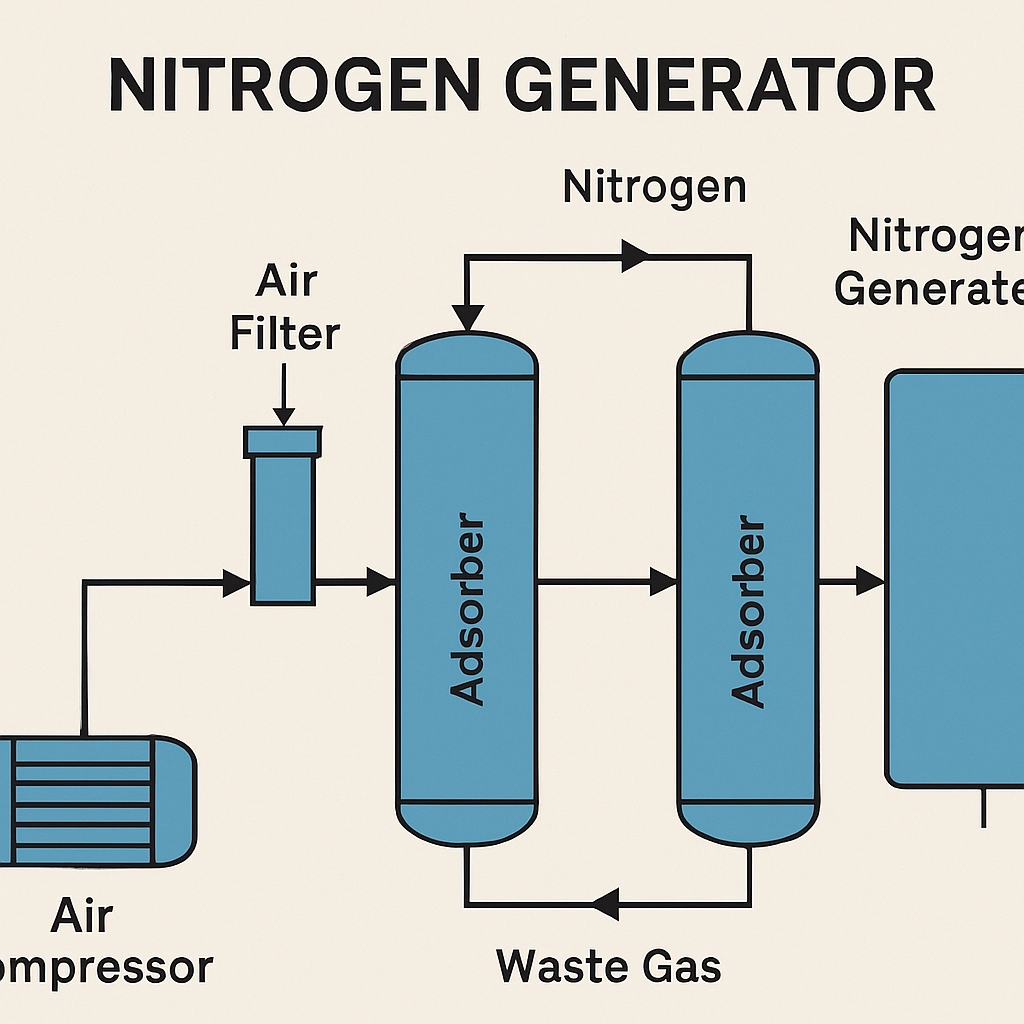
A nitrogen generator is a system designed to extract nitrogen gas from the atmosphere. This process involves separating nitrogen from other gases, primarily oxygen, to deliver high-purity nitrogen. There are two primary types of nitrogen generators: Pressure Swing Adsorption (PSA) and Membrane.
PSA Nitrogen Generators
PSA nitrogen generators operate by using a pair of towers filled with carbon molecular sieves (CMS). These sieves selectively adsorb oxygen and other trace gases, allowing nitrogen to pass through. The system alternates between the two towers, ensuring a continuous supply of nitrogen.
Membrane Nitrogen Generators
Membrane nitrogen generators use a series of hollow fibers to separate nitrogen from compressed air. As the air passes through the fibers, oxygen and water vapor are removed, leaving a high concentration of nitrogen.
Key Specifications to Consider
When evaluating nitrogen generators, there are several critical specifications to keep in mind. Understanding these factors will help you choose a generator that meets your specific requirements.
1. Nitrogen Generator Capacity
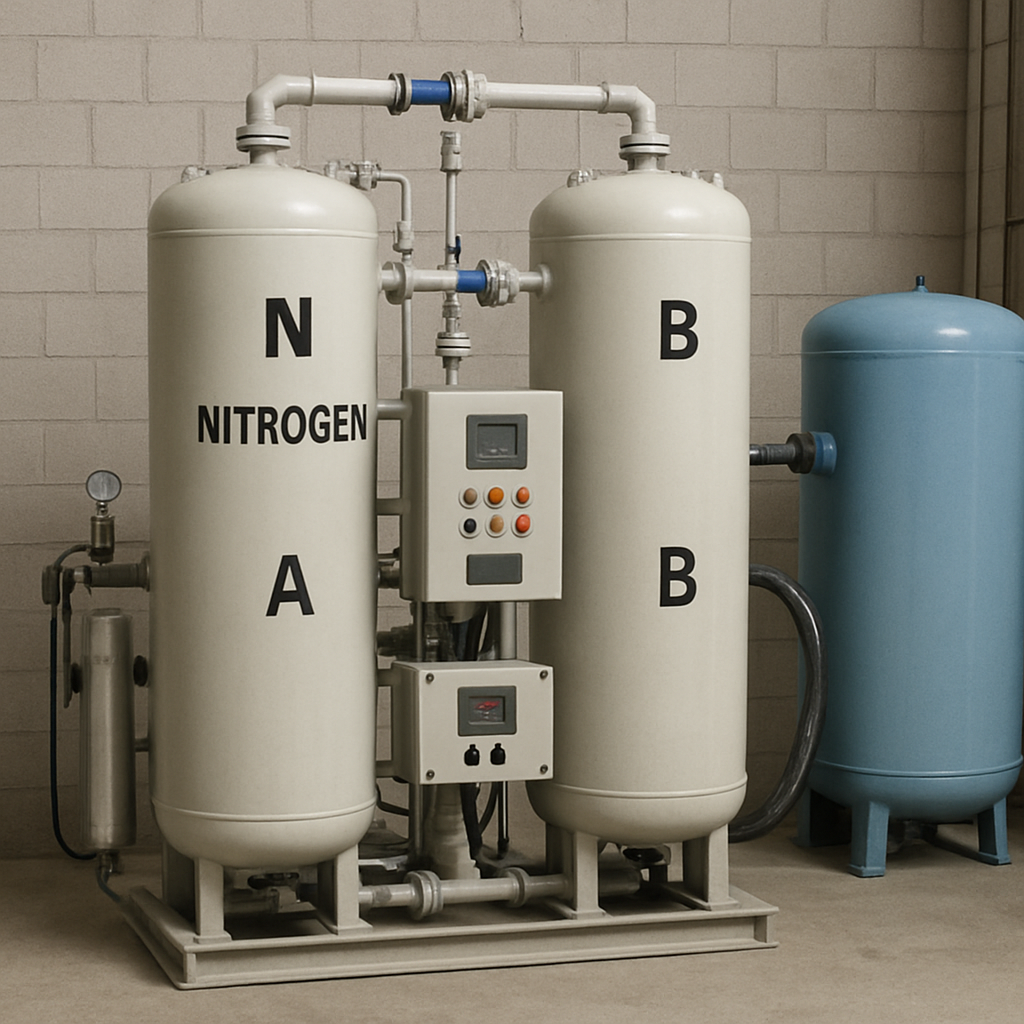
 The capacity of a nitrogen generator refers to the amount of nitrogen it can produce over a specified period. Measured in liters per minute (LPM) or cubic meters per hour (m³/h), capacity is a crucial factor to consider. Determine your nitrogen demand by evaluating your processes and applications. Ensure the generator you select can meet this demand without overworking the system.
2. Purity Levels
Nitrogen purity is another important specification to consider. Different applications require varying levels of nitrogen purity. For instance, food and beverage industries typically need nitrogen with a purity level of 99% or higher, while some industrial applications may require lower purity levels.
PSA and membrane generators offer different purity levels, with PSA systems generally providing higher purity options. Assess your application requirements and choose a generator that delivers the necessary purity.
3. Operating Pressure
Operating pressure is the pressure at which the nitrogen generator delivers the gas. It is essential to match the generator’s output pressure with the requirements of your application. Insufficient pressure may result in inadequate nitrogen supply, while excessive pressure can cause equipment damage.
Most nitrogen generators operate within a range of 5 to 10 bar (72 to 145 psi). Ensure your system is compatible with this range or adjust your setup accordingly.
4. Energy Efficiency
Energy efficiency is a critical consideration, as it impacts both operational costs and environmental sustainability. Evaluate the energy consumption of a nitrogen generator by considering its power requirements and efficiency ratings. Look for systems with energy-saving features, such as automatic standby modes and efficient compressors, to minimize energy usage.
5. Installation and Maintenance
Ease of installation and maintenance can significantly impact the overall cost and convenience of owning a nitrogen generator. Choose a system that is easy to install and requires minimal maintenance. Some generators come with user-friendly interfaces and automated controls, simplifying operation and maintenance tasks.
6. Footprint and Space Requirements
Consider the physical size and footprint of the nitrogen generator, especially if you have limited space available. Compact systems are ideal for small facilities, while larger installations may require more significant equipment. Assess your available space and select a generator that fits comfortably within the area.
Applications of Nitrogen Generators
Nitrogen generators are versatile systems used across various industries. Understanding the applications of these systems can help you determine if a nitrogen generator is suitable for your needs.
Food and Beverage Industry
In the food and beverage industry, nitrogen generators are used for packaging and preservation. Nitrogen extends the shelf life of products by reducing oxidation and preventing spoilage. It is commonly used in Modified Atmosphere Packaging (MAP) to maintain product freshness.
Pharmaceutical Industry

The pharmaceutical industry relies on nitrogen generators for various applications, including inerting, blanketing, and purging processes. Nitrogen provides a stable environment, preventing contamination and ensuring the integrity of pharmaceutical products.
Electronics Manufacturing
In electronics manufacturing, nitrogen generators are used to create an inert atmosphere during soldering and assembly processes. This prevents oxidation and enhances the quality and reliability of electronic components.
Metal Production and Fabrication
Nitrogen generators play a crucial role in metal production and fabrication, where they are used for laser cutting and welding processes. Nitrogen prevents oxidation, resulting in cleaner cuts and stronger welds.
Conclusion
Selecting the right nitrogen generator involves understanding key specifications such as capacity, purity levels, operating pressure, energy efficiency, installation, and maintenance. By considering these factors and evaluating your specific application requirements, you can choose a system that meets your needs and enhances your operations. With the versatility and efficiency of nitrogen generators, your business can enjoy improved product quality and operational efficiency across various applications.