Nitrogen is a vital gas used across various industries, from food packaging to pharmaceuticals. But how do businesses get a steady supply of nitrogen? Enter membrane nitrogen generators. In this article, we’ll delve into what membrane nitrogen generators are, how they work, and why they’re beneficial for numerous applications.
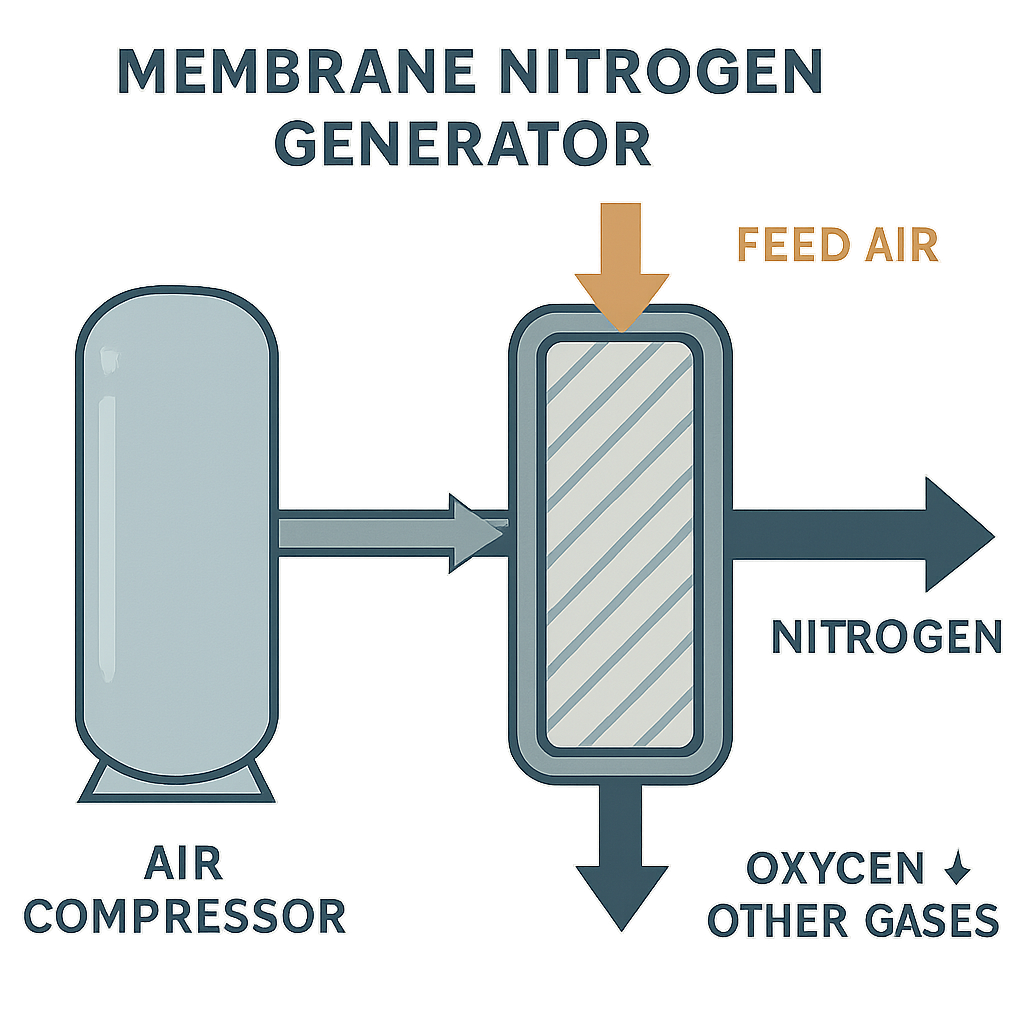
A membrane nitrogen generator is a device that separates nitrogen molecules from the air using a process called membrane filtration. These generators are an efficient and cost-effective way to produce nitrogen on-site, eliminating the need for regular deliveries of nitrogen gas.
How Do They Work?
Membrane nitrogen generators use a technology known as membrane filtration. The air we breathe is composed of 78% nitrogen, 21% oxygen, and other gases. A membrane nitrogen generator takes in compressed air and passes it through a membrane—a selective barrier that separates gases based on their molecular size and solubility.
Here’s a simple breakdown of the process:
- Compression: Air is compressed to increase the pressure, which is necessary for efficient separation.
- Filtration: The compressed air is pushed through the membrane fibers. Because nitrogen molecules are smaller and less soluble than oxygen molecules, they pass through the membrane more quickly.
- Collection: The separated nitrogen is collected on one side of the membrane, while the oxygen and other gases are expelled as waste.
Types of Membranes Used
The efficiency of a membrane nitrogen generator largely depends on the type of membrane used. These membranes are typically made from polymers like cellulose acetate or polyimide. The choice of material affects the selectivity and permeability of the membrane, influencing the purity and flow rate of the nitrogen produced.
Advantages of Using Membrane Nitrogen Generators
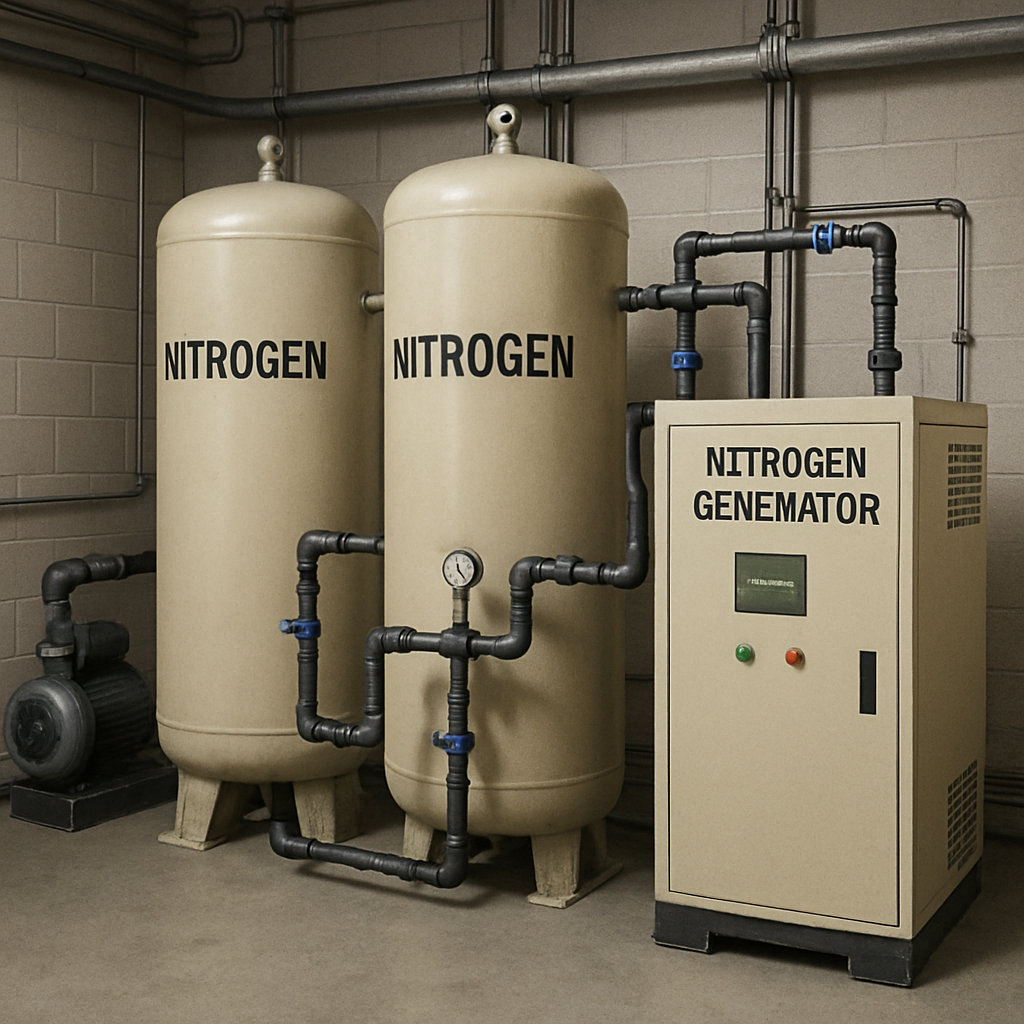
Membrane nitrogen generators offer several advantages over traditional nitrogen supply methods, such as gas cylinders or bulk liquid nitrogen. Here are some of the key benefits:
Cost-Effective
By generating nitrogen on-site, businesses can significantly reduce their reliance on external suppliers. This not only cuts costs associated with purchasing and transporting nitrogen but also reduces the environmental impact of transportation.
Continuous Supply
With a membrane nitrogen generator, you get a continuous supply of nitrogen, ensuring that your operations are never interrupted due to a lack of gas. This is especially crucial in industries where nitrogen is used continuously, like in food packaging or chemical manufacturing.
Compact and Scalable
Membrane nitrogen generators are generally compact, requiring less space compared to other nitrogen generation methods. Additionally, they can be easily scaled to meet increasing demand by adding more membrane modules.
Low Maintenance
These generators have few moving parts, which means they require minimal maintenance. The main upkeep involves replacing the membrane filters periodically, which is a straightforward process.
Applications of Membrane Nitrogen Generators
Membrane nitrogen generators find applications across a wide range of industries due to their efficiency and reliability. Some common uses include:
Food and Beverage Industry
In the food industry, nitrogen is used to preserve freshness by displacing oxygen in packaging. Membrane nitrogen generators provide a reliable source of nitrogen for this purpose, helping to extend shelf life and maintain product quality.
Pharmaceutical Manufacturing
Nitrogen is essential in pharmaceutical production for creating inert environments that prevent oxidation. Membrane nitrogen generators ensure a steady supply of high-purity nitrogen for these sensitive processes.
Chemical Processing
In chemical industries, nitrogen is used to prevent explosions by blanketing flammable substances. Membrane nitrogen generators can produce the necessary volume of nitrogen to maintain safe operating conditions.
Electronics Manufacturing
The electronics industry uses nitrogen to create controlled atmospheres for soldering and other manufacturing processes. Membrane nitrogen generators provide the purity and consistency needed for these applications.
Considerations When Choosing a Membrane Nitrogen Generator

When selecting a membrane nitrogen generator, several factors should be considered to ensure it meets your specific needs:
Purity Requirements
Different applications require different nitrogen purity levels. It’s important to choose a generator that can produce nitrogen at the purity level your industry demands.
Flow Rate
The flow rate, or the amount of nitrogen produced per minute, is another crucial factor. Ensure the generator can meet your operational needs without overburdening the system.
Operating Costs
Consider the total cost of ownership, including initial investment, operating costs, and maintenance expenses. Membrane nitrogen generators are generally cost-effective, but it’s wise to compare options.
Installation and Space
Evaluate the space available for installation. Membrane nitrogen generators are compact, but you should ensure there’s enough room for the unit and any additional equipment required.
Future of Membrane Nitrogen Generators
As industries continue to seek sustainable and efficient solutions, membrane nitrogen generators are poised to play a significant role. Advances in membrane technology promise to enhance the efficiency and reduce the costs of these systems, making them even more attractive to businesses worldwide.
Conclusion
Membrane nitrogen generators offer a reliable, efficient, and cost-effective solution for producing nitrogen on-site. With their low maintenance needs and scalability, they are an ideal choice for many industries looking to streamline operations and reduce costs. Whether you’re in food packaging, pharmaceuticals, or chemical processing, a membrane nitrogen generator could be the key to unlocking more efficient and sustainable operations.
By understanding the basics of how these generators work and their advantages, you can make an informed decision about integrating them into your processes. As technology advances, the potential for membrane nitrogen generators will only continue to grow, offering even greater benefits in the future.