If you look closely at your industrial gas invoice, you might be surprised by what you are actually funding. Industry analysis reveals that nearly 70% of the cost covers the delivery truck, driver, and tank rental rather than the gas itself. You are essentially paying a premium for logistics rather than the product you actually use.
The raw material you need is likely floating right above your workspace. Since the air we breathe contains 78% nitrogen, this resource is technically free and abundant. By shifting your strategy to harvest this gas directly from the atmosphere, you eliminate the expensive middleman entirely.
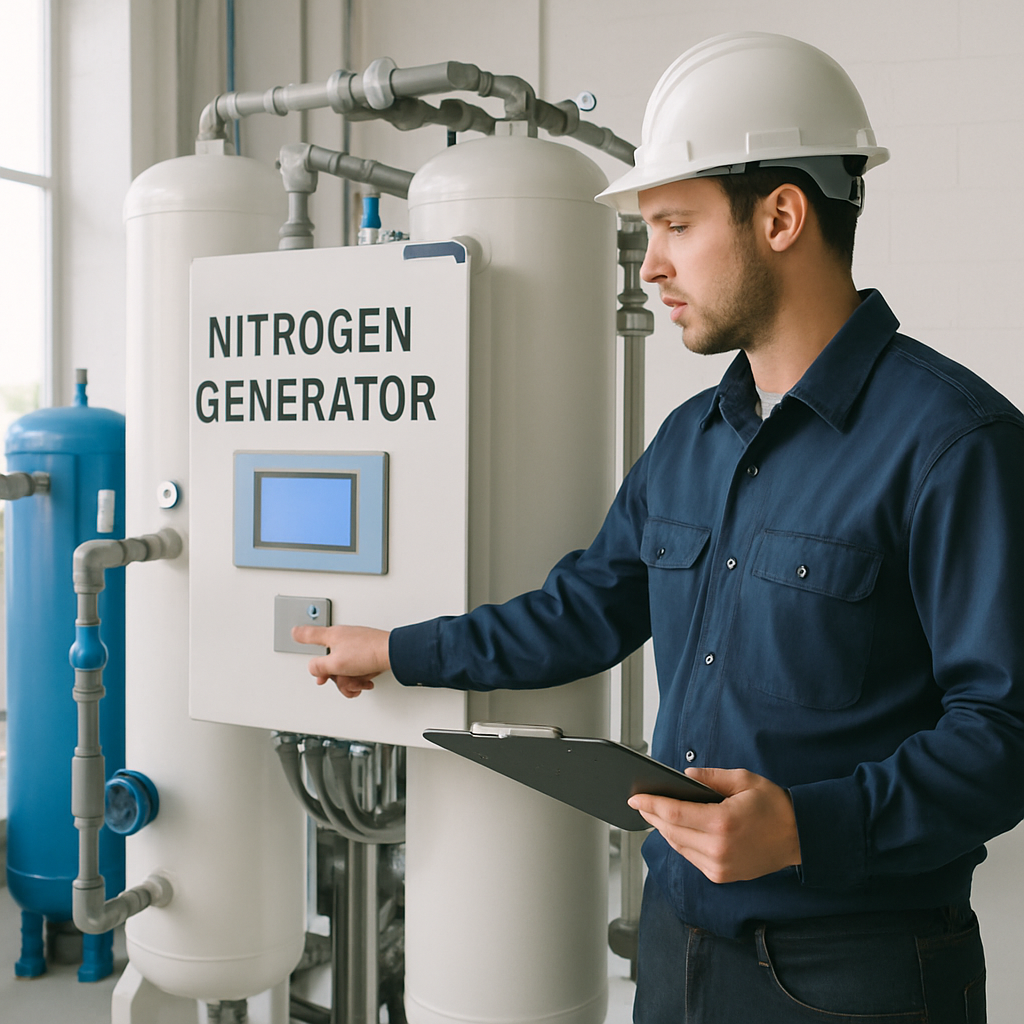
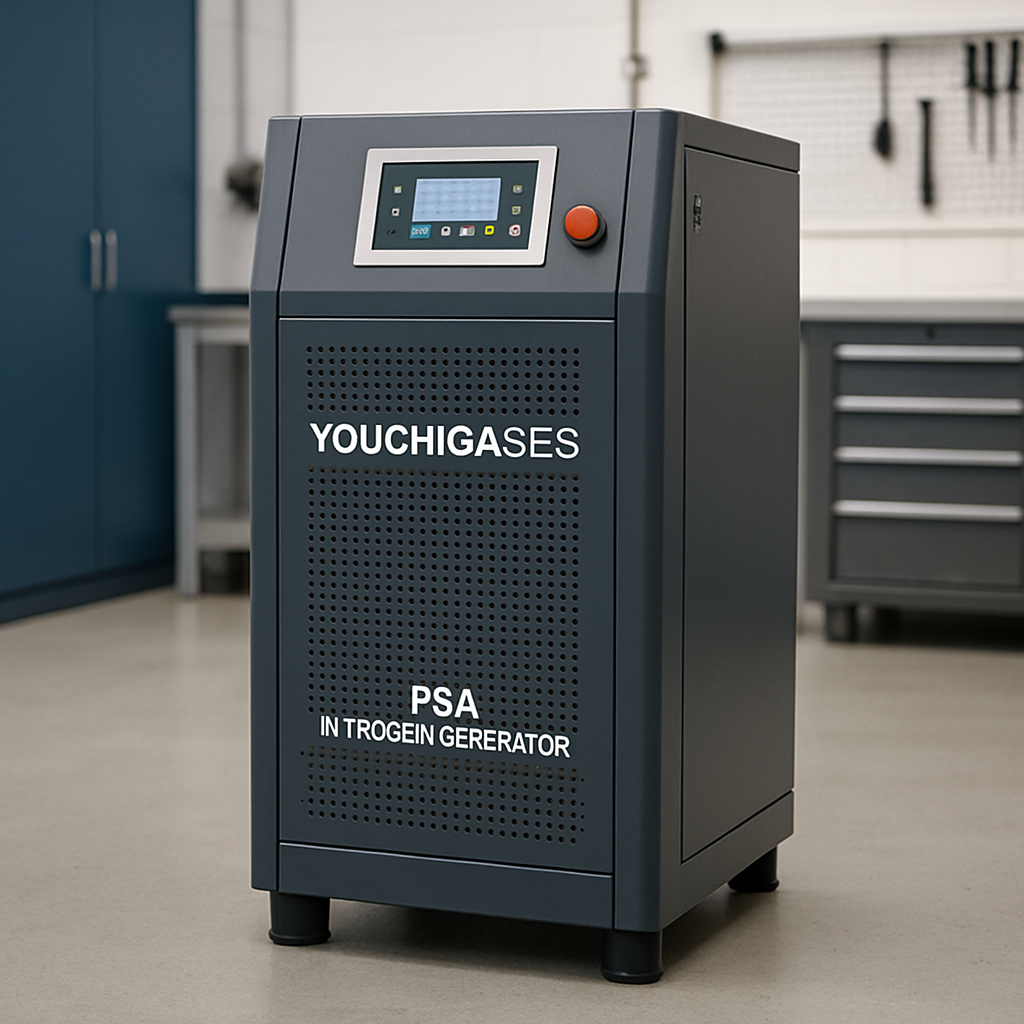
Adopting a cost-effective PSA nitrogen making machine that Youchigases manufactures allows you to capitalize on this available resource. These units serve as on-site “mini-factories,” filtering ambient air to deliver a continuous supply. With a nitrogen generator Youchigases system, you pay for the machine’s efficiency, not the truck that delivers it.
How the PSA Process Acts as a “Security Gate” for Your Gas Supply
You don’t need a physics degree to see how a Youchigases machine creates nitrogen from thin air. Think of the Pressure Swing Adsorption (PSA) process as a highly selective security checkpoint at a busy airport. Ambient air, which contains roughly 78% nitrogen and 21% oxygen, is pushed into the system under pressure. The function isn’t to “make” nitrogen, but simply to detain the oxygen molecules so the nitrogen can pass through freely.
Inside the machine are tanks filled with Carbon Molecular Sieve (CMS), a specialized material that acts like security guards. In this analogy, oxygen molecules are travelers carrying bulky luggage, while nitrogen molecules are travelers carrying nothing. As the pressurized air hits the CMS, the oxygen gets stuck in the microscopic pores—adsorbed—because of its specific molecular properties. Meanwhile, the streamlined nitrogen molecules breeze right past the checkpoint and into a storage tank, ready for use in your food packaging or laser cutting process.
The “Swing” in Pressure Swing Adsorption refers to the system constantly resetting itself to ensure continuous flow. Once the CMS is full of oxygen, the machine releases the pressure, venting the trapped oxygen back into the atmosphere so the filter is clean for the next batch. The cycle happens in four distinct stages:
- Intake: Compressed air enters the vessel.
- Adsorption: CMS traps oxygen while nitrogen passes through.
- Release: Pressure drops, and the CMS lets go of the oxygen.
- Regeneration: The bed is purged and ready to start again.
This twin-tower design allows one side to produce gas while the other cleans itself, ensuring you never run out of supply. By relying on physics rather than chemical reactions, the system minimizes wear and tear. This self-sustaining cycle translates directly to your bottom line.
Calculating Your ROI: How a Youchigases Machine Pays for Itself in 18 Months
Most business owners are shocked to realize that with on-site generation, the price of nitrogen drops to merely the cost of the electricity required to run the compressor. Instead of paying a supplier for a product, you are simply funding the energy needed to extract it yourself. This shift fundamentally changes your industrial nitrogen generator ROI, turning a volatile monthly expense into a predictable, low-cost utility that you control entirely.
Traditional liquid supply methods are notoriously inefficient due to a phenomenon known as “boil-off,” where gas evaporates from storage tanks before you ever get the chance to use it. By eliminating liquid nitrogen delivery costs, a Youchigases machine ensures that every kilowatt of energy you pay for results in usable gas, stopping the financial leak of paying for a product that literally vanishes into thin air. You effectively stop renting your gas and start owning your supply chain.
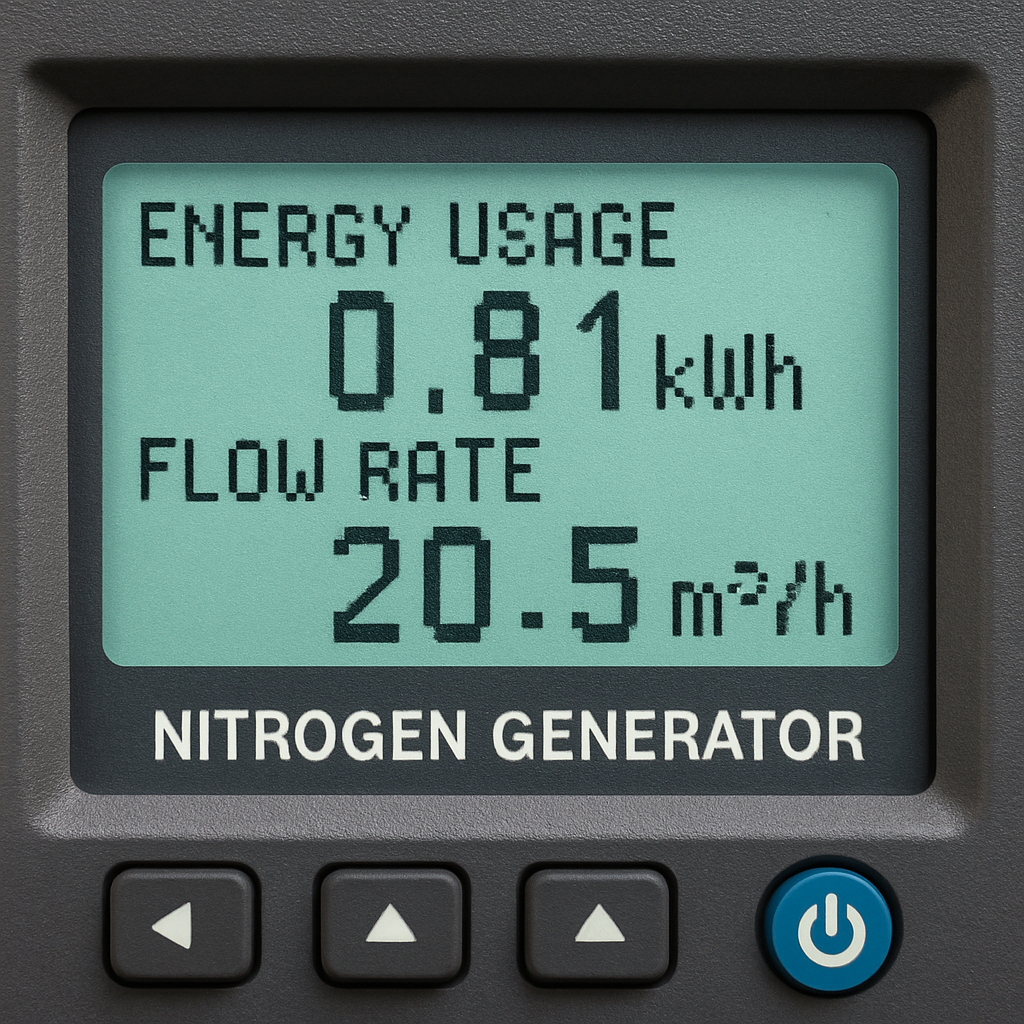
Determining your specific payback period requires looking at your current monthly invoices and understanding how to calculate nitrogen gas consumption for your specific equipment. For a facility running standard shifts, the savings on delivery fees, rental contracts, and hazard surcharges typically cover the initial investment of the generator within just 12 to 18 months. Since the Carbon Molecular Sieve is designed to last over a decade, you unlock years of virtually free gas once that break-even point is reached.
However, saving money only matters if the gas quality meets the strict requirements of your specific application. While a tire shop might operate perfectly with basic purity, a pharmaceutical lab requires absolute perfection to ensure safety and compliance.
From Food Crisps to Pharmaceuticals: Matching Purity Levels to Your Industry
Not every industrial process requires the same level of perfection. Just as you wouldn’t use medical-grade distilled water to wash a car, you don’t need laboratory-grade gas to keep potato chips fresh. For general applications like extending shelf life, a stable nitrogen supply for food packaging typically requires a purity level between 98% and 99.5%. This balance effectively displaces oxygen to prevent spoilage without forcing the machine to work overtime on unnecessary refinement.
As technical demands rise, the generator adjusts its flow rate to capture even trace amounts of oxygen. A high purity nitrogen for laser cutting is essential because any remaining oxygen could cause the metal edges to oxidize or rust during the cut. At the absolute top of the spectrum, a PSA nitrogen generator for the pharmaceutical industry from Youchigases creates a critical environment where 99.999% purity is mandatory to ensure chemical stability.
- Food & Beverage: 99.0% – 99.5% (Prevents oxidation)
- Laser Metal Cutting: 99.9% – 99.99% (Ensures clean cuts)
- Electronics & Pharma: 99.999% (Critical contamination prevention)
The beauty of on-site generation is that you are no longer stuck with whatever “standard grade” the gas company delivers. You simply dial in the exact purity your facility needs, and the system maintains it automatically. To ensure this precision lasts for decades, however, requires a simple but consistent approach to equipment care.
Maintaining Your “Mini-Factory” for a 20-Year Lifespan
Many facility managers worry that installing their own gas supply adds a heavy workload to their maintenance team, but the reality is surprisingly low-touch. A fully automated nitrogen gas plant operates much like a standard HVAC system—it runs quietly in the background with minimal intervention. Because the core machinery has very few moving parts, there are fewer components that can break or wear down compared to the complex pumps used in liquid gas delivery.
Protecting your investment essentially boils down to one rule: keep the intake air clean and dry. The industrial nitrogen system maintenance requirements are almost entirely focused on the air compressor feeding the unit rather than the generator itself. To keep the system healthy, your team only needs a basic monthly rhythm:
- Check air filters for dust and debris blockage.
- Inspect the oil-water separator to ensure moisture is draining.
- Verify the compressor’s pressure output remains stable.
When this clean air supply is maintained, the heart of the machine—the specialized filter material—remains effective for decades. The life expectancy of carbon molecular sieve (CMS) inside a Youchigases unit typically spans 15 to 20 years because the material doesn’t chemically degrade; it simply sorts molecules physically. With these simple checks, your “mini-factory” becomes a fixed asset that pays for itself long before it needs major servicing.
Your Action Plan for Switching to On-Site Nitrogen Generation
You no longer need to rely on expensive delivery trucks for your gas supply. To start your transition, review your current gas bills to calculate volume, measure a ventilated space, and consult a specialist for a guide to installing onsite nitrogen systems. Correctly sizing your Youchigases machine requires knowing your peak flow rate rather than just average use, ensuring you maintain pressure during production spikes.
Comparing onsite nitrogen generation vs cylinders reveals that this switch is a strategic move toward supply independence. By choosing the right nitrogen purity level for your specific needs, you stop paying for unnecessary refinement and turn the free air around your facility into a permanent, cost-saving asset.