In the oil and gas industry, nitrogen plays a crucial role. It’s used for enhanced oil recovery, inerting, and pressure testing.
Choosing between liquid nitrogen and on-site nitrogen generation is a significant decision. Each option has its own cost implications and operational benefits.
Liquid nitrogen is often preferred for its immediate availability. However, its cost can vary based on locati0n and supplier.
On-site nitrogen generation offers a continuous supply, reducing reliance on external suppliers. It requires a higher initial investment but may lead to long-term savings.
This article will explore the cost comparison between these two methods. It aims to help industry professionals make informed decisions.
Nitrogen Use in Oil & Gas: Applications and Requirements
Nitrogen is indispensable in the oil and gas sector. Its applications enhance safety, efficiency, and productivity across operations.
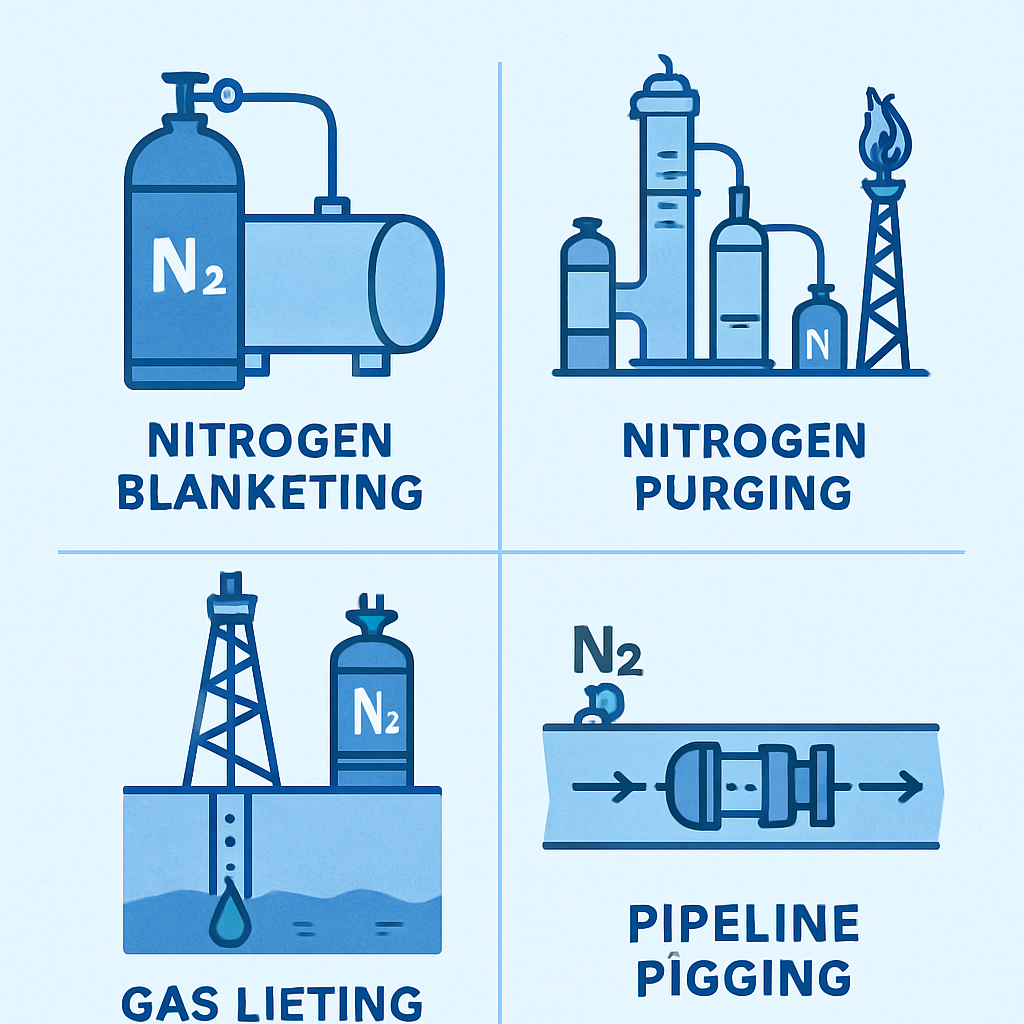
Inerting is a common use, preventing combustion by displacing oxygen in storage tanks. This mitigates explosion risks during drilling and storage.
It’s also employed in enhanced oil recovery (EOR). Injecting nitrogen increases reservoir pressure, improving oil extraction rates. Pressure testing pipelines and equipment with nitrogen ensures their integrity before use.
Oil and gas operations often demand specific nitrogen purity levels. Applications, such as EOR, might require high-purity nitrogen, influencing supply decisions.
Key Applications of Nitrogen in Oil & Gas:
- Enhanced Oil Recovery (EOR)
- Inerting
- Pressure Testing
Meeting these requirements efficiently is essential for operational success. Therefore, selecting the right nitrogen supply method requires careful evaluation.
Overview of Liquid Nitrogen Supply
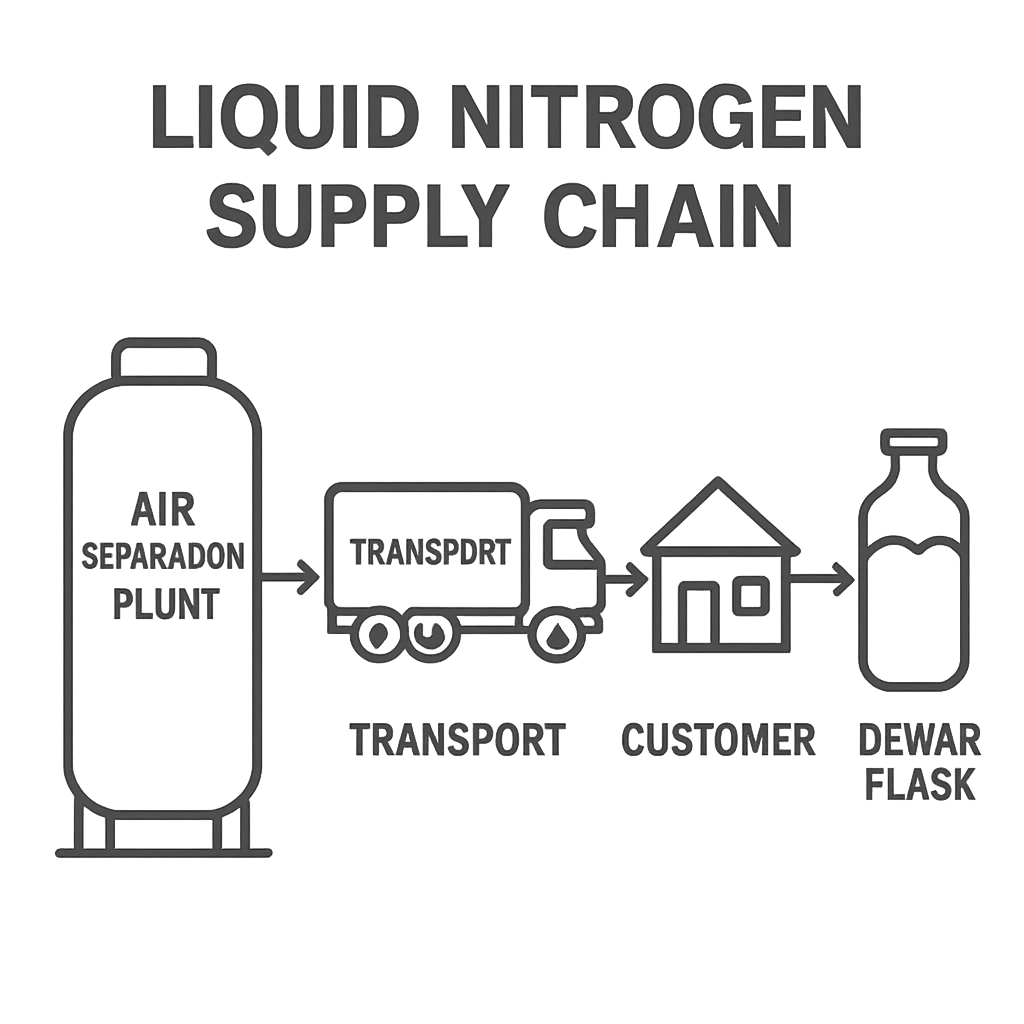
Liquid nitrogen is widely utilized in the oil and gas industry due to its versatility. It’s produced by cooling air until liquefied.
Suppliers provide liquid nitrogen in bulk to meet demand. Delivery requires specialized cryogenic trucks equipped to maintain extremely low temperatures.
The storage of liquid nitrogen is crucial. Cryogenic tanks on-site keep it in liquid form until needed. Handling demands strict safety protocols due to its extremely cold nature.
Cost factors include production, storage, and transportation expenses. Geography and distance from production facilities can impact pricing significantly.
Components Affecting Liquid Nitrogen Supply:
- Production
- Storage
- Transportation
Liquid nitrogen’s immediate availability makes it ideal for short-term projects. However, logistical considerations and associated costs can be significant.
Overview of On-site Nitrogen Generation Systems
On-site nitrogen generation offers a flexible alternative to liquid nitrogen. These systems produce nitrogen directly at the point of use.
They provide a continuous nitrogen supply, crucial for ongoing operations in the oil and gas sector. This reduces dependency on external suppliers and transportation logistics.
Initial setup costs can be high due to the equipment and installation required. However, long-term cost efficiency often improves as continuous nitrogen demand increases.
Nitrogen generation systems are customizable. They can meet specific purity and flow rate requirements, which is essential for different industrial applications.
Operating these systems requires an understanding of their maintenance needs to ensure optimal performance. Regular checks and servicing are necessary.
Advantages of On-site Nitrogen Generation:
- Continuous supply
- Reduced logistics
- Tailored purity
On-site nitrogen generation enhances operational reliability and can integrate seamlessly with existing infrastructure. This integration helps smooth business processes and enhances resilience against supply chain disruptions.
Liquid Nitrogen Cost Structure: What Drives Prices?
The cost structure for liquid nitrogen involves several key components. Understanding these can help in making a more informed choice.
Production expenses are the baseline cost driver. These involve the energy-intensive process of liquefying nitrogen from the air.
Transportation significantly adds to the cost. Moving cryogenic liquid nitrogen involves specialized tankers and logistics.
Storage also poses additional costs. Facilities need to be equipped with cryogenic tanks to safely store liquid nitrogen.
Market dynamics heavily influence liquid nitrogen prices. These include supply-demand balance and raw material price fluctuations.
Suppliers often provide volume discounts. Therefore, bulk purchases may reduce the per-unit cost but require larger initial outlays.
Key Cost Drivers:
- Production expenses
- Transport and storage
Market Influences:
- Supplier dynamics
- Raw material costs

by Bozhin Karaivanov (https://unsplash.com/@bkaraivanov)
Understanding these components can guide decision-makers in effectively managing their nitrogen supply budget. Choosing the right supplier and storage strategies can result in significant savings.
On-site Nitrogen Generation: Investment and Operating Costs
Implementing on-site nitrogen generation systems requires a significant initial investment. This includes purchasing equipment and setting it up within existing facilities.
The initial capital expenses can be substantial. However, they may be offset by long-term savings and operational efficiency.
Operating costs are another factor. These involve energy consumption, maintenance, and any necessary repairs to keep the system functional.
Energy usage often constitutes a large part of running expenses. Efficient systems can mitigate these costs over time.
Regular maintenance ensures peak performance and minimizes downtime. This maintenance can be planned to keep costs predictable and manageable.
Initial Investments:
- Equipment purchase
- Installation and setup
Ongoing Operating Costs:
- Energy consumption
- System maintenance

by Google DeepMind (https://unsplash.com/@googledeepmind)
Accurate budgeting for both initial and ongoing expenses is crucial. This ensures the financial viability of investing in on-site nitrogen generation technology.
Direct Cost Comparison: Liquid Nitrogen vs On-site Generation
Understanding the cost differences between liquid nitrogen and on-site generation is vital. Liquid nitrogen involves costs associated with procurement, storage, and delivery.
On the other hand, on-site nitrogen generation requires an upfront investment but provides continuous savings. The long-term benefits often surpass initial costs.
Consideration must be given to transportation and handling when assessing liquid nitrogen. These can add unpredictability to costs over time.
By contrast, on-site generation offers a more stable and predictable cost model. This stems from consistent energy and maintenance expenses.
Both methods entail unique cost components. Therefore, careful analysis is necessary to understand their full financial implications.
Liquid Nitrogen Costs:
- Purchase price
- Transportation
- Storage and handling
On-site Nitrogen Generation Costs:
- Initial investment
- Energy expenses
- Maintenance fees

by Steve A Johnson (https://unsplash.com/@steve_j)
Determining the most cost-effective option depends on specific operational needs. Decisions should align with both immediate and long-term financial goals.
Indirect Costs and Operational Considerations
Indirect costs can significantly impact the choice between nitrogen supply methods. For liquid nitrogen, factors such as storage infrastructure and safety equipment are crucial. These add to the overall expenses.
On-site nitrogen generation systems pose different challenges. Regular maintenance and technical support are essential to ensure seamless operation. These ongoing responsibilities can require skilled personnel.
Operational efficiency is another key consideration. Liquid nitrogen often necessitates detailed logistical planning for deliveries. This can introduce potential delays or supply chain disruptions.
By contrast, on-site generation offers operational autonomy. It eliminates reliance on external suppliers, reducing logistical complexities.
To make informed decisions, it’s essential to evaluate the following indirect cost elements:
- Safety and handling requirements
- Logistical and supply chain factors
- Maintenance and support needs

by kenny cheng (https://unsplash.com/@kenny161616)
Ultimately, the chosen method should align with operational efficiency and indirect cost management goals.
Environmental Impact and Sustainability
Choosing between liquid nitrogen and on-site nitrogen generation can impact environmental sustainability. Liquid nitrogen transportation contributes to a higher carbon footprint due to fuel consumption and emissions during transit.
On-site nitrogen generation has a different footprint. It minimizes transportation emissions by producing nitrogen at the point of use. This can significantly lower environmental impact.
Sustainability also involves energy consumption. On-site systems, if powered by renewable energy sources, can further enhance eco-friendliness. However, this requires initial investment and infrastructure changes.
Key sustainability factors to evaluate include:
- Transportation emissions
- Energy source for on-site systems
- Long-term ecological impact

by m c (https://unsplash.com/@solaine)
Thus, considering sustainability can aid in making a greener choice for nitrogen supply.
Scalability, Flexibility, and Supply Chain Resilience
Scalability is crucial in the oil and gas sector. On-site nitrogen generation systems excel in this area, easily adapting to increased demand without significant delay.
Flexibility in operations can greatly enhance productivity. On-site systems allow for rapid adjustments in nitrogen flow and purity, tailored to specific project requirements.
Supply chain resilience is another key benefit of on-site generation. By reducing reliance on external suppliers, companies can better withstand disruptions and maintain continuous operations.
Consider these factors when evaluating supply options:
- Demand fluctuations
- Project-specific nitrogen requirements
- Potential supply chain risks

by Steve A Johnson (https://unsplash.com/@steve_j)
Assessing these elements ensures a robust nitrogen supply method.
Decision Factors: How to Choose the Right Nitrogen Supply Method
Selecting the appropriate nitrogen supply method involves numerous factors. Each project in oil and gas is unique, requiring a tailored approach.
One primary consideration is the project’s duration and scale. For short-term projects, liquid nitrogen might offer more convenience due to immediate availability.
Evaluate the total cost of ownership. This includes both direct costs like supply and transportation, and indirect costs such as maintenance and potential downtime.
Essential decision factors include:
- Project scale and duration
- Budget constraints
- Nitrogen purity requirements
- Environmental considerations
Carefully weighing these factors ensures a cost-effective and efficient nitrogen supply solution. Each variable can influence overall project success and operational efficiency.
Frequently Asked Questions
Choosing between liquid nitrogen and on-site generation can be complex. Here are answers to common questions.
1. What are the main cost factors for liquid nitrogen?
- Supply and transportation
- Storage facilities
- Handling equipment
2. How does on-site nitrogen generation benefit operational efficiency?
It minimizes supply chain disruptions and offers consistent production.
3. Are there specific scenarios where liquid nitrogen is preferable?
Yes, in short-term or emergency applications due to quick deployment.
Understanding these aspects helps in making informed decisions. Each option has unique benefits and drawbacks depending on the project’s specifics.
Conclusion: Key Takeaways for Oil & Gas Professionals
Choosing between liquid nitrogen and on-site nitrogen generation depends on several factors. Key considerations include cost, flexibility, and environmental impact.
Ultimately, the decision should balance immediate needs with long-term goals. Evaluating the direct and indirect costs helps in choosing the most suitable nitrogen supply method for your operation.