Automotive nitrogen generators are revolutionizing tire care. They produce nitrogen gas for inflating vehicle tires. This technology is gaining popularity among car owners and professionals alike.
Nitrogen filling offers several benefits over traditional air. It can improve fuel efficiency and extend tire life. The larger nitrogen molecules reduce the rate of tire pressure loss.
Using nitrogen in tires enhances vehicle safety. It maintains consistent tire pressure, reducing the risk of blowouts. This stability is especially beneficial in extreme weather conditions.
Automotive nitrogen generators are easy to use. They separate nitrogen from the air, which is mostly nitrogen already. This process is efficient and quick, making it ideal for service centers.
Understanding the advantages of nitrogen can help you make informed decisions. Whether you’re a car enthusiast or a mechanic, nitrogen inflation could be a valuable addition to your tire maintenance routine.
What Is an Automotive Nitrogen Generator?
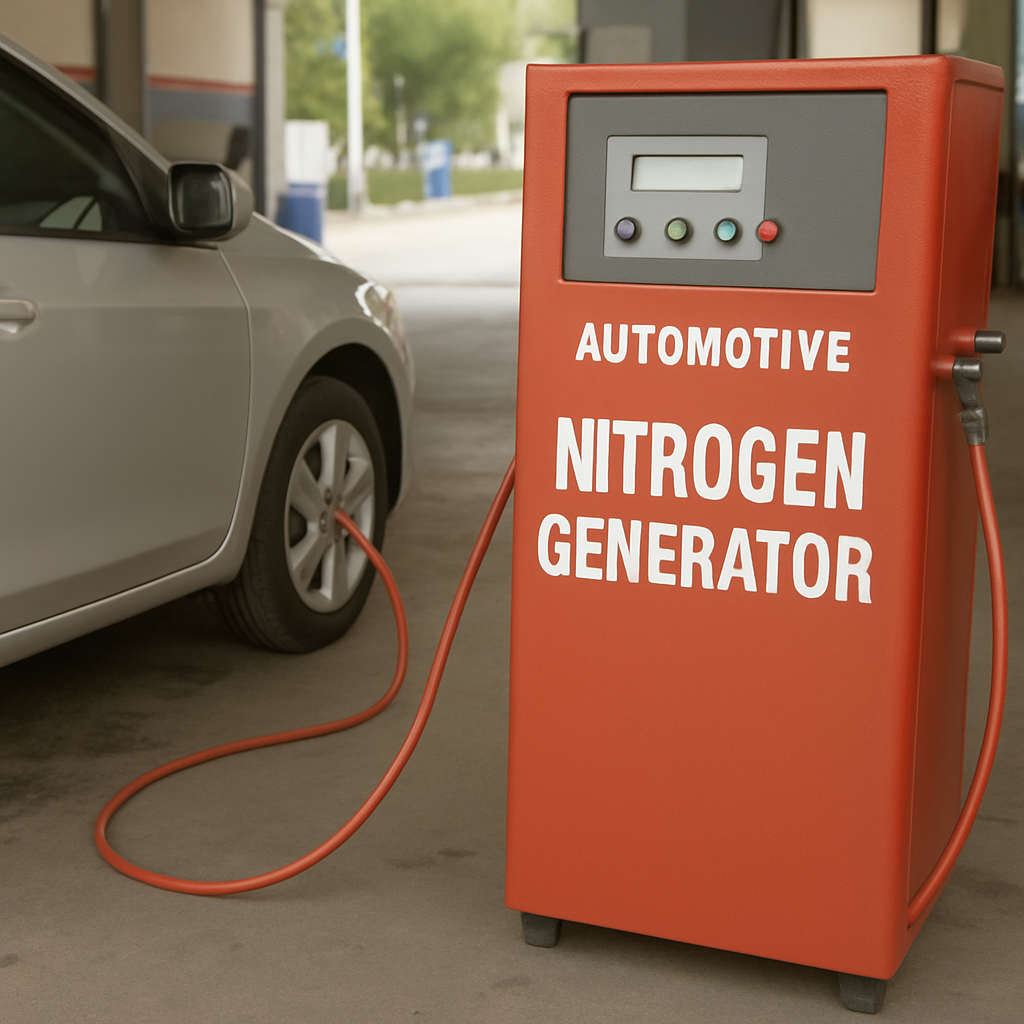
An automotive nitrogen generator is a specialized device. It produces high-purity nitrogen gas for inflating vehicle tires. This technology plays a critical role in modern tire maintenance and care.
These generators work by filtering air. Air is made of about 78% nitrogen. Generators separate nitrogen from other gases to supply pure nitrogen for inflation purposes.
Nitrogen generators come in various sizes and capacities. They can be small and portable or large units for heavy-duty use. This versatility makes them suitable for different settings.
With an automotive nitrogen generator, you can inflate tires with the following advantages:
- Improved fuel efficiency
- Extended tire lifespan
- Reduced pressure loss
- Enhanced safety features
These devices are valuable tools for professional garages and service stations. They ensure optimal tire performance through consistent nitrogen inflation.
How Do Automotive Nitrogen Generators Work?
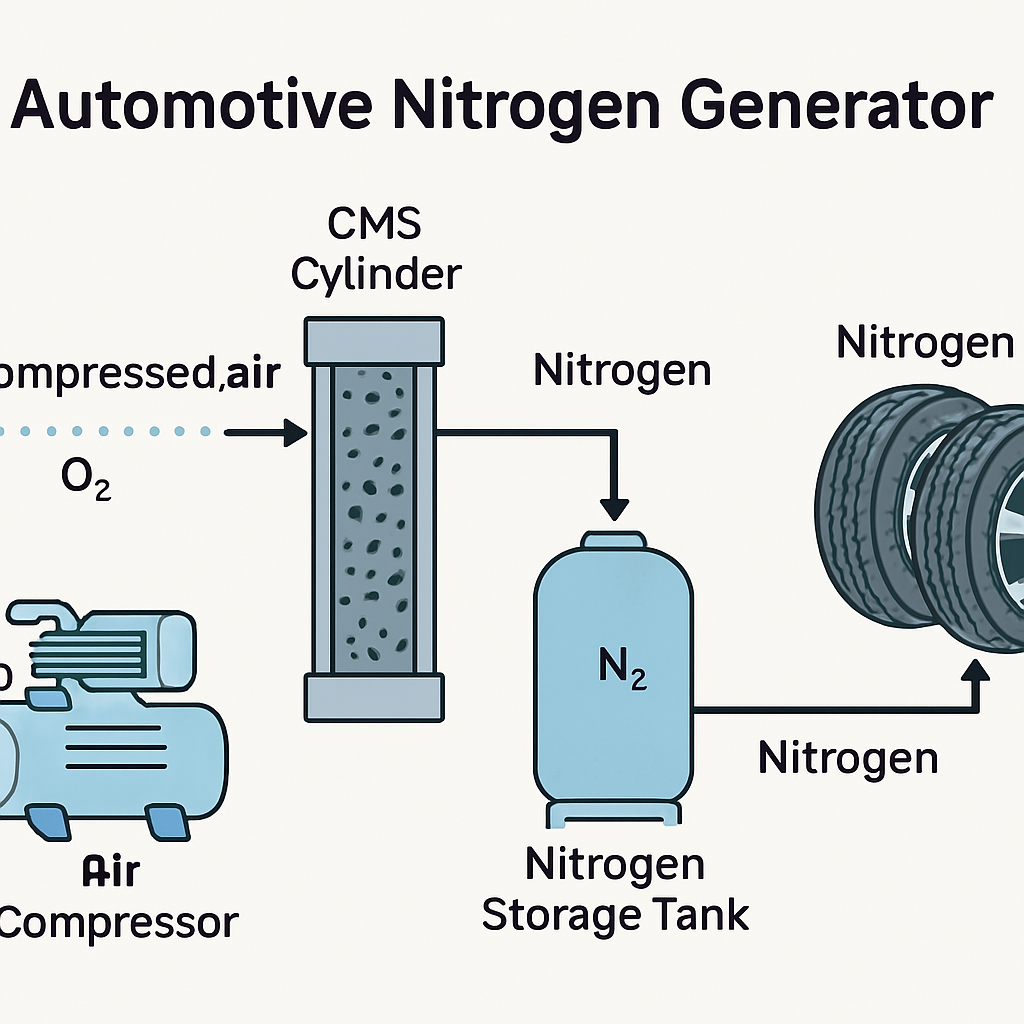
Automotive nitrogen generators operate by using advanced technology. They filter out nitrogen gas from the ambient air. The process involves a few key steps that make these devices efficient.
First, compressors pull in ambient air. The air then passes through a filtration system. This system removes moisture and other unwanted particles.
Next, a process called Pressure Swing Adsorption (PSA) or membrane technology is used. This separates nitrogen from oxygen and trace gases. The result is a high concentration of nitrogen suitable for tire inflation.
The entire process is fast and efficient. It allows service centers to provide pure nitrogen for tire filling. Here’s what happens during generation:
- Air intake by compressor
- Moisture and impurity filtration
- Oxygen separation via PSA or membranes
- Delivery of pure nitrogen gas
These generators are essential for businesses with high tire maintenance needs. They ensure a steady supply of nitrogen while promoting tire safety.
Benefits of Nitrogen Filling for Vehicle Tires
Using nitrogen to fill vehicle tires provides several valuable benefits. The most notable is improved fuel efficiency. Nitrogen maintains tire pressure more consistently than air, reducing rolling resistance.
Proper tire pressure helps extend tire life. With nitrogen, tires lose pressure more slowly, decreasing wear and tear. This means fewer replacements and less maintenance over time.
Nitrogen is also less influenced by temperature changes. This reduces fluctuations in tire pressure during extreme weather conditions. As a result, drivers experience safer and more consistent handling.
Another significant advantage is the reduction in risk of tire blowouts. Nitrogen’s stability minimizes pressure swings, a common cause of these dangerous incidents. This enhances overall vehicle safety.
Finally, nitrogen is an inert gas. It does not corrode tire components, which helps maintain tire integrity. Here’s a summary of key benefits:
- Improved fuel economy
- Extended tire life
- Consistent pressure in extreme temperatures
- Reduced risk of blowouts
- No corrosion of tire materials
Overall, nitrogen offers car owners a reliable and cost-effective way to care for their tires.

by Andrei Pana (https://unsplash.com/@andreipana)
Nitrogen vs. Air in Tires: Key Differences
Understanding the differences between nitrogen and air in tires can help car owners make informed choices. Nitrogen and air both maintain tire pressure, but they perform differently in key areas.
Nitrogen is less likely to permeate through tire walls. This means nitrogen-filled tires hold pressure for longer periods compared to air-filled ones. Drivers need fewer pressure checks and adjustments.
Temperature changes also affect nitrogen and air-filled tires differently. Nitrogen resists pressure variations in response to temperature swings. Meanwhile, air tends to expand and contract more easily, leading to inconsistent pressure levels. This impacts driving stability and fuel efficiency.
Here’s a quick comparison of nitrogen and air:
- Pressure retention: Nitrogen retains pressure longer.
- Temperature stability: Nitrogen remains more stable.
- Maintenance frequency: Nitrogen requires fewer checks.
By knowing these key differences, car owners can better decide if nitrogen filling aligns with their vehicle maintenance goals.
Types of Automotive Nitrogen Generators
Automotive nitrogen generators come in various types, each catering to different needs and settings. Choosing the right one depends on the volume of tires you service and the space available.
Some nitrogen generators are designed for large-scale, professional use. These units are usually installed in service centers and can handle high demand. They often have additional features such as built-in compressors.
Portable nitrogen generators are another option. They are compact and ideal for on-the-go applications. This type is perfect for mobile tire services or businesses with limited space.
Here are common types of automotive nitrogen generators:
- Stationary units: Best for service centers.
- Portable units: Ideal for mobile services.
- Multi-feature generators: Include compressors and other enhancements.

by Cristian Musolino (https://unsplash.com/@its__criss)
Whether for a busy workshop or a mobile operation, there’s a nitrogen generator to suit every need.
Choosing the Right Nitrogen Generator for Your Needs
Selecting the appropriate nitrogen generator involves assessing your specific requirements. Consider factors such as tire volume and available space. A larger operation with frequent tire services may need a high-capacity stationary unit.
If you operate a mobile service, a portable generator might be more suitable. These devices are compact and easy to transport, making them perfect for on-the-go tire inflation.
Evaluate the features available in each generator. Some models offer additional capabilities that can enhance your service efficiency. These might include integrated compressors or digital displays.
Key considerations include:
- Volume of tires to service
- Available space
- Need for portability
- Additional features like compressors
Making the right choice can enhance service efficiency and customer satisfaction.
Nitrogen Filling Process: What to Expect
The nitrogen filling process is quick and straightforward. Skilled professionals typically handle it to ensure accuracy and safety. Once at the service station, technicians will deflate the tires before filling them with nitrogen.
During the process, a few steps are followed to ensure optimal inflation. It’s essential to maintain consistent pressure for the best results. This helps maximize the benefits of nitrogen inflation.
Here’s what generally occurs:
- Deflation of existing air from tires
- Filling tires with nitrogen
- Checking and adjusting pressure as needed
Professionals make the process seamless, ensuring your tires are ready for the road.
Maintenance and Tips for Nitrogen-Filled Tires
Maintaining nitrogen-filled tires requires minimal effort but is essential for optimal performance. Regular checks help ensure consistent tire pressure.
Here are a few tips to keep in mind:
- Check tire pressure monthly: Even nitrogen tires can lose pressure over time.
- Inspect tires for damage or wear: Look for punctures or irregular tread wear.
- Rotate tires regularly: This promotes even wear and extends tire life.
By following these tips, you can maximize the benefits of nitrogen inflation, ensuring smooth and safe driving.
Conclusion: Is Nitrogen Filling Worth It?
Nitrogen filling offers significant long-term advantages like improved tire life and consistent pressure, making it a worthwhile investment.