You are currently breathing the exact raw material needed to power everyday lab equipment. Instead of wrestling with the familiar clank of heavy delivery tanks, a modern nitrogen gas generator harvests this invisible resource directly from the room.
According to standard workplace safety guidelines, eliminating high pressure gas cylinders in labs drastically reduces physical hazards. By switching to a compact benchtop nitrogen generator, you instantly unlock a secure, unlimited utility right at your desk.
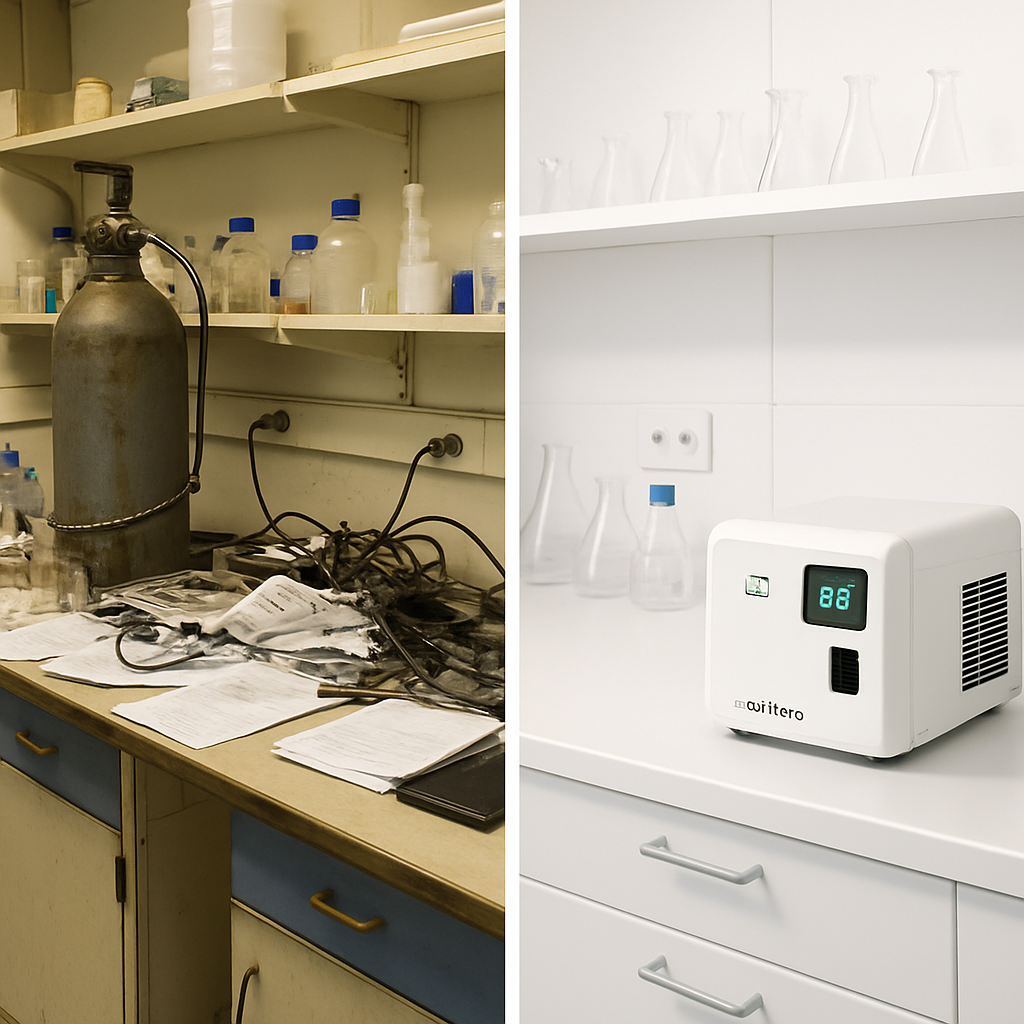
Sieves and Membranes: How Your Desktop ‘Harvests’ Nitrogen from Thin Air
Because air is mostly nitrogen, benchtop generators simply remove the remaining oxygen. Think of this process like an adjustable garden hose: filtering the stream to be perfectly clean means it naturally flows slower. The purity-to-flow trade-off, combined with your required nitrogen purity levels for chromatography, determines how the machine actually separates the gas.
Inside, two microscopic “coffee filters” do the heavy lifting:
- Pressure swing adsorption technology: Operating like a pressurized sponge, PSA traps oxygen while letting pure gas pass. It delivers ultra-high purity nitrogen for LC-MS and highly sensitive equipment.
- Membrane separation: This method pushes air through a bundle of porous tubes where oxygen escapes through the sides, making it ideal when you need a fast, moderate-purity flow.
Matching the right method to your daily workflow prevents you from overpaying for unnecessary performance. Once you lock in that perfect balance, the financial benefits of ditching heavy gas cylinders become impossible to ignore.
The 12-Month Payoff: Slashing Costs and Footprint with On-Site Systems
Renting heavy metal tanks drains your budget while cluttering your workspace. A standard nitrogen generator vs gas cylinder cost analysis reveals that making your own gas typically pays for itself in just 12 months. Reducing laboratory operational costs with gas generation permanently eliminates delivery fees, expensive tank rentals, and the endless headache of scheduling emergency refills.
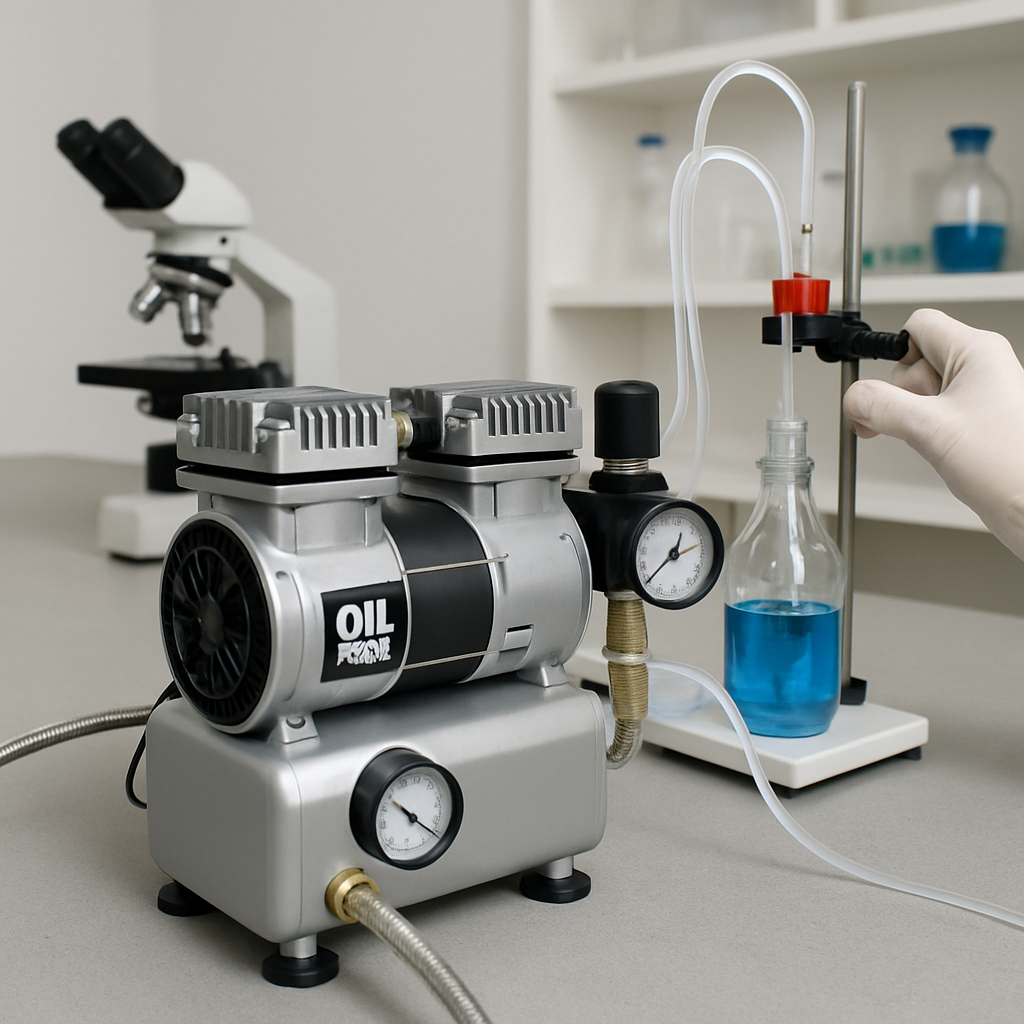
To actually harvest this unlimited gas, your system needs a steady push of clean air, requiring proper oil-free air compressor integration. Why must it be oil-free? Even a microscopic drop of mechanical lubricant from a standard compressor can contaminate your gas stream and ruin highly sensitive experiments.
Keeping this pristine setup running is incredibly easy. A basic maintenance checklist for analytical gas systems takes mere minutes:
- Check the filters: Swap them out annually, exactly like a standard home water filter.
- Drain the compressor: Empty any condensation to prevent internal moisture buildup.
- Inspect the vents: Ensure no dust or clutter blocks the machine’s cooling airflow.
Mastering these straightforward upkeep tasks perfectly prepares you to establish a permanent, onsite solution.
Securing a Sustainable Gas Supply
You no longer need heavy cylinders. To find the best onsite nitrogen systems for small laboratories, simply check your instrument manual for specific flow rate requirements for analytical instruments (usually L/min or scfh). Then, assess your desk space to ensure a perfect fit.
Matching these specifications enables a smooth transition to sustainable laboratory gas solutions. By bringing production in-house, your available lab space transforms into a reliable, endless supply of on-demand gas.