# How Does a Nitrogen Generator Work: PSA vs Membrane Explained
In various industries, nitrogen is an essential gas used for a myriad of applications. From food packaging to pharmaceuticals, nitrogen ensures product quality and safety. But how is nitrogen generated on-site? Understanding the different nitrogen generator types is crucial for selecting the right system for your needs. This article explains how industrial nitrogen generators work, focusing on Pressure Swing Adsorption (PSA) and Membrane systems.
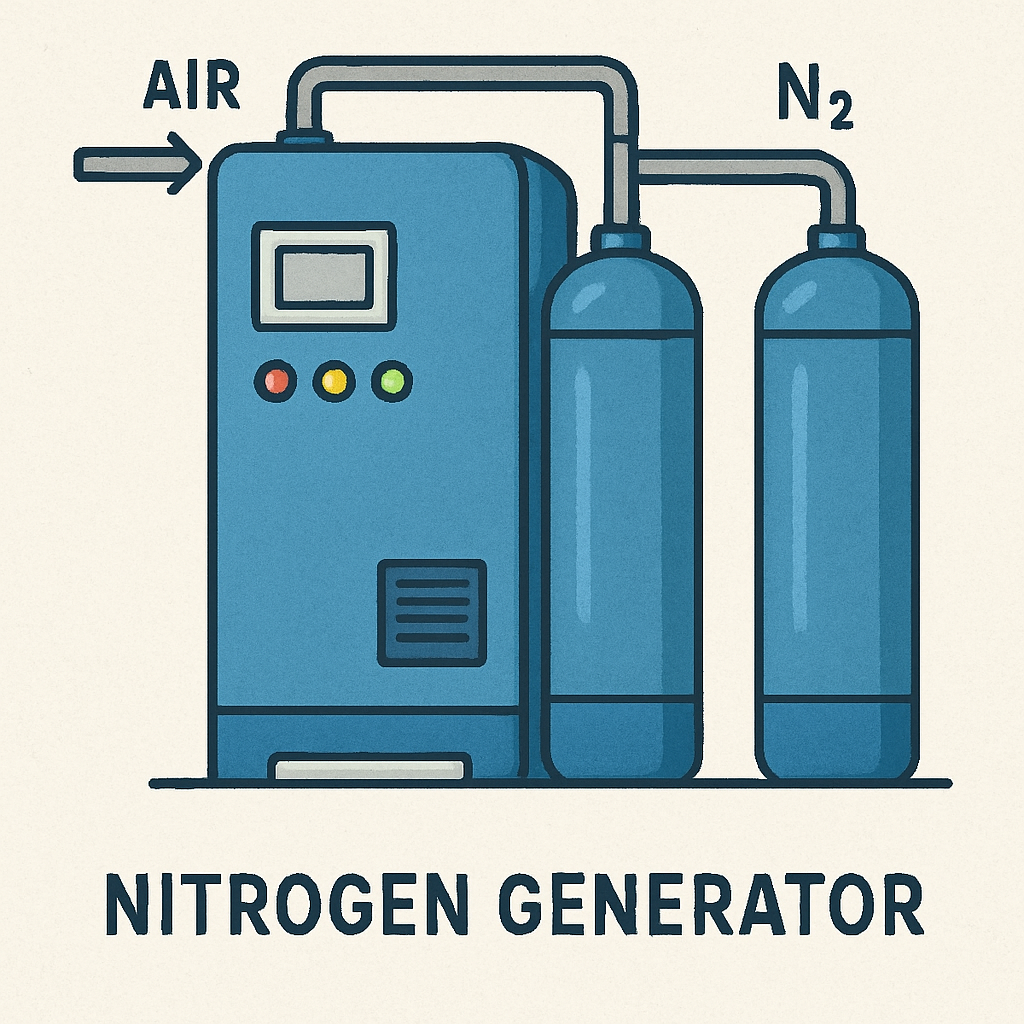
What is a Nitrogen Generator?
A nitrogen generator is a device that separates nitrogen molecules from the other gases in the air to produce high-purity nitrogen gas. It provides a reliable and cost-effective way to generate nitrogen on-site rather than relying on gas cylinders or liquid nitrogen deliveries.
Why Use a Nitrogen Generator?
Industries prefer nitrogen generators because they offer a continuous supply of nitrogen, reduce transportation costs, and eliminate the risks associated with handling high-pressure cylinders. Moreover, nitrogen generator systems are environmentally friendly as they reduce the carbon footprint associated with gas deliveries.
Types of Nitrogen Generators
There are two main types of nitrogen generators: Pressure Swing Adsorption (PSA) and Membrane. Each type has its own unique process and benefits.
Pressure Swing Adsorption (PSA) Nitrogen Generators
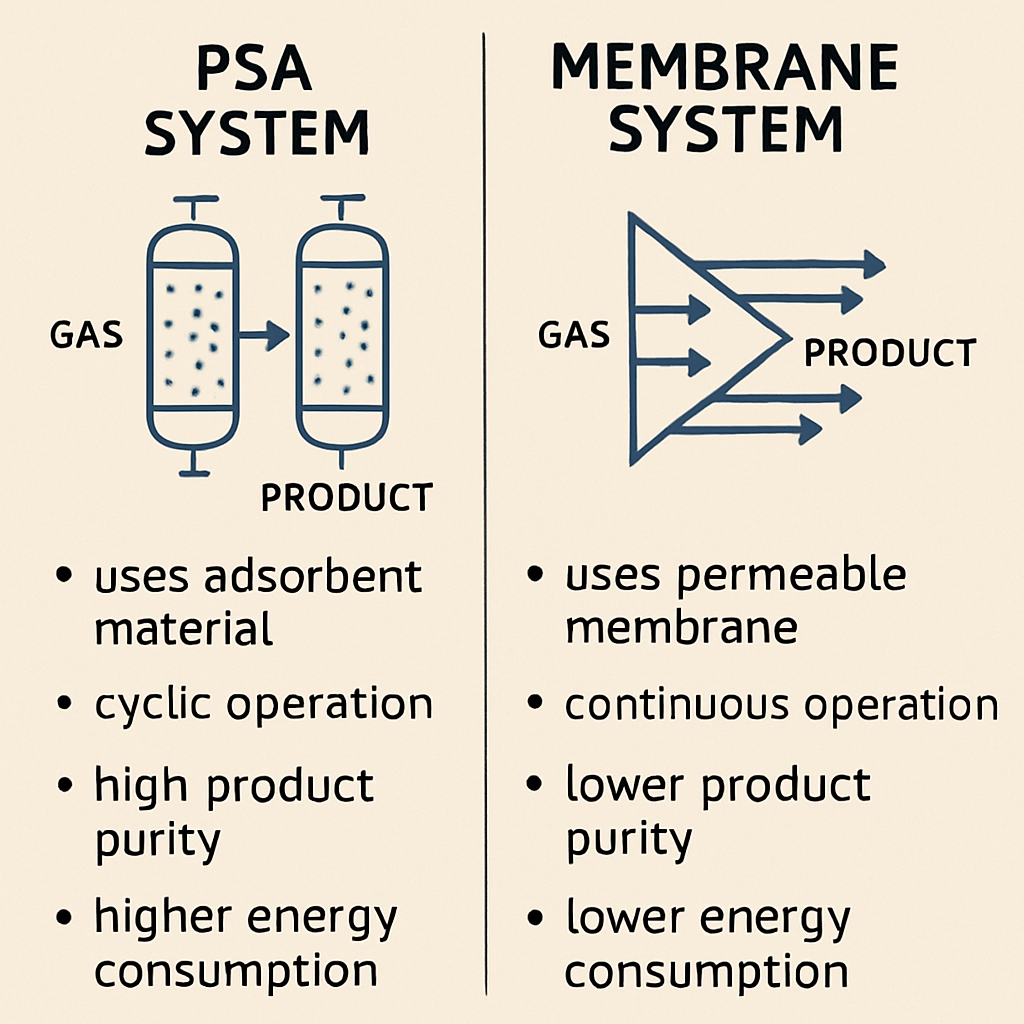
PSA nitrogen generators use a two-tower system filled with Carbon Molecular Sieve (CMS). Here’s how they work:
- Air Compression and Filtration: Compressed air is passed through a series of filters to remove contaminants such as oil, water, and dust particles.
- Adsorption Phase: The clean, compressed air enters the first tower where the CMS adsorbs oxygen, carbon dioxide, and other trace gases, allowing nitrogen to pass through as the primary gas.
- Desorption Phase: While the first tower is in the adsorption phase, the second tower undergoes desorption. The CMS releases the adsorbed gases into the atmosphere, regenerating the CMS for the next cycle.
- Switching: The system switches between the two towers, ensuring a continuous flow of nitrogen.
Benefits of PSA Nitrogen Generators
- High Purity: PSA systems can produce nitrogen with purities up to 99.999%.
- Flexibility: Ideal for varying flow demands, allowing for adjustable nitrogen purity levels.
- Reliability: PSA generators have a long lifespan and require minimal maintenance.
Membrane Nitrogen Generators
Membrane nitrogen generators use a different principle for nitrogen production. They employ a bundle of hollow fibers made from semi-permeable materials.
- Air Compression and Filtration: Similar to PSA systems, the air is compressed and filtered to remove contaminants.
- Separation Process: The filtered air passes through the hollow fibers. Oxygen, carbon dioxide, and water vapor permeate through the membrane walls faster than nitrogen, which remains in the center of the fibers.
- Nitrogen Collection: The nitrogen-enriched gas exits the membrane module as the final product.
Benefits of Membrane Nitrogen Generators
- Compact Design: Membrane systems are compact and space-saving.
- Ease of Use: Simple setup with fewer moving parts, reducing maintenance needs.
- Cost-Effective for Low Purity Needs: Suitable for applications requiring nitrogen purity up to 99.5%.
 by Simone Hutsch (https://unsplash.com/@heysupersimi)
Choosing Between PSA and Membrane Generators
Selecting the right nitrogen generator depends on several factors including purity requirements, space availability, and budget constraints.
Key Considerations
- Purity Requirements: If your application demands very high nitrogen purity, a PSA generator is the better choice. For applications with lower purity needs, a membrane system may suffice.
- Space Constraints: Membrane generators are more compact, making them ideal for facilities with limited space.
- Budget: Consider both the initial investment and the long-term operational costs. Membrane systems often have lower upfront costs but may not achieve the same purity levels as PSA systems.
- Maintenance: PSA systems require periodic maintenance of CMS and valves, whereas membrane systems have fewer maintenance needs due to fewer moving parts.
Applications of Nitrogen Generators
Both PSA and membrane nitrogen generators find applications across diverse industries.
Food and Beverage Industry
Nitrogen is used to displace oxygen in food packaging, preventing oxidation and spoilage. This extends the shelf life of perishable goods.
Pharmaceutical Industry
In pharmaceuticals, nitrogen is critical for maintaining sterile environments and preventing contamination in drug manufacturing processes.
Electronics Manufacturing
Nitrogen is used for creating inert atmospheres during the production of electronic components, ensuring high-quality and defect-free products.
Conclusion
Understanding how nitrogen generators work and the differences between PSA and membrane systems is essential for making an informed decision. Each type of generator has its own strengths and is suited to different applications and industrial needs. By considering factors such as purity requirements, space, and budget, you can select the most appropriate nitrogen generator system for your operations.
Investing in the right nitrogen generation technology not only ensures a steady supply of nitrogen but also enhances operational efficiency and cost savings in the long run.