Have you ever wondered why a bag of potato chips stays crisp for months? The secret is usually pure nitrogen gas, which prevents spoilage by displacing oxygen. Science tells us that the air you are breathing right now is already 78% nitrogen, simply waiting to be captured.
Historically, businesses purchased this gas in heavy steel tanks, but relying on truck deliveries creates unnecessary costs and logistical headaches. By switching to industrial on-site gas production, facilities can stop buying what nature provides for free and simply harvest nitrogen from the surrounding room.
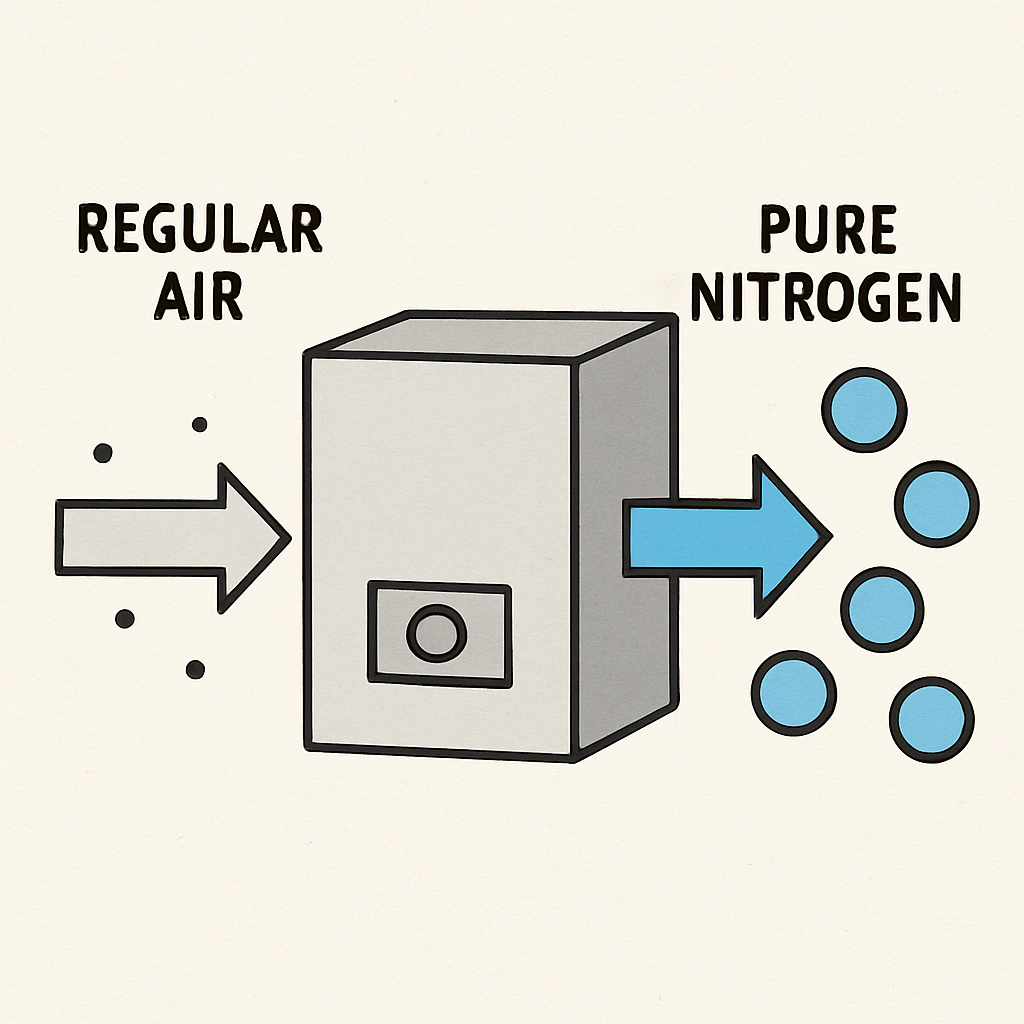
A nitrogen machine makes this possible by acting as a high-tech sorter. It effectively filters out oxygen molecules to leave only the pure gas behind. From food packaging plants to a local shop using an automotive nitrogen generator for tires, these systems turn ordinary air into a valuable tool.
Why Nitrogen Outperforms Regular Air in Tires and Packaging
Oxygen is chemically aggressive—it turns iron into rust and fresh guacamole brown. Nitrogen, by contrast, is an “inert” gas, meaning it refuses to react with other materials. This is why nitrogen purity for food packaging is so critical; by swapping out the air in a bag of chips for nitrogen, manufacturers stop the process of oxidation in its tracks, ensuring the food stays crisp rather than going rancid.
Mechanics prefer a nitrogen generator for tires because of a simple physical property: size. While rubber looks solid to the naked eye, it is actually porous enough for gas to slowly leak out over time. Nitrogen molecules are slightly larger than oxygen molecules, making it much harder for them to squeeze through the tire walls. This leads to stable pressure and better fuel economy without constant refills.
Beyond just displacing oxygen, the benefits of on-demand gas generation include superior quality control compared to standard air. A dedicated machine delivers three distinct advantages:
- Inertness: It creates a safety blanket that prevents fires and stops food spoilage.
- Dryness: It eliminates the moisture found in compressed air that corrodes metal rims.
- Retention: Larger molecules act as a better barrier against leaks.
With these properties established, we can examine the technology inside the box: the molecular sieve.
The ‘Molecular Sieve’ Explained: How PSA Machines Sort Gas
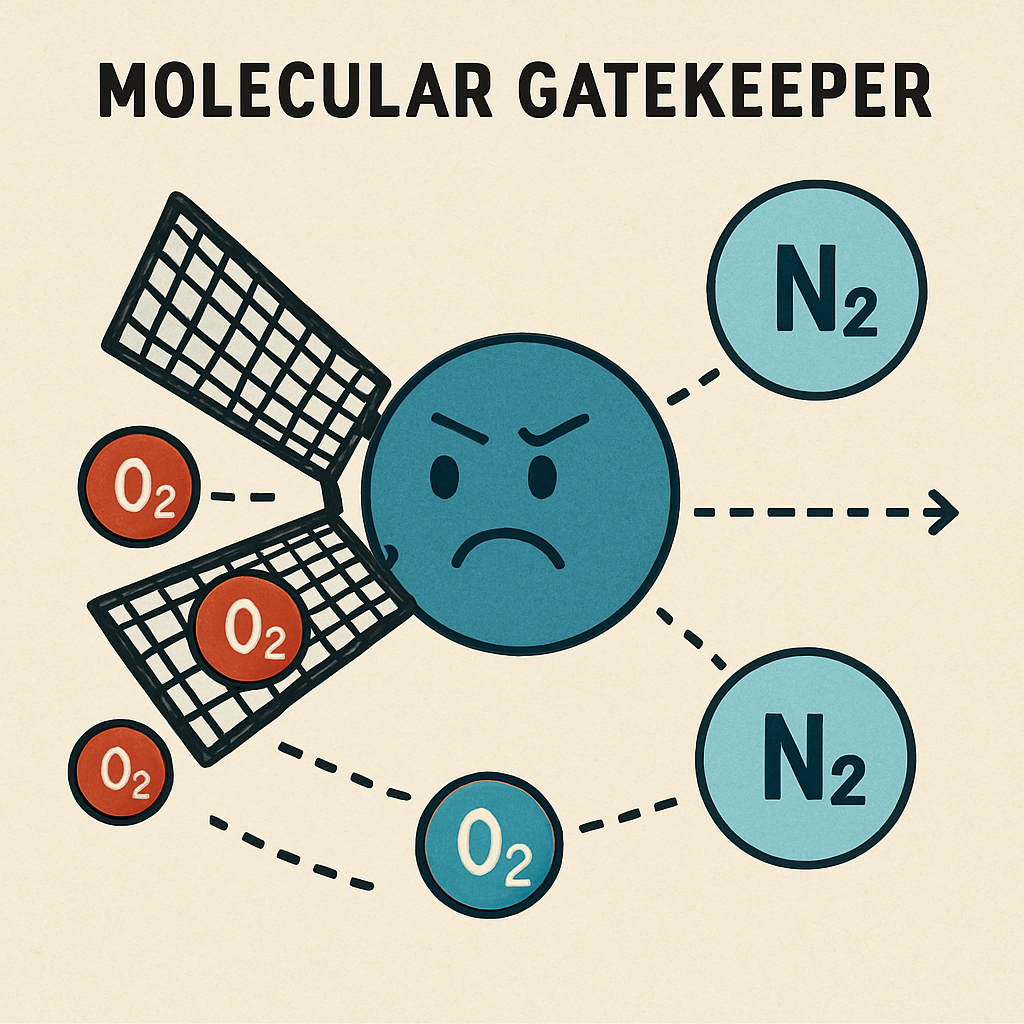
Nitrogen generators function less like manufacturing plants and more like specialized sorting systems. These machines don’t create nitrogen from scratch; they simply strip away the unwanted oxygen from the air already surrounding us. Inside the unit lies a canister filled with pellets called a Carbon Molecular Sieve (CMS), which acts remarkably like a smart charcoal filter designed to capture specific molecules while letting others pass.
Under high pressure, this sieve exploits a chemical “stickiness” known as adsorption. Oxygen molecules are slightly smaller and highly attracted to the porous surface of the carbon beads, effectively getting stuck in the trap like metal shavings on a magnet. Meanwhile, the nitrogen molecules flow right past the trapped oxygen and into a storage tank, ready for use. Because these beads do the heavy lifting, monitoring their condition is the most critical step in maintaining the system’s longevity.
Eventually, the carbon beads become completely saturated with oxygen and cannot hold any more. This is where the pressure swing adsorption process gets its name: the machine automatically “swings” the pressure down, instantly releasing the trapped oxygen back into the room as harmless waste gas. By alternating between two tanks—one filtering while the other regenerates—the system provides a continuous stream of pure gas without interruption.
While PSA technology is the gold standard for applications requiring ultra-high purity (up to 99.999%), it isn’t the only method available for separating air. For businesses that prioritize speed and volume over extreme precision, a different technology works less like a magnet and more like a bundle of hollow spaghetti.
Membrane Technology: The ‘Coffee Filter’ for High-Flow Gas
Imagine blowing air through a bundle of thousands of microscopic straws where the walls are actually permeable membranes. This is the heart of membrane separation. While PSA technology dominates high-purity applications, membrane technology offers a different approach: instead of trapping molecules, membranes separate them by speed. Oxygen and water vapor are “fast gases” that quickly leak through the fiber walls and escape, while nitrogen is a “slow gas” that travels the full length of the fiber to the outlet.
Because this process relies on simple physics rather than complex valve switching, these high-flow nitrogen gas systems are incredibly robust. They sacrifice a small amount of purity for simplicity, making them ideal for tasks like tire inflation or fire prevention where 99% purity is plenty.
For businesses seeking low-maintenance solutions, membrane generators offer distinct advantages:
- Compact size fitting in tight spaces
- No moving parts to wear out
- Instant start-up time
With these energy-efficient air separation units effectively removing the need for external suppliers, the only question remaining is the bottom line: does making your own gas actually cost less than buying it?
Cutting Costs: Why Making Your Own Nitrogen Beats Tank Deliveries
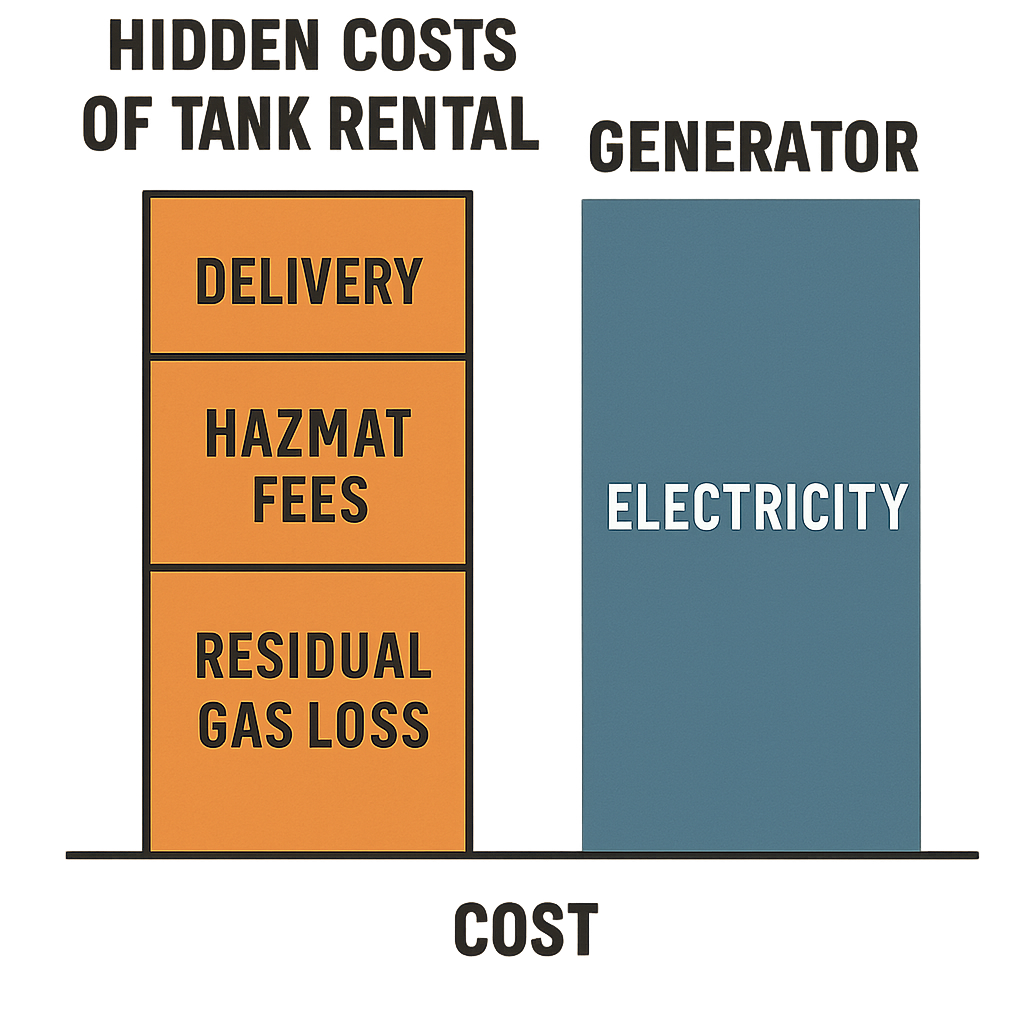
Switching to on-site generation often feels like cutting the cord on an expensive subscription service. When you rely on delivered gas, the price per cubic foot is only a fraction of the total bill; you are also paying for truck delivery, hazmat fees, and daily rental charges that accrue even when the bottles sit unused. By installing a generator, the ongoing expense drops primarily to electricity, which significantly reduces overhead and creates a predictable monthly budget.
There is also a surprising source of waste called “residual gas loss” that most businesses overlook. High-pressure cylinders require a minimum amount of pressure to prevent outside air from entering, meaning you are forced to send back tanks that are still about 10% full, yet you pay for the whole amount. This efficiency serves as a major deciding factor when choosing between liquid nitrogen and gas generators, ensuring every penny spent on energy actually produces usable gas rather than being returned to the supplier.
Beyond the balance sheet, removing heavy steel tanks creates a safer workspace by eliminating handling risks. Employees no longer need to wrestle with dangerous high-pressure cylinders, which is particularly valuable for busy shops using stationary nitrogen tire inflation systems. Once the initial investment is made, the system runs largely in the background, provided you follow a few basic rules to keep it humming.
A Simple Maintenance Checklist for Long-Term Efficiency
Just like a car engine needs clean fuel, a nitrogen generator demands clean intake air to function correctly. The internal material that separates the gas—known as the molecular sieve—is highly efficient but incredibly sensitive to pollution. If moisture or oil from your compressor sneaks inside, it effectively clogs the system like a wet sponge. Therefore, strict adherence to air quality requirements is the single most important factor for protecting your investment.
Keeping the system healthy doesn’t require complex engineering skills, just a commitment to checking the “gatekeeper” filters. A simple weekly maintenance routine prevents contaminants from ever reaching the sensitive core:
- Drain water traps to prevent moisture buildup in the feed tank.
- Check pre-filter indicators to ensure airflow remains strong.
- Inspect air compressor oil levels to stop accidental oil carryover.
- Verify purity sensors to confirm the output meets your standards.
Sticking to this routine can extend the life of your equipment by over a decade. Whether you are packaging food or relying on high-purity nitrogen generation for laser cutting, ensuring dry, clean intake air guarantees consistent performance. With the maintenance basics under control, you are ready to map out your specific production needs.
Achieving Gas Independence: Your Steps to On-Site Efficiency
By moving past the mystery of industrial gas, it becomes clear how a nitrogen machine simply filters the air you already breathe. Instead of relying on unpredictable delivery trucks and heavy cylinders, on-site generation offers a safe, limitless supply. Whether you are preserving food products or maintaining tires, the ability to “make” rather than “buy” represents a powerful shift in control and efficiency.
Start by checking your current gas invoices for hidden rental fees or delivery charges. These costs often reveal exactly where an automotive nitrogen generator pays for itself. You are now equipped to evaluate your needs, ask suppliers confident questions about purity, and turn a monthly expense into a permanent asset.
Contact us for Nitrogen Machine +86 193 0864 1458