What Is Nitrogen Gas and Why Is It Used in Food Packaging?
Nitrogen gas is an inert, colorless, and odorless gas widely used in food and beverage packaging as a natural, non-chemical preservative. Its primary role is to displace oxygen inside packages.
Why remove oxygen?
Oxygen triggers oxidation, a reaction that affects fats, oils, and sugars—causing rancidity, color changes, and spoilage. The browning of a bitten apple is a simple example of oxidation in action.
By replacing oxygen in the packaging atmosphere, nitrogen helps:
- Prevent oxidation and rancidity
- Preserve taste, aroma, texture, and nutrients
- Extend product shelf life
- Reduce microbial growth (for aerobic bacteria)
Foods that commonly rely on nitrogen flushing include meats, seafood, nuts, coffee, snacks, produce, and ready-to-eat meals.
Other Applications of Nitrogen in Food Processing
You’ve probably noticed that a new bag of potato chips looks half-full. That “air” is actually pure nitrogen.
During packaging, nitrogen is used to:
- Push out oxygen from the bag
- Create a protective cushion to prevent chip breakage
- Maintain crispness and overall product quality
Beyond snack packaging, nitrogen is also used for:
- Headspace replacement
- Fluffing and volume increase
- Blanketing of food-processing lines to prevent combustion
- Fumigation and pest control
- Preventing oxidation during mixing and storage
Nitrogen in Beverage Processing
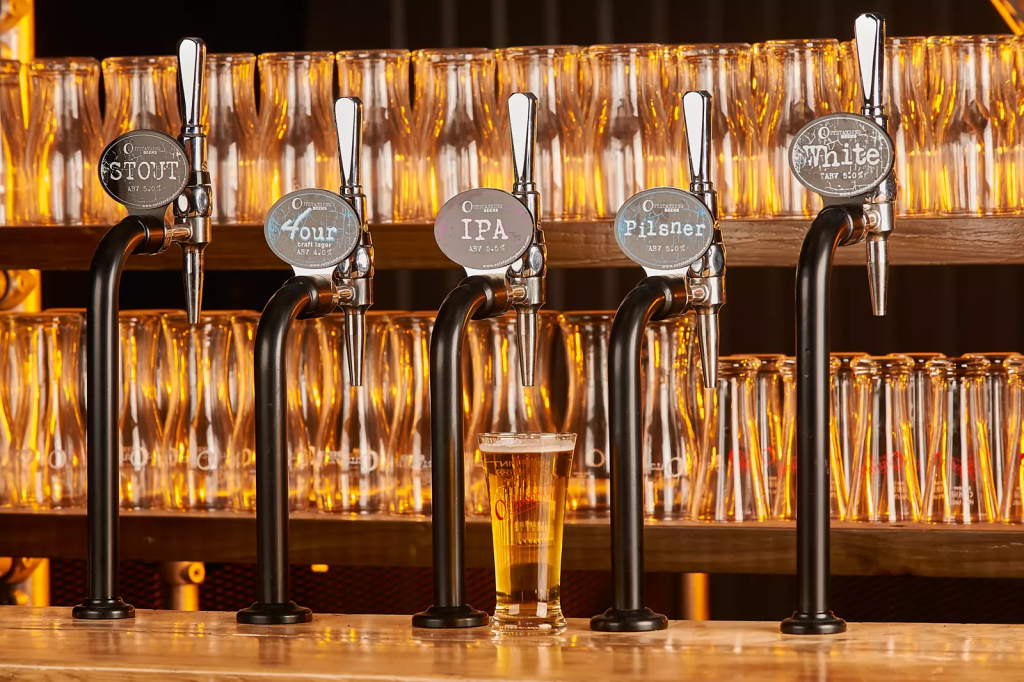
Nitrogen plays a critical role in wine, beer, coffee, and other beverage production workflows.
Wine Production
Nitrogen helps winemakers:
- Retain color, aroma, and acidity
- Prevent oxidation during storage and transfer
- Maintain product consistency
- Improve bottle hygiene
Because nitrogen is almost insoluble in liquid, it is ideal for transferring wine without contamination. Bottles are also washed and dried with nitrogen, providing faster drying due to the gas’s extremely low moisture content. Before corking, bottles are purged to remove residual air.
Other Beverage Applications
- Sparging liquids to remove dissolved oxygen
- Beer dispensing and pressurization
- Beer bottling and canning
- Purging tanks and pipelines
How Is Nitrogen Produced?
The air around us contains 78% nitrogen. To obtain higher purity nitrogen, manufacturers separate nitrogen molecules from other gases in compressed air. This is typically achieved through:
- PSA (Pressure Swing Adsorption)
- Membrane nitrogen generation
Both technologies provide clean, dry, and consistent nitrogen for food and beverage applications.
Why Generate Nitrogen In-House?
More companies are switching from delivered cylinders to on-site nitrogen generators because they offer:
✔ Continuous supply—no cylinder shortages
No dependence on third-party deliveries and no downtime.
✔ Lower long-term cost
Eliminates recurring cylinder rental, refills, transport fees, and manual handling.
✔ Flexible purity and flow control
Adjust purity levels from 95% to 99.999% depending on application needs.
✔ Improved safety and space savings
No need to store large quantities of high-pressure nitrogen bottles (full or empty).
✔ Better production efficiency
Nitrogen is always available when you need it, supporting stable output for food and beverage manufacturers.
If you are considering generating your own nitrogen, talk with a compressed-air and gas professional to choose the right PSA or membrane system.
Learn More About Our Nitrogen Generators
Nitrogen plays a vital role across food, beverage, and industrial applications. Our free e-book explains why on-site nitrogen generation is becoming the global trend and how your business can benefit from it.
Ready to explore your options or looking for a custom solution?
👉 Click below to contact our team and discuss the best nitrogen generator for your production needs.