Introduction: Why industrial nitrogen generators is Revolutionizing Industries
Industrial nitrogen generator have become a critical technology across manufacturing, food packaging, electronics, and chemical processing. By producing high-purity nitrogen gas on-demand, these systems eliminate dependency on delivered gas cylinders and offer unprecedented control, cost savings, and operational efficiency. This comprehensive guide explores everything you need to know about industrial nitrogen generation technology.
Catalogue
- What is an Industrial Nitrogen Generator?
- How Nitrogen Generators Work: Two Primary Technologies
- Key Applications Across Industries
- Benefits of On-Site Nitrogen Generation
- Critical Selection Factors
- System Components & Configuration
- Maintenance & Operational Best Practices
- Cost Analysis: ROI Calculation Framework
- Future Trends & Innovations
- Choosing the Right Supplier: Key Questions
- Implementation Checklist
- Conclusion: Making the Transition to On-Site Generation
What is an Industrial Nitrogen Generator?
An industrial nitrogen generator is a system that separates nitrogen gas from compressed air, typically delivering purity levels ranging from 95% to 99.999%. Unlike traditional nitrogen supply methods (cylinders or liquid nitrogen), these generators produce nitrogen gas continuously at the point of use.
How Nitrogen Generators Work: Two Primary Technologies
1. Pressure Swing Adsorption (PSA) Technology
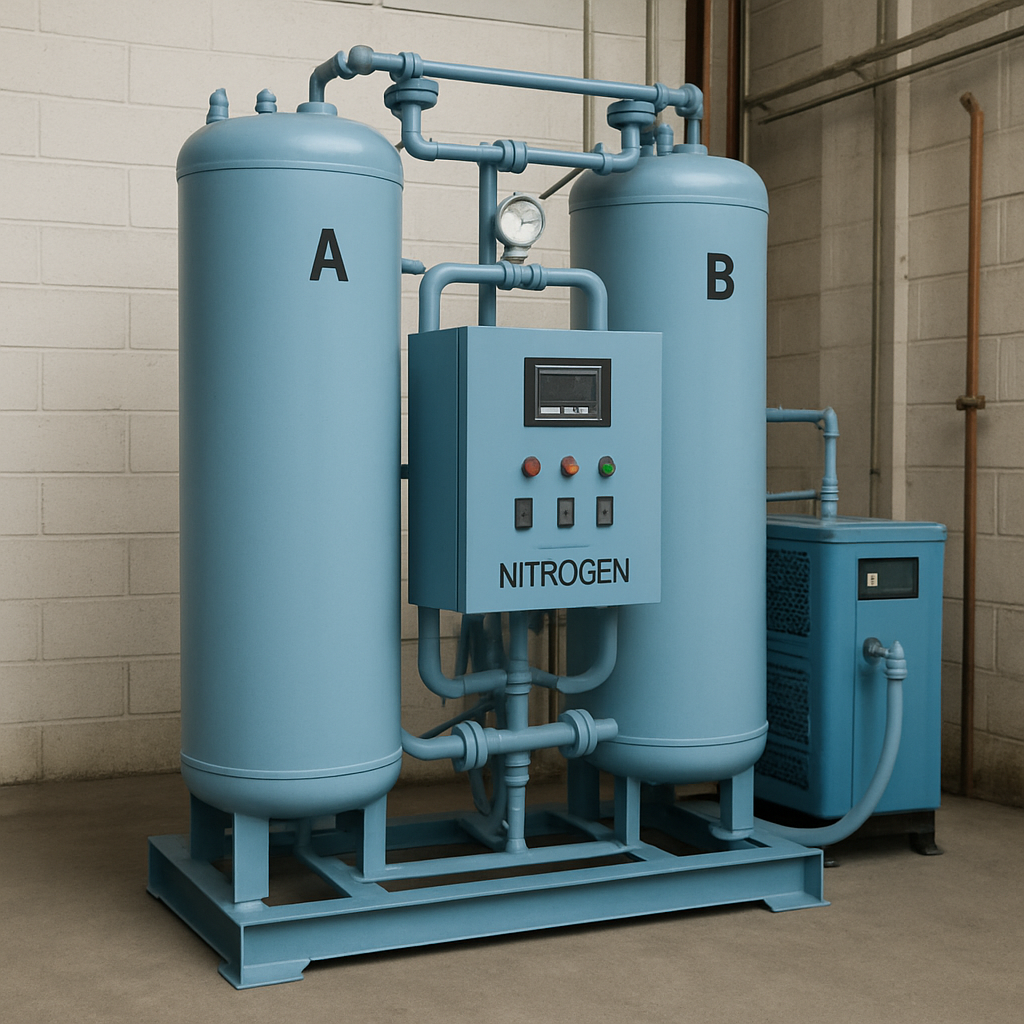
PSA generators use carbon molecular sieve (CMS) material to separate nitrogen from oxygen and other gases. The process operates through two towers:
- Adsorption Phase: Compressed air passes through one tower where CMS adsorbs oxygen, allowing nitrogen to pass through
- Regeneration Phase: The saturated tower depressurizes, releasing captured oxygen to atmosphere
- System Advantage: Rapid cycle times (typically 60-120 seconds), excellent for high-flow applications
2. Membrane Separation Technology
Membrane generators utilize hollow-fiber polymer membranes with selective permeability:
- Separation Principle: Oxygen, water vapor, and CO2 permeate through membrane walls faster than nitrogen molecules
- Continuous Operation: Single-stream process without cycling valves or moving parts
- Best Applications: Lower purity requirements (95-99.5%), compact installations, and applications with limited maintenance access
Key Applications Across Industries
Manufacturing & Metalworking
- Laser Cutting: Prevents oxidation for cleaner cuts (typically 99.5-99.9% purity)
- Sintering & Heat Treating: Creates protective atmospheres in furnaces
- Electronics Manufacturing: Wave soldering and component packaging
Food & Beverage Industry
- Modified Atmosphere Packaging (MAP): Extends shelf life (99-99.9% purity)
- Sparging & Blanketing: Prevents oxidation in processing and storage
- Beverage Dispensing: Pressurizes kegs and tanks
Pharmaceutical & Healthcare
- Pneumatic Conveying: Prevents product contamination
- Analytical Instrumentation: Carrier gas for chromatography (often requiring 99.999% purity)
- Medical Device Manufacturing: Clean room applications
Chemical & Petrochemical
- Inerting & Purging: Creates safe environments for flammable materials
- Tank Blanketing: Prevents vapor formation and oxidation
- Pipeline Purging: Safe maintenance and commissioning procedures
Benefits of On-Site Nitrogen Generation
1. Significant Cost Reduction
- Eliminate cylinder rental fees and delivery charges
- Reduce nitrogen costs by 40-80% compared to delivered gas
- Lower transportation and handling expenses
2. Enhanced Supply Reliability
- Eliminate delivery delays and supply chain disruptions
- Continuous production unaffected by weather or logistics issues
- Consistent purity levels tailored to your specific needs
3. Improved Safety & Environmental Impact
- Reduce onsite cylinder handling and storage risks
- Minimize carbon footprint by eliminating delivery transportation
- Lower energy consumption compared to liquid nitrogen evaporation
4. Operational Flexibility
- Scalable systems that grow with your business
- Adjustable purity settings for different applications
- Compact designs with minimal footprint requirements
Critical Selection Factors
Purity Requirements
- Food Grade: 95-99.9% (depending on application)
- Industrial Grade: 99.5-99.9%
- High Purity: 99.9-99.999%
- Ultra High Purity: 99.999%+ (requires additional purification)
Flow Rate Considerations
- Calculate peak demand: Consider simultaneous processes
- Include safety margins: +10-20% for future expansion
- Account for purification losses: Especially for high-purity applications
Compressed Air Requirements
- Quality: Oil-free compressed air recommended (Class 0)
- Pressure: Typically 100-150 PSIG for PSA systems
- Dew Point: Adequate drying to prevent CMS or membrane damage
Space & Installation Factors
- Footprint: Membrane systems generally more compact
- Ventilation: Adequate airflow for heat dissipation
- Noise Levels: PSA systems may require acoustic enclosures in sensitive areas
System Components & Configuration
Essential Components
- Air Compressor: Provides clean, dry compressed air
- Air Treatment System: Filters, dryers, and particulate removal
- Nitrogen Generator: PSA or membrane separation unit
- Buffer Tank: Ensures stable pressure and flow
- Monitoring System: Purity analyzers, flow meters, and pressure gauges
- Distribution System: Piping to points of use
Optional Enhancements
- Oxygen Analyzers: Continuous purity monitoring
- Automated Control Systems: PLC-based operation with remote monitoring
- Backup Systems: Cylinder or liquid nitrogen backup for critical applications
- Energy Recovery: Heat exchange systems for improved efficiency
Maintenance & Operational Best Practices
Regular Maintenance Schedule
- Daily: Check pressure differentials and purity readings
- Weekly: Inspect pre-filters and drain condensate
- Monthly: Change particulate filters as needed
- Annually: Replace CMS (PSA) or membrane cartridges, typically every 5-10 years
Performance Monitoring
- Track energy consumption per unit of nitrogen produced
- Monitor purity consistency with calibrated analyzers
- Document maintenance activities for predictive scheduling
Common Issues & Troubleshooting
- Purity degradation: Check for air leaks, CMS exhaustion, or membrane damage
- Reduced flow rates: Inspect filters and verify compressor performance
- Pressure fluctuations: Examine valves and check for restrictions
Cost Analysis: ROI Calculation Framework
Initial Investment Components
- Generator system purchase
- Installation and commissioning
- Necessary air compressor upgrades
- Piping and distribution modifications
Operational Cost Factors
- Electricity consumption (compressor + generator)
- Maintenance and consumables
- Labor for monitoring and maintenance
Future Trends & Innovations
1. Energy Efficiency Improvements
- Variable frequency drive (VFD) compressors
- Heat integration systems
- Advanced membrane materials with lower pressure requirements
2. Smart Monitoring & IoT Integration
- Remote diagnostics and predictive maintenance
- Automated purity adjustment based on demand
- Integration with plant energy management systems
3. Modular & Scalable Designs
- Plug-and-play modules for easy expansion
- Containerized solutions for temporary applications
- Hybrid systems combining PSA and membrane technologies
4. Sustainability Developments
- Renewable energy integration
- Carbon capture from waste streams
- Recyclable and longer-life materials
Choosing the Right Supplier: Key Questions
Technical Capabilities
- What is your experience with applications in my industry?
- Can you provide references from similar installations?
- What purity and flow guarantees do you offer?
Support & Service
- What is included in the warranty?
- What is your response time for service calls?
- Do you offer remote monitoring capabilities?
- Are training and documentation provided?
Financial Considerations
- What are the total lifecycle costs?
- Do you offer leasing or financing options?
- What is the expected maintenance cost over 5-10 years?
Implementation Checklist
- Conduct detailed application analysis
- Perform site survey and utility assessment
- Obtain multiple quotations with detailed specifications
- Validate supplier references and certifications
- Plan installation during scheduled downtime
- Develop comprehensive operator training program
- Establish maintenance schedule and spare parts inventory
- Implement monitoring and performance tracking system
Conclusion: Making the Transition to On-Site Generation
Industrial nitrogen generators represent a strategic investment that delivers substantial operational and financial benefits. By understanding the technology options, carefully assessing your specific requirements, and partnering with an experienced supplier, you can implement a system that provides reliable, cost-effective nitrogen supply for years to come.
The shift from delivered nitrogen to on-site generation is no longer just an economic decision—it’s a strategic move toward greater operational control, sustainability, and supply chain resilience. As technology continues to advance and energy efficiency improves, the case for on-site nitrogen generation becomes increasingly compelling for businesses of all sizes across virtually every industry.