In the realm of industrial fire safety, nitrogen fire suppression systems have emerged as a reliable and effective solution. These systems use nitrogen, a naturally occurring gas, to extinguish fires, protecting valuable assets and ensuring the safety of personnel. In this article, we will explore the key benefits, applications, and operational principles of nitrogen fire suppression systems.
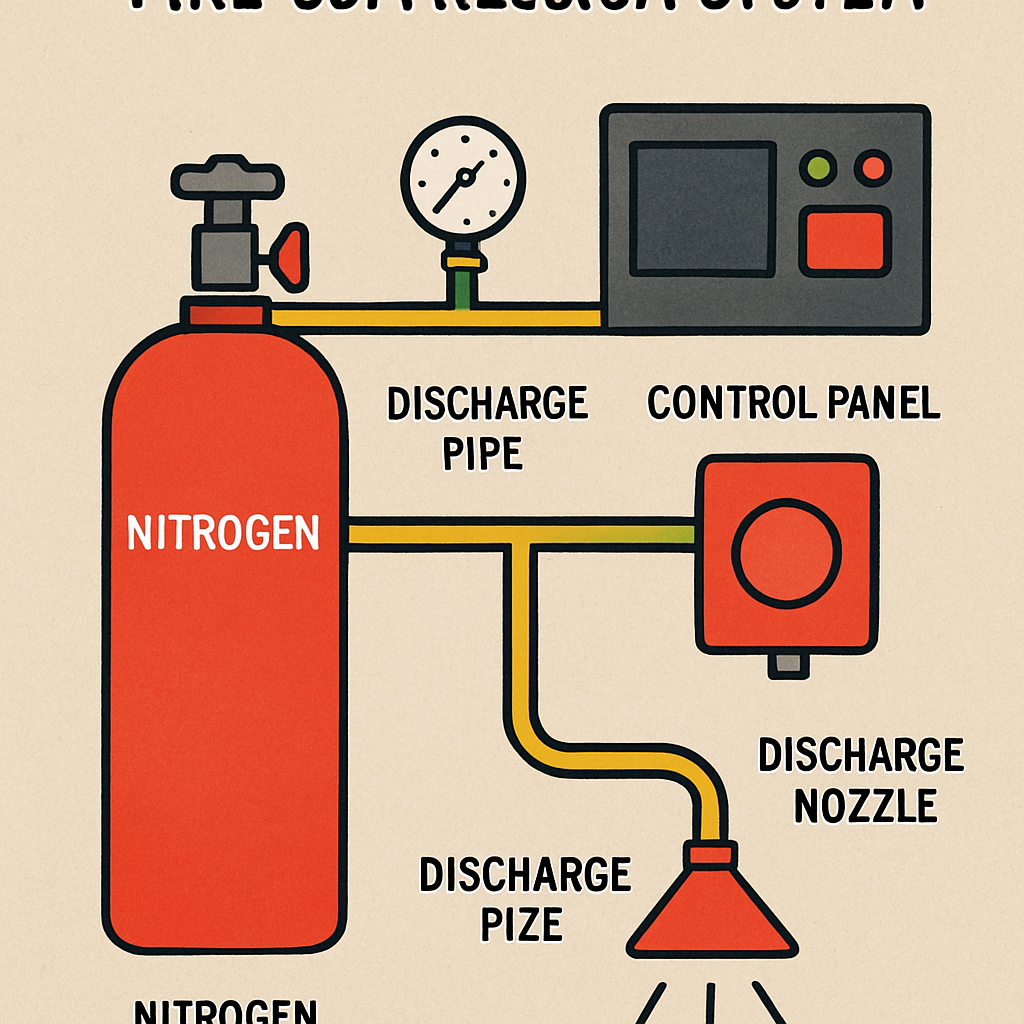
A nitrogen fire suppression system is a type of fire extinguishing system that uses nitrogen gas to suppress and extinguish fires. Nitrogen is an inert gas, which means it does not support combustion. By displacing oxygen in the environment, nitrogen reduces the oxygen concentration to a level that cannot sustain a fire, effectively extinguishing it.
Key Benefits of Nitrogen Fire Suppression Systems
- Environmentally Friendly: Nitrogen is abundant in the atmosphere and does not contribute to ozone depletion or global warming. This makes nitrogen fire suppression systems an eco-friendly option.
- Non-Toxic: Unlike some chemical fire suppression agents, nitrogen is non-toxic and safe for use in occupied spaces. It poses no health risks to humans when used in appropriate concentrations.
- Effective on Various Fire Classes: Nitrogen systems can extinguish a wide range of fires, including those involving flammable liquids, electrical equipment, and combustible materials.
- Minimal Residue: As a gas, nitrogen leaves no residue behind, reducing the need for cleanup after a fire event. This is particularly beneficial in environments with sensitive equipment.
- Cost-Effective: Nitrogen is readily available and cost-effective, making these systems an economical choice for fire protection.
Applications of Nitrogen Fire Suppression Systems
Nitrogen fire suppression systems are versatile and can be deployed in various settings, including:
- Data Centers: Protecting sensitive electronic equipment from fire damage without leaving residue that could harm the equipment.
- Industrial Facilities: Safeguarding manufacturing processes and equipment from fire hazards.
- Archives and Museums: Preserving valuable documents and artifacts from fire damage while avoiding chemical residues.
- Power Plants: Ensuring the safety of critical infrastructure and minimizing downtime due to fire incidents.
- Marine Vessels: Providing fire protection on ships, where space is limited and corrosive residues are undesirable.
How Nitrogen Fire Suppression Systems Work
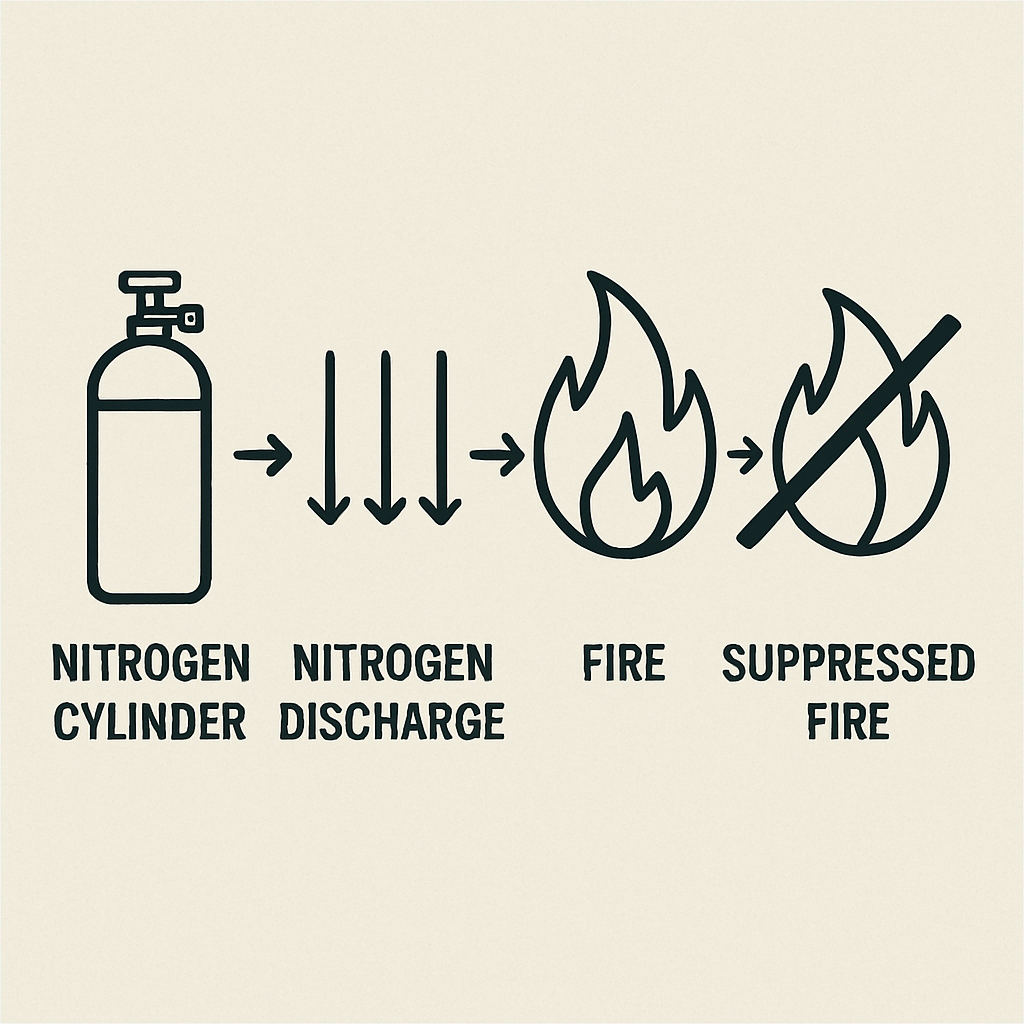
The operation of a nitrogen fire suppression system involves several key steps:
Detection
The system begins with the detection of a fire. This is typically achieved through smoke detectors, heat sensors, or flame detectors strategically placed throughout the protected area. Once a fire is detected, the system triggers an alarm to alert occupants and initiate the suppression process.
Activation
Upon fire detection, the nitrogen suppression system is activated. Valves connected to nitrogen storage cylinders open, allowing the gas to flow through a network of pipes and nozzles.
Discharge
The nitrogen is discharged into the protected area through nozzles designed to ensure even distribution. The rapid release of nitrogen quickly displaces oxygen, reducing its concentration to a level that cannot sustain combustion. This effectively extinguishes the fire.
Post-Fire Operations
After the fire is suppressed, the system may initiate ventilation to restore normal oxygen levels. The area can then be safely re-entered for inspection and cleanup, if necessary. Since nitrogen leaves no residue, the cleanup process is generally minimal.
Maintenance and Considerations
 by NOAA (https://unsplash.com/@noaa)
To ensure the reliability and effectiveness of a nitrogen fire suppression system, regular maintenance is essential. This includes:
- Inspection of Components: Regular checks of cylinders, valves, and nozzles to ensure they are in proper working condition.
- System Testing: Routine testing of detection and activation mechanisms to verify functionality.
- Refilling Cylinders: Ensuring that nitrogen cylinders are properly filled and ready for use.
- Updating System Design: As building layouts and occupancy change, the system design may need adjustments to maintain optimal coverage.
When considering a nitrogen fire suppression system, it is important to work with experienced professionals who can assess your specific needs and design a system tailored to your environment. Proper installation and maintenance are critical to the system’s performance in an emergency.
Conclusion
Nitrogen fire suppression systems offer a reliable, environmentally friendly, and effective solution for industrial fire safety. With their ability to protect various types of environments without leaving harmful residues, they are an excellent choice for many applications. By understanding the benefits and operational principles of these systems, you can make informed decisions to enhance fire safety in your facility.
In summary, whether you’re safeguarding sensitive electronics, preserving invaluable artifacts, or protecting critical infrastructure, nitrogen fire suppression systems provide peace of mind and robust fire protection. By investing in these systems and ensuring regular maintenance, you can help ensure the safety and continuity of your operations.