Despite decades of proven efficiency gains, compressed air heat recovery remains surprisingly uncommon in Mexico’s manufacturing sector. Is cost truly the main barrier, or are factories held back by misconceptions about complexity, integration, and priorities?
Compressed air is one of the most widely used utilities in modern industry—essential for food processing, pharmaceuticals, automotive manufacturing, packaging, and more. Yet it’s also one of the most energy-intensive. Up to 90% of the electrical energy used by an air compressor is converted into heat, and in most factories, that heat is simply released into the atmosphere.
For years, this has been an “open secret.” The technology needed to capture and reuse that heat is neither new nor complicated. In fact, the concept is straightforward: recover waste heat and convert it into hot water or warm air for use elsewhere in the plant. The energy is already being generated as a by-product—the real question is whether manufacturers choose to harvest it or waste it.
This contradiction lies at the heart of the issue. At a time when energy prices fluctuate and sustainability pressures intensify, a well-proven method of reducing operational costs and emissions continues to be overlooked, not because the technology is insufficient, but because of perception barriers.
Why Aren’t More Mexico Manufacturers Using Heat Recovery?
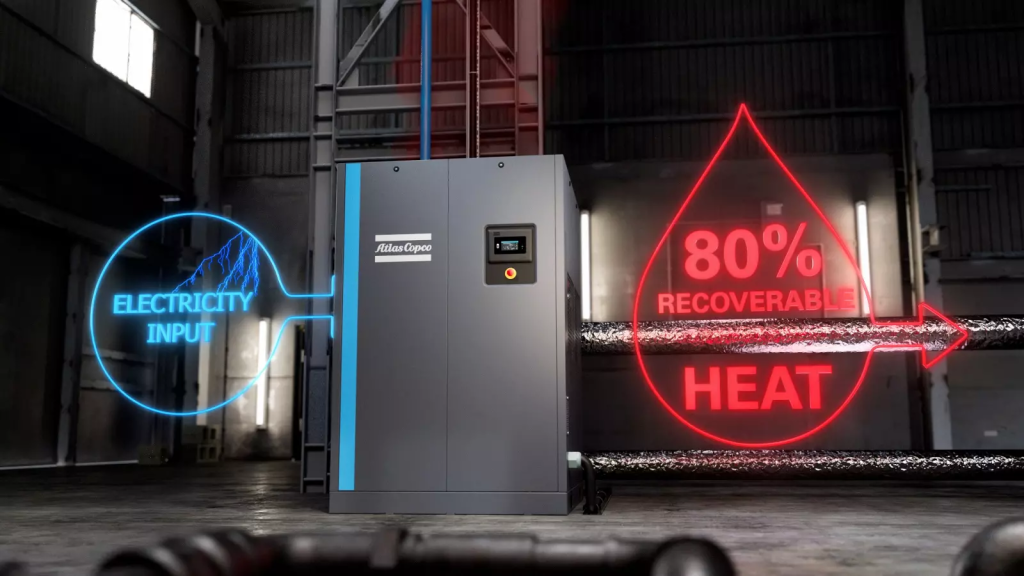
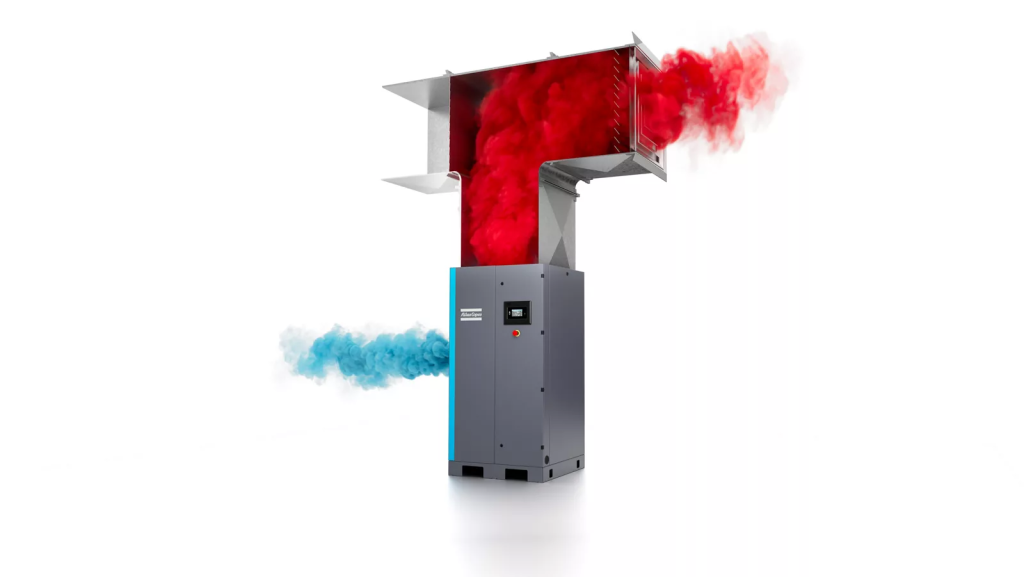
Heat recovery for compressors is not new. Water-cooled compressors have always been compatible with recovery systems, while air-cooled units can easily be fitted with ducting to redirect hot air into workspaces.
Over the past twenty years, manufacturers have significantly optimized these systems—they are more efficient, more compact, and more compatible with modern factory automation.
Yet adoption in Mexico lags behind regions like Brazil, Argentina, and other South American markets. There are standout examples—such as Greiner Packaging’s Mexico plant, which supplies waste heat to a nearby school—but they remain exceptions.
1. Uncertainty About Applicability
Many plant managers still wonder:
- Can recovered heat really integrate with existing boilers?
- Will it produce enough hot water to justify installation?
- Will installation cause downtime?
These concerns often reflect unfamiliarity rather than real limitations.
2. Perceived Economic Risk
Payback periods of 3–5 years are common. But factories with short planning cycles hesitate:
“What if we don’t operate long enough to see the return?”
The upfront investment feels risky to organizations that prioritize immediate production needs over long-term efficiency.
3. Limited Cross-discipline Expertise
Although the technology is mature, many compressed-air technicians have limited experience connecting compressor systems to hot-water circuits. These two engineering domains rarely overlap, and historically, little training existed to bridge them.
The result: heat recovery appears more complicated than it truly is.
4. Weak Policy Incentives
Past government programs offered grants for energy-recovery projects. Today, support is minimal. While companies must audit energy use, they are rarely required to act. Without incentives, many identified opportunities remain unimplemented.
Lessons From the Factory Floor
Perception—not technology—is the largest barrier.
To many managers, heat recovery feels like a “dark art”: risky, expensive, disruptive. In reality, the core principles are simple—capture heat from the cooling system or redirect warm air through ducts.
Large factories with multiple compressors require more design work, especially where redundancy or load sharing is involved. But with experienced partners, this complexity is manageable and predictable.
Real-World Example From a Mexico Food Manufacturer
A leading dessert producer recently upgraded to new oil-free compressors to enhance efficiency.
Results:
- USD 117,000 yearly electricity savings
- Additional savings through heat-recovery integration
(used for boiler preheating and wash-down processes)
The heat-recovery component reduced overall project payback to just 3.5 years.
This shows heat recovery isn’t a gimmick—it’s a strategic part of a modern compressed air system.
From Mystery to Mainstream
By now, compressed air heat recovery should be standard practice. The technology is mature. The savings are proven. Environmental benefits are significant. And any plant that uses hot water or space heating could benefit immediately.
So why the slow adoption?
Because awareness, confidence, and investment priorities have not caught up with opportunity.
What will change this?
- Closer collaboration across compressed-air and thermal-system specialists
- Clear ROI assessments to reduce uncertainty
- Turn-key solutions that minimize disruption
- Training for engineers and sales teams
- Early-stage design involvement from consultants and contractors
With these enablers, factories can begin to view heat recovery as a mainstream efficiency measure—just as essential as VSD drives or LED lighting.
A Missed Opportunity Mexico Can No Longer Ignore
Compressed-air heat recovery is not new. It is not untested. Nor is it complex.
What it is—unfortunately—is misunderstood.
And that misunderstanding has allowed millions of dollars in potential energy savings to slip away.
At a moment when Mexico’s manufacturing industry faces pressure to cut costs, reduce emissions, and boost resilience, the opportunity to reclaim wasted energy is too valuable to continue ignoring.
The technology works. The economics make sense.
The real question is not whether heat recovery is viable—
but why so few factories are using it.