When it comes to nitrogen generation, the debate between PSA (Pressure Swing Adsorption) and membrane technology has been ongoing. As industries strive for efficiency and adaptability, membrane nitrogen generators are increasingly becoming the go-to choice for niche applications. But what exactly sets membrane systems apart, and why are they gaining traction? In this article, we’ll explore the fundamentals of membrane nitrogen generators, their working principles, and the unique advantages they offer over PSA systems.
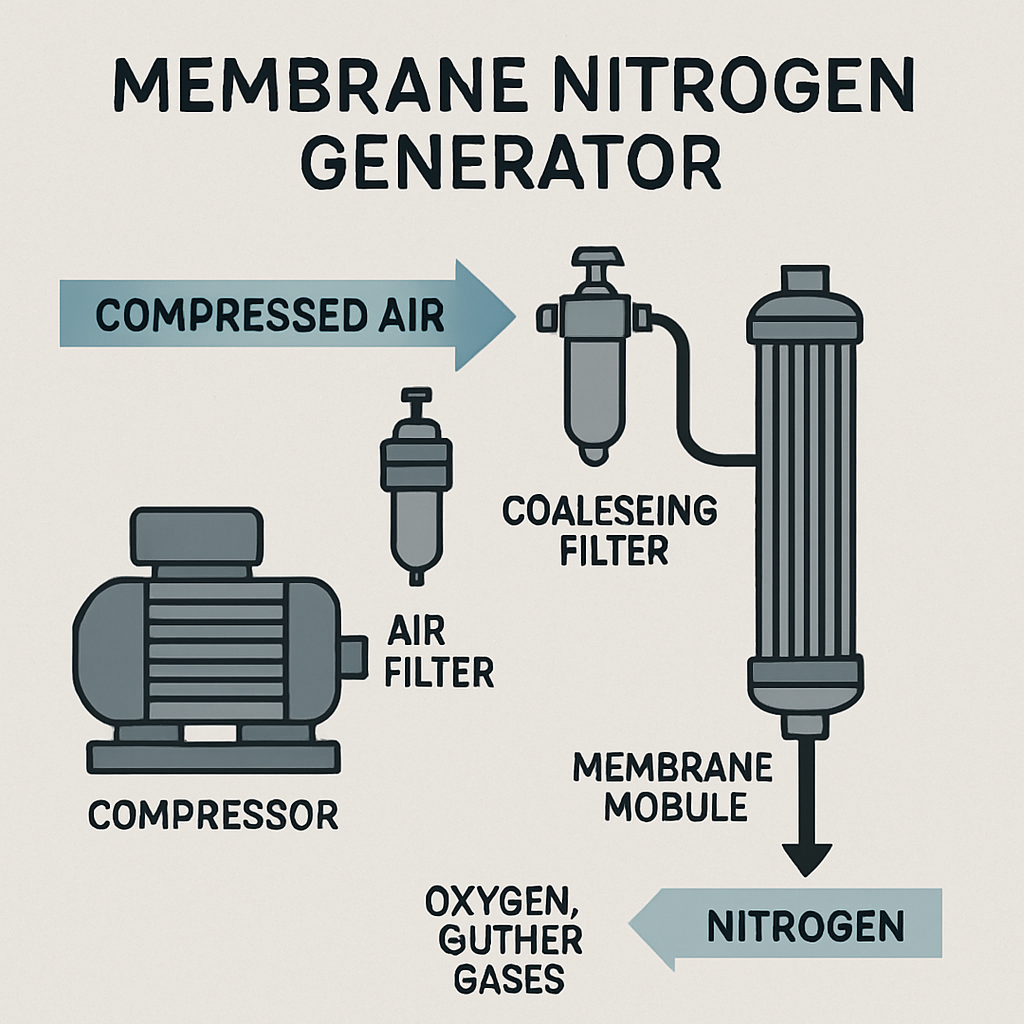
A membrane nitrogen generator is an advanced system that produces nitrogen gas from compressed air using selective permeability. This separation process allows nitrogen to pass through a membrane while other gases, like oxygen and water vapor, are vented out. The result is a continuous supply of nitrogen gas with varying purity levels, depending on the application needs.
Membrane Gas Separation: The Science Behind It
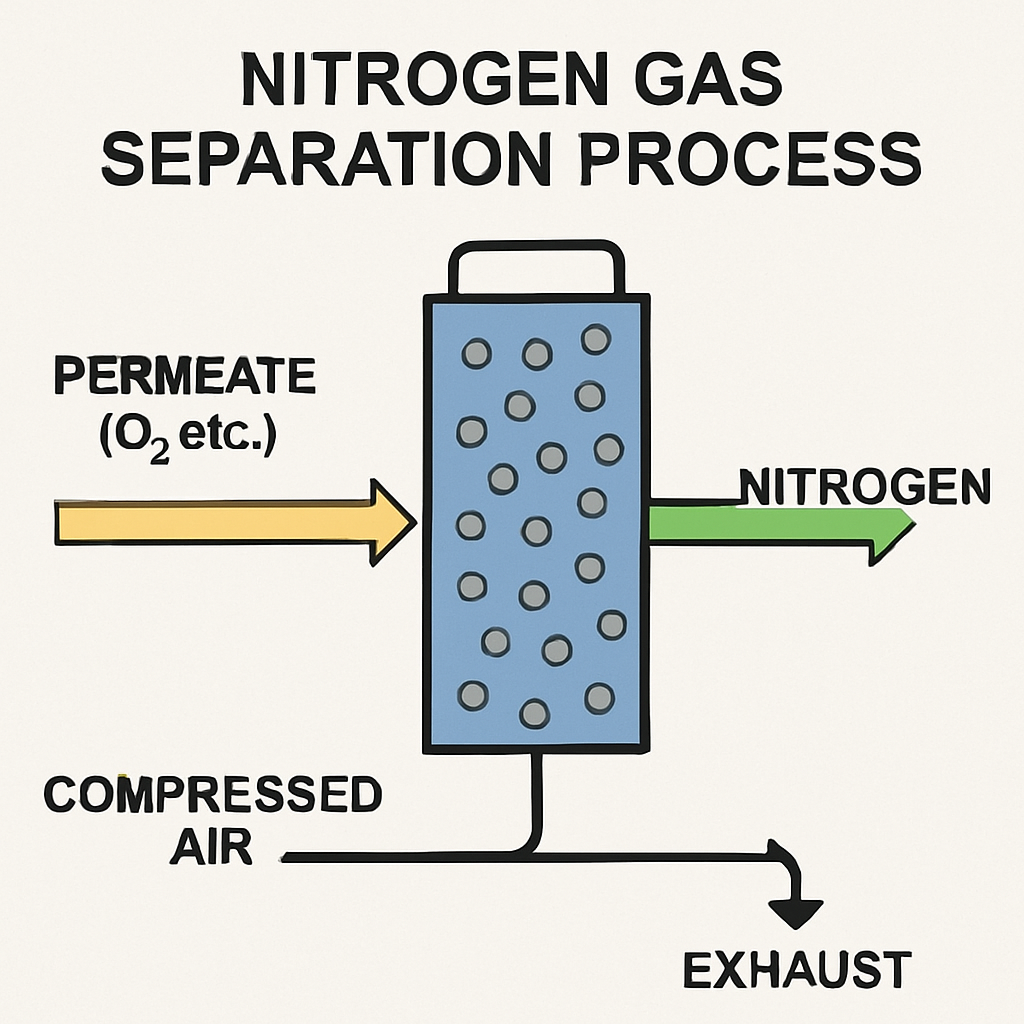
Membrane gas separation is based on the principle of selective permeation. Different gases permeate through the membrane at varying rates. Nitrogen, being a slower permeating gas, is retained while faster gases like oxygen are separated out. This unique feature makes membrane nitrogen generators ideal for applications requiring consistent nitrogen purity levels.
How Does a Membrane Nitrogen Generator Work?
The operation of a membrane nitrogen generator is straightforward. Compressed air is fed into the system, where it passes through a series of hollow fiber membranes. These fibers selectively allow nitrogen to pass through, while oxygen and other gases are vented out. The nitrogen-enriched stream is then delivered for use in various applications. This simple yet effective mechanism is what sets membrane technology apart.
Advantages of Membrane Nitrogen Generators
Flexibility and Adaptability
One of the standout advantages of membrane nitrogen generators is their flexibility. These systems can easily adapt to varying production demands, making them ideal for industries with fluctuating nitrogen requirements. Unlike PSA systems, which require time-consuming adjustments, membrane generators can quickly respond to changes in demand without significant downtime.
Continuous Operation
Membrane systems offer continuous nitrogen production, eliminating the need for complex cyclic processes found in PSA systems. This ensures a steady supply of nitrogen, reducing the risk of interruptions in critical operations. The simplicity of membrane systems also means fewer moving parts, leading to lower maintenance costs and extended system life.
Compact and Lightweight Design
Membrane nitrogen generators are typically more compact and lightweight compared to their PSA counterparts. This makes them suitable for industries with limited space or those requiring portable solutions. From food packaging to electronics manufacturing, the small footprint of membrane systems provides a significant advantage.
Energy Efficiency
Energy consumption is a crucial factor for many industries. Membrane nitrogen generators are generally more energy-efficient than PSA systems, as they operate at lower pressures and require less compressed air. This efficiency translates to cost savings and a reduced carbon footprint, making them an environmentally friendly choice.
Lower Initial Investment
For businesses looking to minimize capital expenditure, membrane nitrogen generators often come with a lower initial investment compared to PSA systems. The simpler design and reduced infrastructure requirements make them an attractive option for companies with budget constraints.
Applications of Membrane Nitrogen Generators in Niche Industries
 by Simone Hutsch (https://unsplash.com/@heysupersimi)
Food and Beverage Industry
In the food and beverage sector, membrane nitrogen generators are used to preserve freshness and extend shelf life. The nitrogen gas helps in creating an inert atmosphere, preventing oxidation and spoilage. From packaging to storage, the adaptability of membrane systems ensures optimal performance.
Electronics Manufacturing
The electronics industry demands high-purity nitrogen for processes like soldering and semiconductor manufacturing. Membrane nitrogen generators provide the precise purity levels required, ensuring product quality and consistency. Their compact design also fits well within cleanroom environments.
Oil and Gas Industry
In oil and gas applications, membrane nitrogen generators are used for inerting and blanketing to prevent combustion and corrosion. Their ability to operate continuously and withstand harsh conditions makes them a reliable choice for this demanding industry.
Pharmaceutical Industry
Pharmaceutical manufacturing requires stringent quality controls, especially in packaging and storage. Membrane nitrogen generators provide the necessary purity levels to maintain product integrity, ensuring compliance with industry standards.
Comparing PSA and Membrane Nitrogen Generators
While both PSA and membrane nitrogen generators serve the purpose of nitrogen production, the choice between them depends on specific industry needs.
PSA vs. Membrane: Key Differences
- Purity Levels: PSA systems typically achieve higher nitrogen purities compared to membrane systems. However, for many applications, the purity offered by membrane generators is sufficient.
- Maintenance: Membrane nitrogen generators have fewer moving parts, resulting in lower maintenance requirements and costs.
- Response Time: Membrane systems adjust quickly to changes in demand, offering greater operational flexibility.
- Space and Weight: The compact design of membrane generators makes them suitable for space-constrained environments.
Which Is Right for Your Business?
Choosing between PSA and membrane nitrogen generators depends on your specific application requirements. If your industry demands high nitrogen purity and you’re prepared for higher maintenance and investment costs, PSA might be the way to go. However, if flexibility, lower costs, and energy efficiency are your priorities, membrane nitrogen generators are a compelling choice.
Conclusion
As industries continue to evolve, the need for efficient, adaptable, and cost-effective solutions remains paramount. Membrane nitrogen generators are carving a niche by offering distinct advantages that cater to the specific demands of various industries. Whether it’s their energy efficiency, continuous operation, or compact design, these systems are proving to be a valuable asset in sectors ranging from food and beverage to oil and gas.
Understanding the difference between PSA and membrane nitrogen generators allows businesses to make informed decisions, ensuring they choose the best system for their operational needs. As membrane technology advances, its role in niche industries is poised to grow, offering a sustainable solution for the future.
Founded in 2013 and 2014, Shenzhen Yuhan Electronic Technology Co., Ltd. and Suzhou Hongjinli Gas Equipment Co., Ltd. specialize in PSA nitrogen generators, oxygen generators, nitrogen purification systems, and gas equipment solutions. Our expertise spans industries including SMT manufacturing, semiconductor packaging, optoelectronics, and food and pharmaceutical storage.