In today’s competitive food industry, businesses are constantly searching for ways to cut costs and improve efficiency. One method that is gaining popularity is the use of on-site nitrogen generators. In this article, we will explore the concept of calculating the return on investment (ROI) for on-site nitrogen in food factories. By the end, you’ll have a clear understanding of the benefits and financial advantages of implementing a PSA nitrogen generator in your facility.
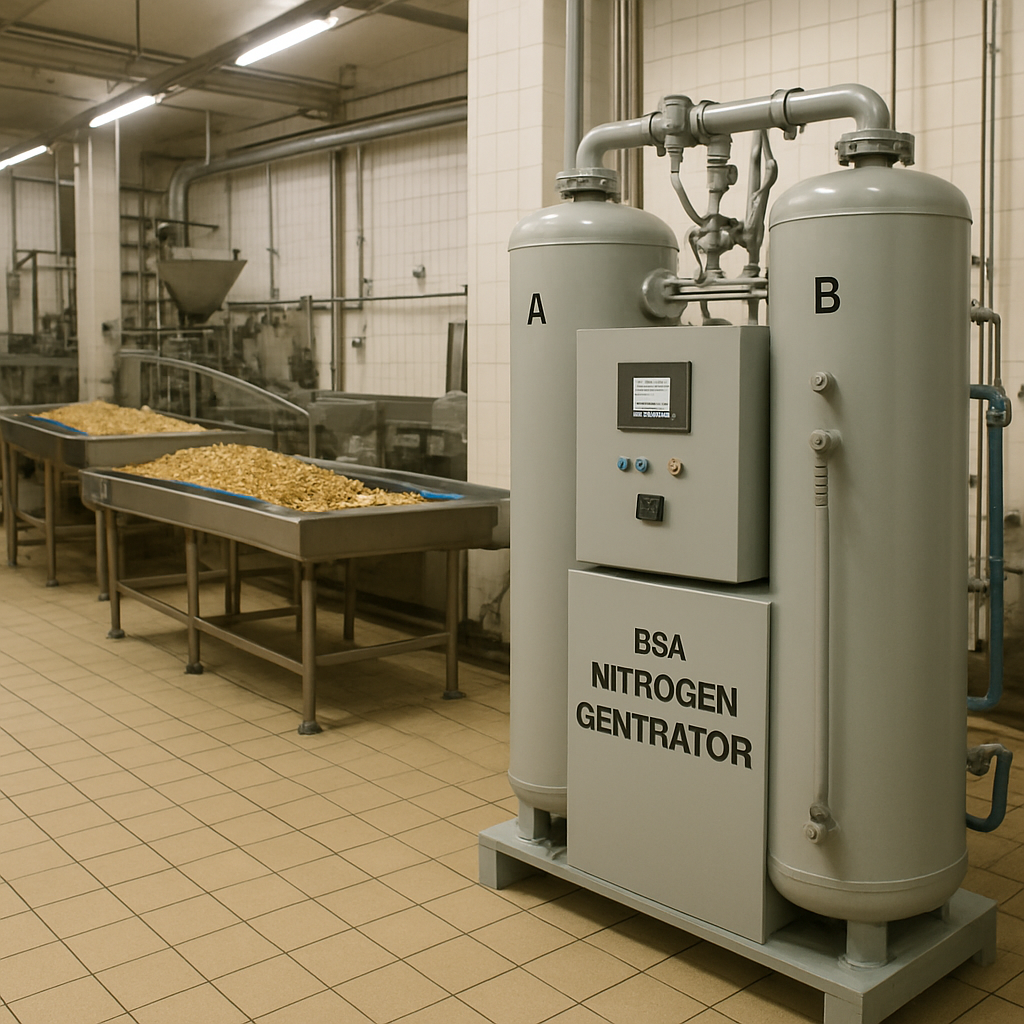
On-site nitrogen generation involves the production of nitrogen gas directly at the point of use, eliminating the need for traditional nitrogen supply methods like bulk delivery or cylinder rentals. The most common technology used for on-site nitrogen generation is Pressure Swing Adsorption (PSA). This method separates nitrogen from the air and produces high-purity nitrogen gas that can be used in various applications within the food industry.
Benefits of On-Site Nitrogen Generators
The advantages of using an on-site nitrogen generator in food factories are numerous. Here are some key benefits:
- Cost Savings: By generating nitrogen on-site, food factories can significantly reduce the costs associated with purchasing and transporting nitrogen gas. This can result in substantial savings over time.
- Continuous Supply: On-site nitrogen generators provide a continuous supply of nitrogen gas, ensuring that production processes are never interrupted due to a lack of nitrogen.
- High Purity Levels: PSA nitrogen generators are capable of producing nitrogen gas with high purity levels, which is crucial for maintaining product quality and safety in the food industry.
- Environmental Impact: By reducing the need for transportation and storage of nitrogen gas, on-site generation is a more environmentally friendly option.
Calculating the ROI of On-Site Nitrogen
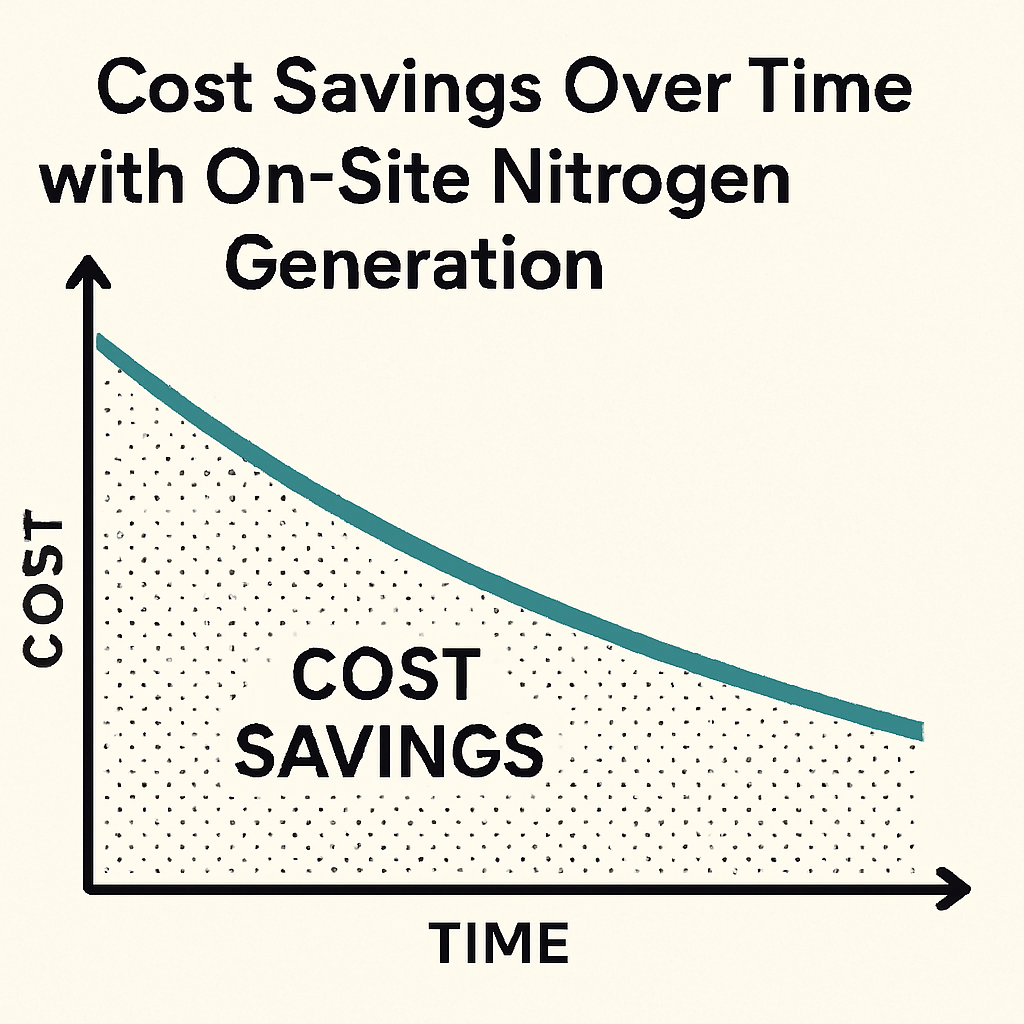
Calculating the ROI of an on-site nitrogen generator involves comparing the costs associated with traditional nitrogen supply methods to the costs and savings associated with on-site generation. Here are the steps to calculate ROI:
Step 1: Identify Current Costs
First, determine the current costs of nitrogen supply in your facility. This includes the cost of purchasing nitrogen gas, transportation fees, cylinder rental fees, and any additional costs related to storing and handling nitrogen.
Step 2: Determine On-Site Generator Costs
Next, calculate the costs associated with installing and operating an on-site nitrogen generator. This includes the initial purchase or lease cost of the generator, installation expenses, ongoing maintenance costs, and energy consumption.
Step 3: Estimate Savings
Estimate the potential savings your facility could achieve by switching to on-site nitrogen generation. Consider the reduction in nitrogen purchase costs, transportation savings, and any other cost reductions specific to your operation.
Step 4: Calculate ROI
To calculate the ROI, use the following formula:
[ \text{ROI} = \left( \frac{\text{Annual Savings} – \text{Annual Costs of Generator}}{\text{Initial Investment Cost}} \right) \times 100 ]
This formula will provide the percentage return on investment. A higher ROI indicates a more favorable financial outcome.
Real-World Examples
 by Muhammed A. Mustapha (https://unsplash.com/@flairman)
Many food factories have successfully implemented on-site nitrogen generators and experienced significant ROI. For instance, a mid-sized snack food manufacturer was spending approximately $100,000 annually on bulk nitrogen deliveries. By installing a PSA nitrogen generator, they reduced their nitrogen costs by 70%, resulting in an ROI of over 200% within the first two years.
Factors Affecting ROI
Several factors can influence the ROI of on-site nitrogen generation in food factories:
- Production Volume: Facilities with higher production volumes tend to benefit more from on-site nitrogen generation due to economies of scale.
- Energy Costs: The cost of electricity can impact the overall savings achieved through on-site generation. Lower energy costs can enhance ROI.
- Maintenance and Downtime: Regular maintenance and minimal downtime ensure that the generator operates efficiently, maximizing savings.
Conclusion
On-site nitrogen generation offers a compelling solution for food factories looking to enhance efficiency, reduce costs, and improve their environmental footprint. By calculating the ROI of a PSA nitrogen generator, businesses can make informed decisions that positively impact their bottom line. With the potential for substantial cost savings and a continuous supply of high-purity nitrogen, on-site generation is a smart investment for food manufacturers.
Implementing an on-site nitrogen generator can streamline operations and provide a competitive edge in the food industry. By understanding the costs and benefits, you can confidently assess whether this solution is right for your facility.