In the world of industrial gas production, PSA nitrogen generators play a crucial role. These systems are designed to produce nitrogen gas on demand, offering a cost-effective and efficient solution for many industries. If you’re new to this technology, understanding how a PSA nitrogen generator works can seem daunting. This guide aims to demystify the process with a straightforward flow chart and detailed explanations.
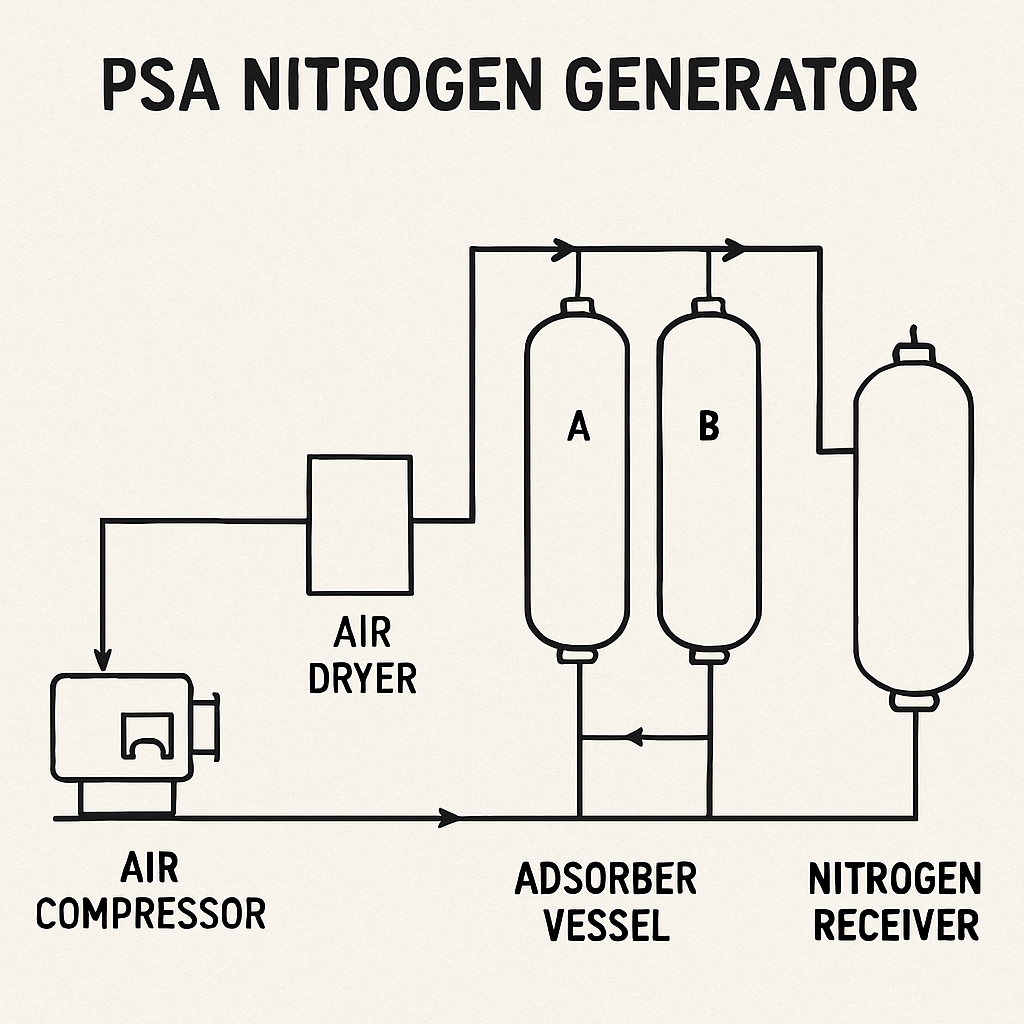
What is a PSA Nitrogen Generator?
A PSA (Pressure Swing Adsorption) nitrogen generator is a device that separates nitrogen from the air. The process uses a unique property of certain materials called adsorbents, which can selectively adsorb molecules from a mixture of gases under pressure. In this case, the adsorbents capture oxygen and other trace gases, allowing nitrogen to pass through.
Why Use a PSA Nitrogen Generator?
PSA nitrogen generators offer several benefits over traditional nitrogen supply methods like gas cylinders or liquid nitrogen tanks. They provide a continuous supply of nitrogen, reduce dependency on external suppliers, and can significantly lower costs over time.
Key Components of a PSA Nitrogen Generator
Understanding the main components of a PSA nitrogen generator is essential for grasping how the system works:
- Air Compressor: Compresses ambient air to the required pressure.
- Adsorption Towers: Contain the adsorbent material that separates gases.
- Control System: Manages the flow of air and operation of the system.
- Nitrogen Storage Tank: Stores the generated nitrogen for use.
How Does a PSA Nitrogen Generator Work?
Let’s break down the process step by step with the help of a flow chart:
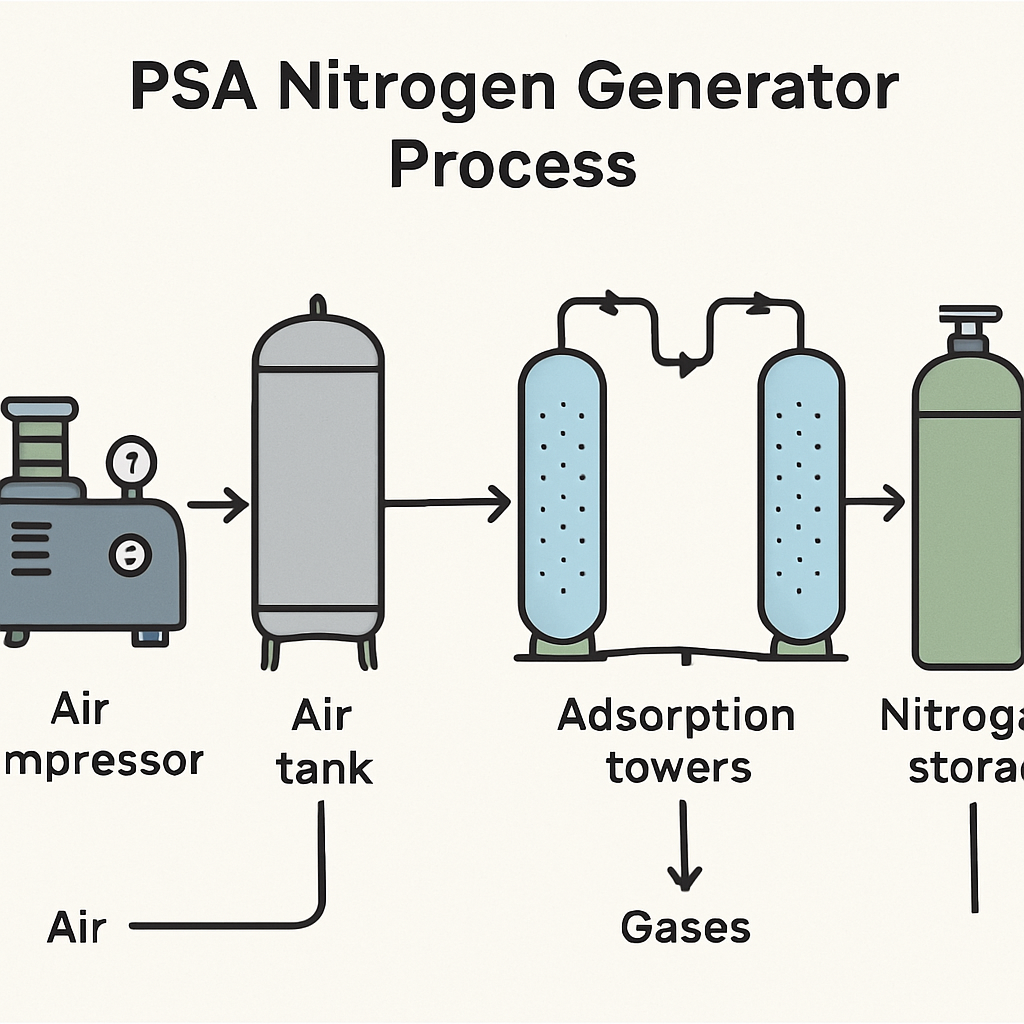
Step 1: Air Compression
The process begins with an air compressor, which draws in ambient air and compresses it to a high pressure. Compressed air is essential for the adsorption process, as it allows the adsorbents to effectively capture oxygen and other gases.
Step 2: Air Filtration
Before entering the adsorption towers, the compressed air passes through filters that remove contaminants such as dust, oil, and water vapor. Clean air ensures the longevity and efficiency of the adsorbents.
Step 3: Adsorption Process
The filtered, compressed air is then directed into the adsorption towers. These towers are filled with adsorbent materials like carbon molecular sieves (CMS) that preferentially adsorb oxygen over nitrogen. As the air passes through the towers, oxygen and trace gases are captured, leaving behind high-purity nitrogen.
Step 4: Desorption and Regeneration
As one tower is busy adsorbing gases, the other undergoes desorption. This process involves depressurizing the tower to release the captured gases, regenerating the adsorbents for the next cycle. The alternating cycle between towers ensures a continuous flow of nitrogen.
Step 5: Nitrogen Storage
The pure nitrogen gas exits the adsorption towers and is stored in a nitrogen storage tank. From here, it can be distributed to various applications as needed.
Applications of PSA Nitrogen Generators
PSA nitrogen generators are versatile and find use in multiple industries, including:
- Food and Beverage: Used for packaging and preserving freshness.
- Pharmaceuticals: Provides an inert atmosphere for manufacturing processes.
- Electronics: Used in soldering and manufacturing semiconductor components.
- Chemical Manufacturing: Offers a safe, inert environment for chemical reactions.
Choosing the Right PSA Nitrogen Generator
Selecting the right PSA nitrogen generator involves considering several factors:
- Flow Rate: Determine the volume of nitrogen required per minute or hour.
- Purity Level: Different applications require varying levels of nitrogen purity. Ensure the generator meets your specific needs.
- Pressure Requirements: Consider the pressure at which nitrogen will be used in your processes.
- Space and Maintenance: Evaluate the available space for the generator and the maintenance requirements.
 by Michael (https://unsplash.com/@michael75)
Advantages of PSA Nitrogen Generators
PSA nitrogen generators offer several significant advantages:
- Cost-Effective: Reduces the need for purchasing and transporting nitrogen cylinders.
- Convenience: Provides on-demand nitrogen supply, eliminating shortages.
- Environmentally Friendly: Produces nitrogen from ambient air, minimizing environmental impact.
- Scalable: Easily adjustable to meet changing production needs.
Leading PSA Nitrogen Generator Manufacturers
When considering a PSA nitrogen generator, it’s crucial to choose a reputable manufacturer. Here are some of the top manufacturers in the industry:
- Atlas Copco: Known for high-quality industrial equipment, including nitrogen generators.
- Parker Hannifin: Offers a range of gas generation solutions with advanced technology.
- Air Products and Chemicals: Provides reliable PSA nitrogen generators with global support.
Conclusion
PSA nitrogen generators are an efficient and effective solution for industries requiring a reliable nitrogen supply. By understanding the flow chart and process involved, you can make an informed decision about integrating this technology into your operations. Remember to consider your specific requirements and consult with manufacturers to find the best fit for your needs.
By embracing PSA nitrogen technology, industries can enjoy a consistent supply of high-quality nitrogen, improve operational efficiency, and reduce costs. Whether you’re in food processing, pharmaceuticals, or electronics, a PSA nitrogen generator can be a valuable asset to your business.