Choosing the right nitrogen generator for your needs can be a challenging decision. With two main types available—Pressure Swing Adsorption (PSA) and Membrane Nitrogen Generators—understanding their differences, applications, and benefits is essential. This guide will help you make an informed choice by comparing these two types of nitrogen generators.
Nitrogen generators are devices that separate nitrogen from the atmosphere and supply it for various industrial applications. They provide a continuous supply of nitrogen, eliminating the need for delivery and storage of compressed nitrogen gas.
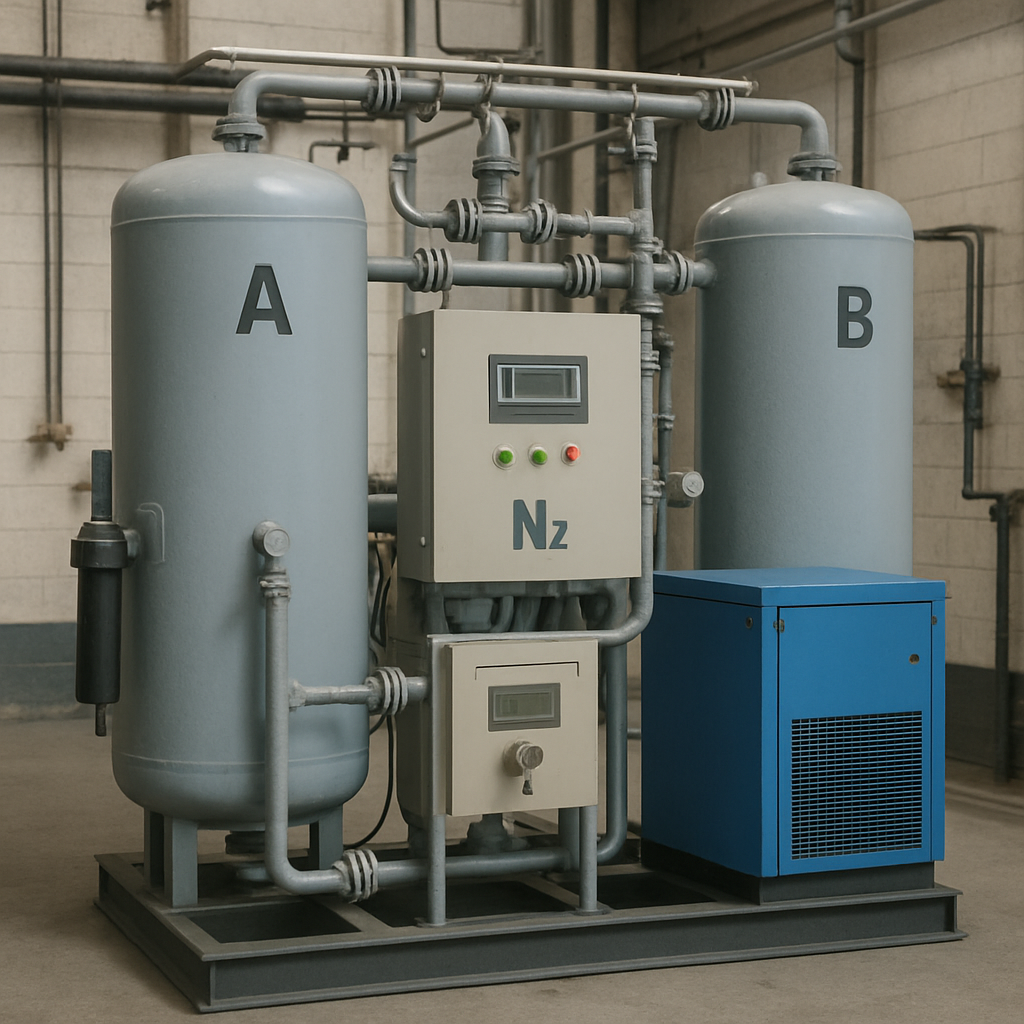
Why Use a Nitrogen Generator?
Nitrogen generators are commonly used in industries like food and beverage, electronics, pharmaceuticals, and petrochemicals. They are preferred for their cost-effectiveness, reliability, and ability to produce high-purity nitrogen on-site.
PSA Nitrogen Generators
Pressure Swing Adsorption (PSA) Nitrogen Generators use a technology based on the principle of adsorption. This process involves using a material called a molecular sieve, often made of carbon, to separate nitrogen from other gases in the air.
How Do PSA Nitrogen Generators Work?
PSA nitrogen generators operate by cycling between pressurized adsorption and depressurized desorption. During adsorption, air is passed through the molecular sieve, which traps oxygen and other gases, allowing nitrogen to pass through. When the pressure is released, the trapped gases are expelled, and the sieve is ready for another cycle.
Benefits of PSA Nitrogen Generators
- High Purity Levels: PSA generators can produce nitrogen with purity levels up to 99.999%.
- Versatility: They are suitable for various applications, from food packaging to chemical processing.
- Scalability: PSA systems can be easily scaled to meet increasing nitrogen demands.
Limitations of PSA Nitrogen Generators
- Initial Costs: They may require a higher initial investment compared to membrane systems.
- Maintenance: Regular maintenance is needed to ensure the molecular sieve functions effectively.
Membrane Nitrogen Generators
Membrane Nitrogen Generators use a different method to separate nitrogen from other gases. They employ a semi-permeable membrane that selectively allows certain gases to pass through while blocking others.
 How Do Membrane Nitrogen Generators Work?
Compressed air is passed through the membrane fibers. The membrane allows oxygen, water vapor, and other gases to diffuse through it, while nitrogen is retained and collected as the product gas.
Benefits of Membrane Nitrogen Generators
- Lower Initial Costs: Membrane systems are generally more affordable upfront.
- Compact and Lightweight: They occupy less space and are easier to transport.
- Low Maintenance: Membrane systems require minimal maintenance, reducing downtime.
Limitations of Membrane Nitrogen Generators
- Purity Limitations: They typically produce nitrogen with purity levels up to 99.5%.
- Temperature Sensitivity: Membrane performance can be affected by temperature and humidity variations.
Comparing PSA and Membrane Nitrogen Generators
When deciding between PSA and Membrane Nitrogen Generators, consider the following factors:
Purity Requirements
If your application demands high-purity nitrogen (above 99.5%), PSA generators are the better choice. For applications where lower purity is acceptable, such as in fire suppression or tire inflation, membrane generators may suffice.
Cost Considerations
Evaluate both the initial investment and ongoing operating costs. PSA systems may have higher upfront costs but can be more cost-effective in the long term due to their efficiency and high purity output. Membrane systems are budget-friendly initially but may incur higher costs if purity needs change.
Space and Mobility
Consider the available space and mobility requirements. Membrane generators are compact and easy to install, making them ideal for space-constrained environments. PSA systems require more space but offer scalability for expanding operations.
Maintenance Needs
PSA systems need regular maintenance for optimal performance, particularly concerning the molecular sieve. Membrane systems, being low-maintenance, can be advantageous if reducing downtime is a priority.
Application-Specific Needs
Think about the specific needs of your industry and application. Food and beverage industries, electronics manufacturing, and laboratories often require high-purity nitrogen, making PSA systems more suitable. For applications like fire prevention or tire inflation, membrane systems are often adequate.
Real-World Applications
Food and Beverage Industry
In the food and beverage industry, nitrogen is used to extend shelf life and prevent spoilage. PSA generators are often preferred for their ability to deliver high-purity nitrogen, crucial for maintaining product integrity.
 by Roger Starnes Sr (https://unsplash.com/@rstar50)
Electronics Manufacturing
In electronics manufacturing, nitrogen is used to create an inert atmosphere during soldering processes. High-purity nitrogen from PSA generators ensures the highest quality in electronic products.
Oil and Gas Industry
The oil and gas industry often uses nitrogen for purging and blanketing applications. The choice between PSA and membrane systems depends on the specific purity requirements and site conditions.
Final Thoughts
Choosing between a PSA and a Membrane Nitrogen Generator depends on various factors, including your specific application needs, budget, and space constraints. By understanding the strengths and limitations of each system, you can select the one that best meets your requirements.
Ultimately, both types of nitrogen generators offer reliable on-site nitrogen production, helping you save on costs, improve efficiency, and ensure a steady supply of nitrogen for your operations. Consider consulting with a nitrogen generator expert to tailor the solution to your specific needs and ensure optimal performance.