# Understanding the Basics of Gas Chromatography
Gas chromatography is a powerful analytical method used in laboratories to separate and analyze compounds that can be vaporized without decomposing. It’s a staple in fields like analytical chemistry, where scientists need to identify and quantify different substances within a sample. This article will break down the basics of gas chromatography, its components, and how it works, in a straightforward manner.
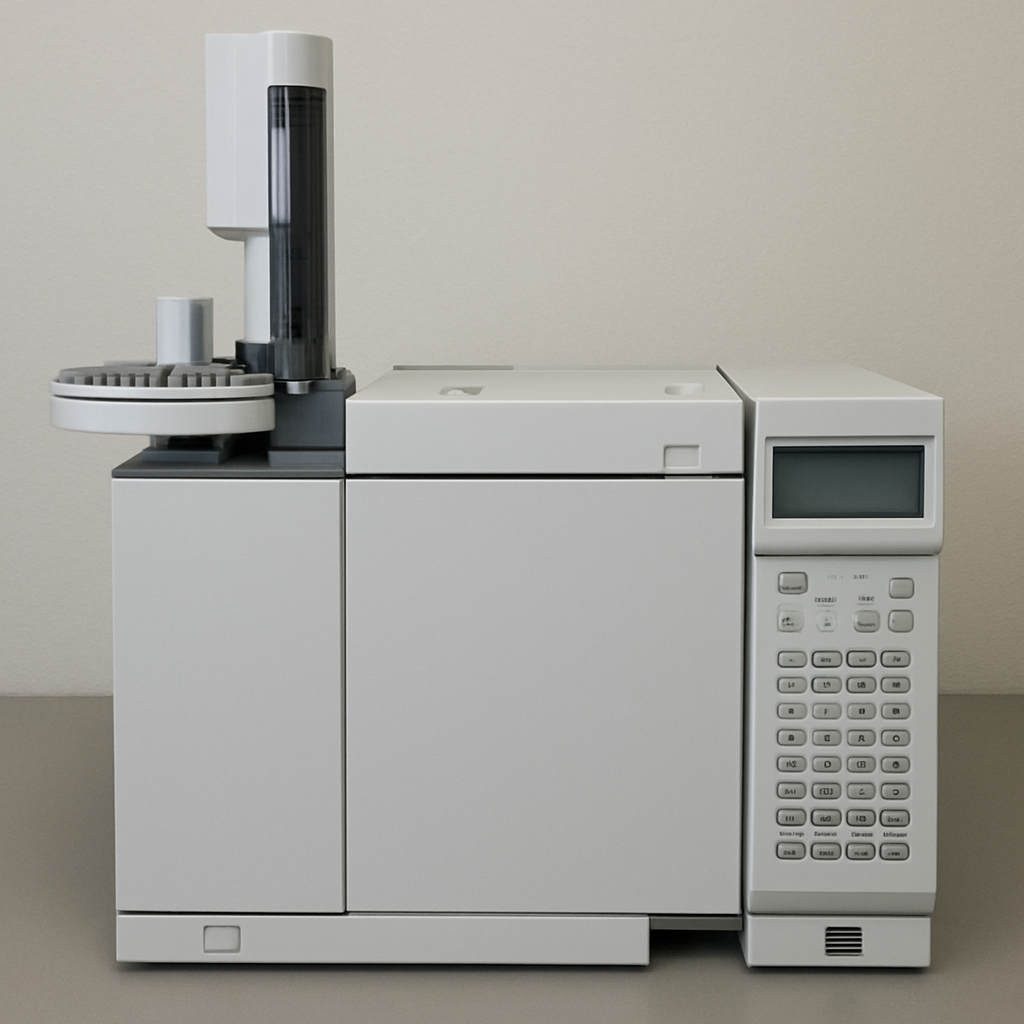
What is Gas Chromatography?
Gas chromatography (GC) is a technique that allows scientists to separate mixtures into individual components. By doing so, they can identify what substances are present in a sample and how much of each substance is there. This is particularly useful in industries such as pharmaceuticals, environmental testing, and food and beverage production.
Key Components of Gas Chromatography
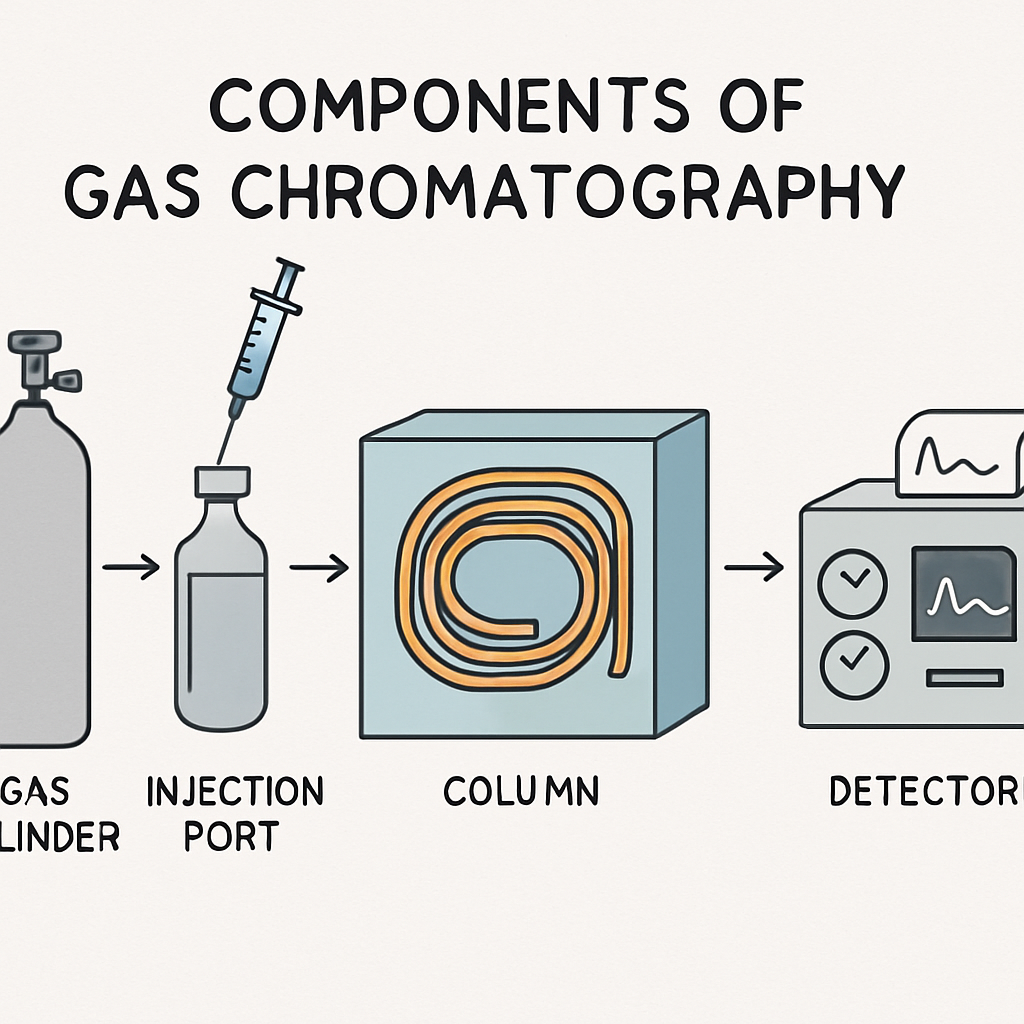
To understand how gas chromatography works, it’s important to know its main components:
- Carrier Gas: This is the mobile phase of the system. An inert gas, like helium or nitrogen, carries the sample through the column.
- Injector: The injector introduces the sample into the carrier gas stream.
- Column: This is where the separation of the sample takes place. The column is filled with a stationary phase, which interacts differently with each component of the sample.
- Oven: The column is housed in an oven that controls the temperature, affecting the separation process.
- Detector: After separation, the detector identifies and quantifies the components as they exit the column.
How Does Gas Chromatography Work?
The process of gas chromatography involves several steps, each crucial to the accurate separation and analysis of compounds:
Sample Injection
The process begins with the injection of the sample. The sample is usually in a liquid form and is injected into the gas chromatograph. The injector port is heated to vaporize the sample, allowing it to mix with the carrier gas.
Separation in the Column
As the vaporized sample moves through the column, its components interact with the stationary phase. Each substance in the sample moves at a different speed, which leads to their separation. The stationary phase is often a liquid or polymer on an inert solid support, and it retains compounds based on their chemical properties.
Detection and Analysis
Once the components exit the column, they reach the detector. Common detectors include flame ionization detectors (FID) and mass spectrometers (MS). The detector produces a signal proportional to the amount of substance, allowing for both qualitative and quantitative analysis.
 by National Cancer Institute (https://unsplash.com/@nci)
Applications of Gas Chromatography
Gas chromatography has a wide range of applications across various fields:
Environmental Testing
In environmental testing, GC is used to detect pollutants in air, water, and soil. It helps in monitoring environmental contamination and ensuring regulatory compliance.
Pharmaceutical Industry
In the pharmaceutical industry, gas chromatography is crucial for quality control and ensuring the purity of drugs. It’s used to test raw materials and finished products.
Food and Beverage Analysis
GC plays a vital role in the food industry by analyzing flavors, fragrances, and determining the presence of contaminants or additives in food and beverages.
Forensic Science
In forensic science, gas chromatography is used to analyze substances found at crime scenes, such as drugs, alcohol, and explosives. It aids in investigations by providing detailed substance identification.
Advantages and Limitations
Advantages of Gas Chromatography
- High Sensitivity: GC can detect even minute quantities of substances.
- Speed: The analysis is relatively fast compared to other methods.
- Resolution: Provides excellent separation of components.
- Versatility: Can be used for a wide range of volatile compounds.
Limitations of Gas Chromatography
- Volatility Requirement: Only compounds that can be vaporized without decomposition can be analyzed.
- Complexity and Cost: Equipment can be expensive and requires skilled operators.
- Sample Preparation: Samples often require preparation, which can be time-consuming.
Conclusion
Gas chromatography is an indispensable tool in analytical chemistry, offering precise and reliable results for separating and analyzing compounds. Whether you’re testing environmental samples, ensuring pharmaceutical quality, or investigating a crime scene, gas chromatography provides the detailed analysis needed to make informed decisions. Understanding its basics, applications, and limitations can help you appreciate its role in modern science and industry.
In summary, while gas chromatography might seem complex, its principles are straightforward. By using a carrier gas to transport samples through a column, compounds are separated and detected, providing detailed chemical analysis. This powerful method continues to be a cornerstone of analytical practices worldwide.