In industrial settings, the need for nitrogen gas is undeniable. This versatile gas finds its applications in various industries, from food packaging to electronics manufacturing. One efficient way to produce nitrogen gas on-site is by using an industrial nitrogen generator. This article will explore the benefits of using a nitrogen gas generator, explain how it works, and discuss why cooling the nitrogen gas is essential.
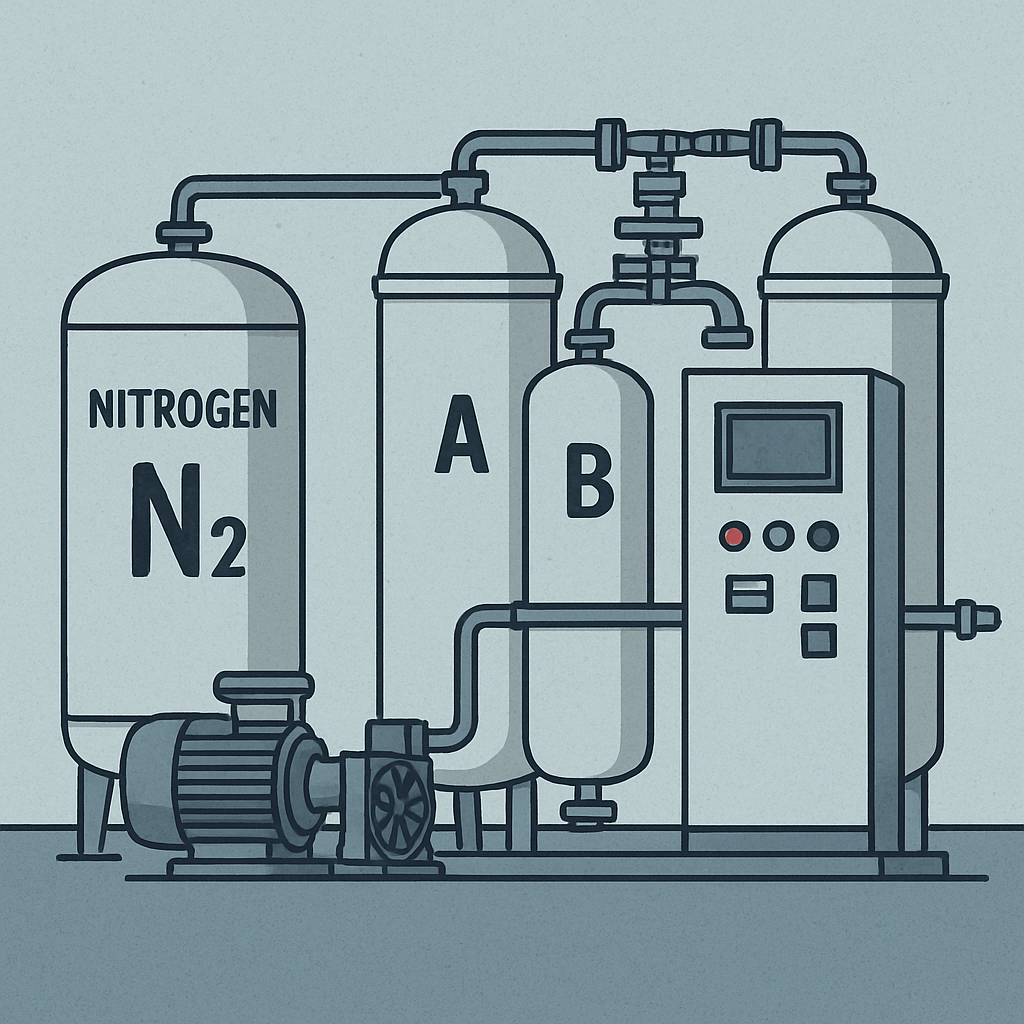
An industrial nitrogen generator is a device that separates nitrogen from other gases found in the air, producing high-purity nitrogen gas. The air we breathe is composed of approximately 78% nitrogen, 21% oxygen, and trace amounts of other gases. These generators utilize this abundant resource, making them an efficient and cost-effective solution for nitrogen production.
How Does a Nitrogen Gas Generator Work?
Nitrogen gas generators use one of two main technologies: Pressure Swing Adsorption (PSA) or Membrane Technology. Both methods are effective in separating nitrogen from the air, but they operate differently.
- Pressure Swing Adsorption (PSA): This method uses a material called a molecular sieve to adsorb oxygen and other trace gases, allowing nitrogen to pass through as a pure gas. The process involves alternating between two vessels to ensure continuous nitrogen production.
- Membrane Technology: This method employs a membrane made of hollow fibers that selectively allow nitrogen to pass through while retaining oxygen and other gases. The result is a steady stream of nitrogen gas.
Why is Cooling Nitrogen Gas Important?
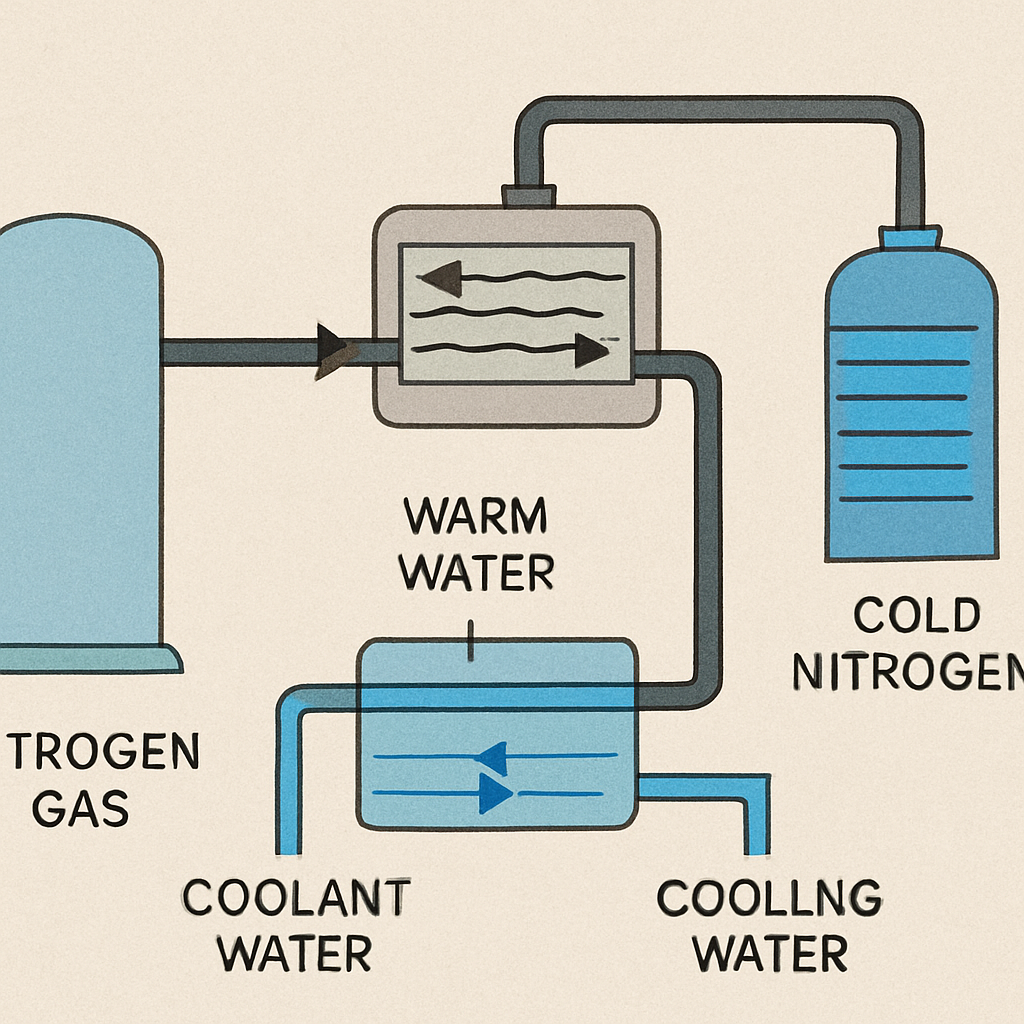
Cooling nitrogen gas is a crucial step in many industrial applications. Here are a few reasons why:
- Safety: High-temperature gases can pose safety risks, including burns and equipment damage. Cooling the nitrogen gas reduces these risks and ensures a safer working environment.
- Efficiency: Some industrial processes require nitrogen gas at specific temperatures. Cooling the nitrogen gas can improve the efficiency and effectiveness of these processes.
- Equipment Longevity: Excessive heat can lead to wear and tear on equipment. By cooling the nitrogen gas, you can prolong the life of your machinery and reduce maintenance costs.
Applications of Cooled Nitrogen Gas
Cooled nitrogen gas is used in various industries, each requiring specific conditions for optimal performance.
- Food Packaging: In the food industry, cooled nitrogen gas is used to preserve freshness and extend shelf life. The gas displaces oxygen, which can cause spoilage, and the cooling process helps maintain product quality.
- Electronics Manufacturing: The electronics industry relies on cooled nitrogen gas to prevent oxidation during the manufacturing process. The cooling aspect helps maintain the integrity of sensitive components.
- Pharmaceuticals: In pharmaceutical production, cooled nitrogen gas is used to maintain the stability of temperature-sensitive compounds.
Benefits of Using a Cool Nitrogen Gas Generator
Using a cool nitrogen gas generator offers several advantages over traditional methods of nitrogen gas supply.
- Cost-Effective: Generating nitrogen on-site eliminates the need for purchasing and transporting gas cylinders, reducing costs significantly.
- Consistent Supply: With a generator, you have a continuous supply of nitrogen gas, eliminating the risk of running out during critical operations.
- Customization: Nitrogen gas generators can be tailored to meet the specific purity and temperature requirements of your application.
- Environmental Impact: By producing nitrogen on-site, you reduce the carbon footprint associated with transporting gas cylinders.
How to Select the Right Nitrogen Gas Generator
Choosing the right nitrogen gas generator depends on several factors, including your specific needs and applications. Here are some things to consider:
Purity Requirements
Determine the level of nitrogen purity required for your processes. Different applications have varying purity requirements, and selecting a generator that can meet these needs is crucial.
Volume and Flow Rate
Consider the volume of nitrogen gas you need and the flow rate required for your operations. Ensure that the generator can produce enough nitrogen to meet your demands.
Space and Installation
Assess the available space for installation and choose a generator that fits within your physical constraints. Some generators are more compact and easier to install than others.
Maintenance and Support
Look for a generator that is easy to maintain and comes with reliable support from the manufacturer. Regular maintenance is essential to ensure optimal performance and longevity.
Conclusion

In conclusion, a cool nitrogen gas generator is an invaluable asset for many industries. By producing nitrogen gas on-site, you can enjoy the benefits of cost savings, a consistent supply, and customization options. Cooling the nitrogen gas enhances safety, efficiency, and equipment longevity, making it a wise investment for any operation requiring nitrogen gas.
When selecting a nitrogen gas generator, consider your specific needs, including purity, volume, and space requirements. With the right generator in place, you can optimize your processes and ensure smooth, uninterrupted operations. Whether you’re in food packaging, electronics manufacturing, or pharmaceuticals, a cool nitrogen gas generator can play a pivotal role in your success.