If you have ever stared at a crystal-clear aquarium only to find your fish acting sluggish, you have likely encountered an invisible enemy. While nitrogen makes up 78% of the air we breathe and acts as a building block for life, it becomes a silent killer when it builds up as waste in a closed environment. This paradox catches many beginners off guard because unlike muddy water, chemical toxicity is impossible to see with the naked eye.
In the wild, vast rivers and oceans act as a massive cleaning crew, instantly diluting waste and recycling nutrients. When we bring these environments into our homes or utilize well water, we lose that natural advantage and must recreate it artificially. Without a proper nitrogen filter to manage the load, everyday leftovers from food and biological processes accumulate rapidly, turning a safe habitat into a toxic trap.
Most people imagine filtration works like a coffee strainer, physically catching floating particles. However, true nitrogen filtration operates more like a microscopic waste treatment plant than a simple mesh screen. It relies on chemical conversion, transforming harmful compounds like ammonia into safer substances through invisible biological or chemical reactions.
This distinction allows you to move from struggling with water quality to maintaining a thriving, stable ecosystem. Whether you are managing a residential pond or a specialized nitrogen gas filter system, the goal remains the same: mastering the science of cleaning the unseen.
The ‘Bacteria Hotel’: How Biological Filters Turn Toxic Waste into Safe Water
The most vital function of your filtration system is invisible to the naked eye. It acts less like a sieve and more like a massive housing complex for microscopic “good guys.” These beneficial bacteria for biological water treatment are the real workhorses, eating invisible toxins that would otherwise poison your aquatic life.
Once waste enters the water, it triggers a chemical relay race that scientists call the nitrogen cycle. Nature handles this cleanup through a specific sequence of events where different teams of bacteria pass the “baton” to neutralize threats:
- Ammonia (Toxic): The raw waste from fish and rotting food is highly dangerous and burns fish gills.
- Nitrite (Harmful): The first team of bacteria converts ammonia into this compound, which is less aggressive but still risky.
- Nitrate (Safe/Removable): The final stage turns the chemical into a relatively harmless form that plants eat or you remove during water changes.
To house enough of these microscopic cleaners to handle the workload, you need immense surface area. Choosing the best biomedia for filtration systems is like picking the right furniture for that bacterial hotel. Materials like porous ceramic rings or bio-balls are engineered with thousands of tiny tunnels and caverns, providing acres of living space for bacteria within a compact filter box.
Impatience often leads to a frustration known as “New Tank Syndrome,” where fish die suddenly in pristine-looking water. This happens because the filter is brand new and sterile; it hasn’t had time to “cycle” or grow its bacterial workforce yet. The nitrogen cycle in home aquariums requires patience, as you must allow weeks for the bacteria to populate the media before fully stocking the tank.
Advanced setups take this a step further with “denitrification,” where deep, oxygen-poor zones in the media allow specialized bacteria to turn nitrate into harmless gas that bubbles away. While aquariums focus on managing nitrogen in liquid, other technologies focus on harvesting it from the atmosphere.
Beyond the Water: How Industrial Filters Extract Pure Nitrogen from Thin Air
While aquariums rely on bacteria to manage nitrogen, industries use mechanical brute force to harvest it directly from the air we breathe. Ordinary air is actually a “soup” of different gases—mostly nitrogen (about 78%) mixed with oxygen and moisture. The primary benefits of high purity nitrogen gas generation lie in its ability to prevent reactions; unlike oxygen, which fuels fire and causes rust (oxidation), nitrogen is an inert “blanket” that keeps snacks fresh, tires inflated longer, and laser cutters safe from burning.
Extracting this gas requires separating the ingredients of that air soup. One common method, called membrane gas separation, works like a microscopic spaghetti strainer. Compressed air is pushed through a bundle of hollow fibers. “Fast” gases like oxygen and water vapor slip through the porous walls of the fibers, while the larger, “slower” nitrogen molecules travel straight through to the end of the tube, ready for use.
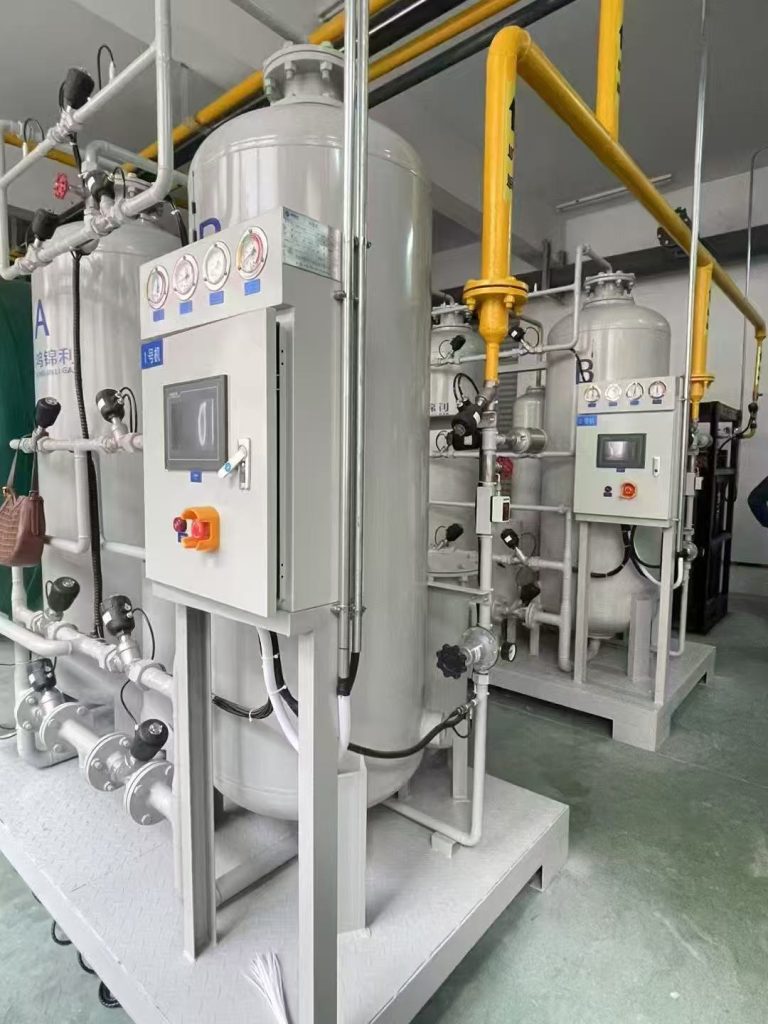
For applications requiring ultra-high purity, engineers turn to a process known as Pressure Swing Adsorption (PSA). This technique uses a material called Carbon Molecular Sieves (CMS), which acts like a sponge designed with holes exactly the size of an oxygen molecule. Under high pressure, the CMS traps the oxygen, letting the nitrogen pass through. When the pressure is released (swung), the sieve “exhales” the trapped oxygen and is ready to start again.
Choosing between pressure swing adsorption vs membrane gas separation depends entirely on how pure the gas needs to be for industrial gas separation technology applications:
- Membrane Systems: Best for continuous flow and standard purity (95-99.5%), often used for tire inflation or food packaging.
- PSA (Carbon Sieve) Systems: Best for demanding tasks requiring extreme purity (up to 99.999%), such as laser cutting or electronics manufacturing.
The role of carbon molecular sieves in gas purity explains why some nitrogen generators are larger and more complex than others. Whether protecting a bag of potato chips or preventing an industrial fire, these filters ensure that only the safe, non-reactive gas remains. However, back in the biological world of your pond or tank, nitrogen isn’t a safety blanket—it’s a potential killer if left unchecked.
Red Alert: Recognizing the Visual Signs of Nitrogen Poisoning in Your Pond
While you cannot see dissolved ammonia or nitrates with the naked eye, your aquatic ecosystem provides clear visual cues when the chemical balance tips. A healthy biological filter processes waste silently, but when the “biological load”—the total amount of waste produced by fish and decaying food—exceeds what your beneficial bacteria can handle, the environment becomes toxic. Recognizing these distress signals early is crucial for saving your living pets before invisible chemical burns cause permanent damage.
Green water is often the first red flag that your maintenance routine needs adjustment. Algae thrives on nitrates, using them as fertilizer to explode in population. If you notice a sudden blanket of green fuzz or “pea-soup” water, your system likely lacks sufficient mechanisms for reducing algae growth through nutrient export. Essentially, the bacteria are successfully converting toxic ammonia into nitrate, but that nitrate is accumulating faster than it is being removed, fueling an unwanted plant takeover.
Beyond the water’s appearance, your fish offer the most urgent warnings. Identifying ammonia spikes in closed aquatic systems or spotting chronic nitrate buildup often comes down to observing behavioral changes. Watch closely for these common signs of nitrate poisoning in ornamental fish:
- Algae Spikes: Rapid, uncontrolled growth on glass or rocks.
- Gasping Fish: Fish hovering near the surface gasping for air, indicating gill damage.
- Dull Colors: Vibrant fish turning pale, lethargic, or refusing to eat.
- Cloudy Water: A milky haze indicating a bacterial bloom rather than dust.
Immediate action is required when these symptoms appear. The most effective method for how to lower nitrate levels in pond water quickly is a partial water change—replacing about 20% of the volume with fresh, dechlorinated water to dilute the toxins. While water changes act as an emergency brake, long-term stability requires a filtration system designed to handle your specific volume and stock level.
The Right Tool for the Job: Comparing Mechanical, Chemical, and Biological Filtration
Think of your filtration system as a three-stage waste treatment plant where the specific order of operations is critical for success. The first line of defense is purely physical, designed to catch visible debris before it decays. By distinguishing between mechanical vs biological waste removal methods, you ensure that you don’t ask your microscopic bacteria to do a job meant for a sponge. This stage acts like a sieve, trapping solid waste so the downstream biological workers can focus on invisible toxins without getting smothered by sludge.
Once the floating solids are trapped, you may need a “polishing” stage to handle impurities you cannot see. Chemical media, such as activated carbon or zeolite, functions by removing dissolved organic compounds from water—the invisible elements that cause foul odors, yellow tinting, or medication residue. While powerful, this stage is often optional or temporary; these materials act like sponges that eventually get full and must be replaced to prevent them from leaching toxins back into the water.
The final and most critical stage is the biological filter, the true engine that keeps your aquatic pets alive. This porous media provides a vast surface area for bacteria to colonize, allowing you to stabilize water chemistry naturally by converting toxic ammonia into safer compounds. To maximize efficiency and prevent “New Tank Syndrome,” you must arrange these components correctly so the water flows through them in a specific sequence:
- The Ideal Filter Stack:
- Mechanical (Sponge/Pad): Traps coarse debris and solids first to protect other stages.
- Chemical (Carbon/Resin): Absorbs odors and microscopic impurities (optional middle layer).
- Biological (Ceramic Rings/Bio-Balls): Houses the bacteria that consume toxins (always last).
A common mistake new hobbyists make is falling into the “sterile filter trap” by cleaning these components too thoroughly. Scrubbing your biological ceramic rings under tap water kills the beneficial bacteria you’ve worked so hard to grow, effectively resetting the nitrogen cycle. Instead, simply rinse your mechanical sponges in a bucket of old tank water to remove the gunk while preserving the living colony that keeps your ecosystem safe.
Your Nitrogen Success Plan: Three Steps to a Balanced Ecosystem
Nitrogen often appears as an invisible threat, but your nitrogen filter transforms it into a manageable element of a bustling ecosystem. By mastering the conversion of toxic waste into harmless gas, you graduate from being a simple tank owner to the manager of a thriving, microscopic city.
Keeping this ecosystem healthy doesn’t require a chemistry degree, just consistency. Commit to this simple routine to ensure you are maintaining anaerobic conditions for denitrification alongside your standard filtration:
- The 15-Minute Weekly Maintenance Checklist:
- Test the Numbers: Aim for zero ammonia readings using a liquid test kit.
- Preserve the Colony: Rinse filter sponges in dirty tank water—never chlorinated tap water—to protect your bacteria.
- Use Your Senses: Verify the flow rate and use the “smell test.” A healthy filter smells earthy like fresh soil; a rotten egg smell signals a crash.
This shift from reactive fixes to proactive care is your best investment in peace of mind. Instead of panicking over cloudy water, you can trust your system. When you look at your crystal clear water, take a moment to appreciate the invisible work happening beneath the surface—that is the mark of a successful ecosystem manager.
Shenzhen Yuhan Electronic Technology Co., Ltd. and Suzhou Hongjinli Gas Equipment Co., Ltd. specialize in PSA nitrogen generators, oxygen generators, nitrogen purification systems, and gas equipment solutions. Our expertise spans industries including SMT manufacturing, semiconductor packaging, optoelectronics, and food and pharmaceutical storage.