Choosing the right nitrogen generator for vehicles is crucial for effective tire maintenance. Nitrogen inflation offers several benefits over regular air, enhancing tire life and vehicle performance.
Automotive nitrogen generators come in various sizes and capacities. They cater to different needs, from personal vehicle owners to large automotive service providers. Understanding these options can help you make an informed decision.
Nitrogen inflation reduces pressure loss, leading to better fuel efficiency and reduced tire wear. This makes it a cost-effective solution in the long run. The initial investment in a nitrogen generator can be offset by these savings.
For those in the automotive industry, offering nitrogen inflation can set you apart from competitors. It meets the growing demand for advanced tire maintenance solutions.
This guide will help you navigate the options and choose the best nitrogen generator for your needs.
What Is an Automotive Nitrogen Generator?
An automotive nitrogen generator is a device that produces nitrogen gas for inflating vehicle tires. Instead of using regular air, it delivers a higher concentration of nitrogen. This enhances the performance and lifespan of your tires.
The generator filters out oxygen and other gases from the air, isolating nitrogen molecules. This process ensures a high purity level of nitrogen, important for tire maintenance.
Key Functions of Automotive Nitrogen Generators:
- Gas Purity: Provides nitrogen with minimal oxygen content.
- Pressure Stability: Maintains consistent tire pressure longer.
- Efficiency: Offers quick and effective inflation.
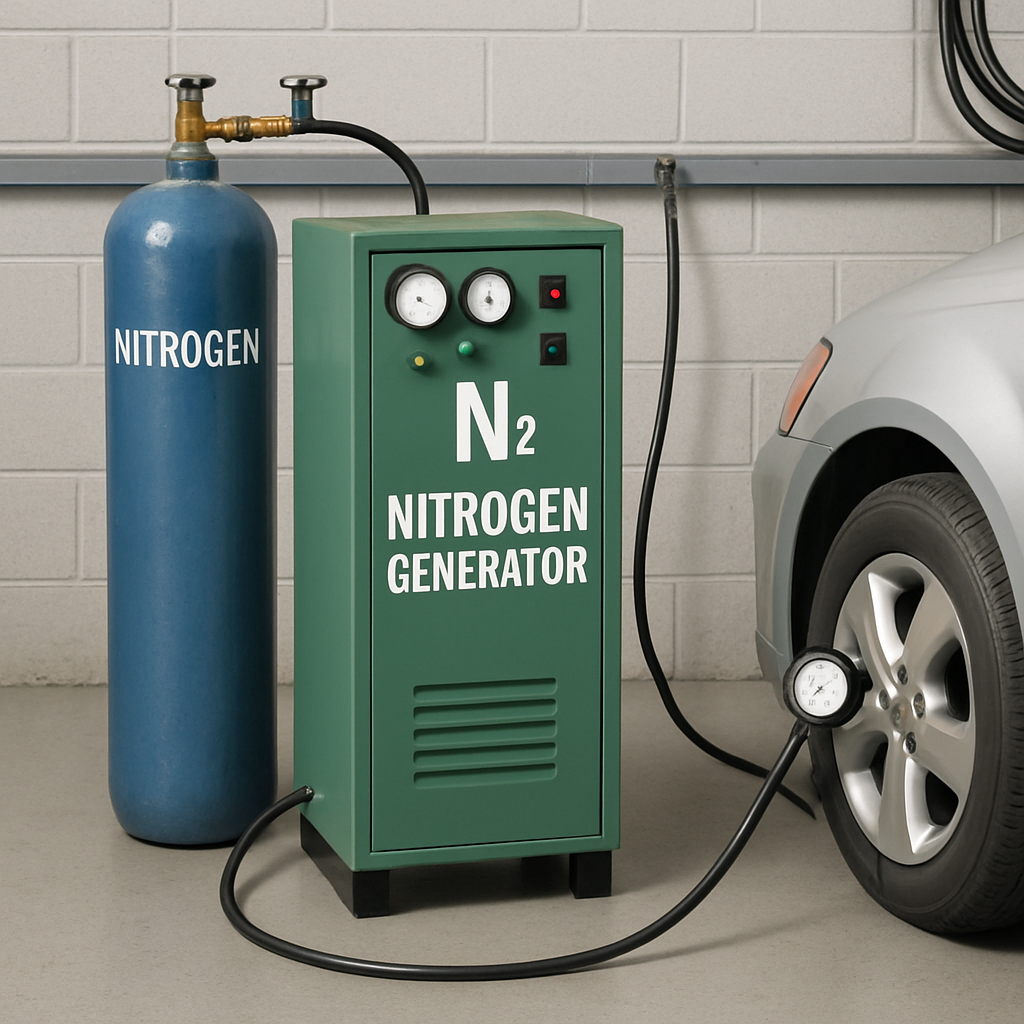
Using a nitrogen generator improves tire pressure maintenance and fuel efficiency. Such benefits make it a preferred choice for many automotive services. It’s particularly useful for high-performance and commercial vehicles. Adopting this technology could significantly enhance your vehicle maintenance approach.
Why Use Nitrogen for Tire Maintenance?
Using nitrogen for tire maintenance offers several advantages over regular air. One of the main benefits is improved tire pressure stability. Nitrogen’s larger molecules escape more slowly, maintaining pressure longer.
A stable tire pressure enhances fuel efficiency. With properly inflated tires, cars require less energy to move, leading to better mileage. This contributes to reduced fuel consumption and cost savings over time.
Additionally, nitrogen inflation helps prevent tire blowouts. Maintaining steady tire pressure minimizes the risk of sudden pressure drops. This results in safer driving conditions, especially for long-distance travel.
Benefits of Using Nitrogen in Tires:
- Extended Tire Life: Reduces wear and tear.
- Improved Fuel Economy: Leads to cost savings.
- Enhanced Safety: Lowers the risk of blowouts.
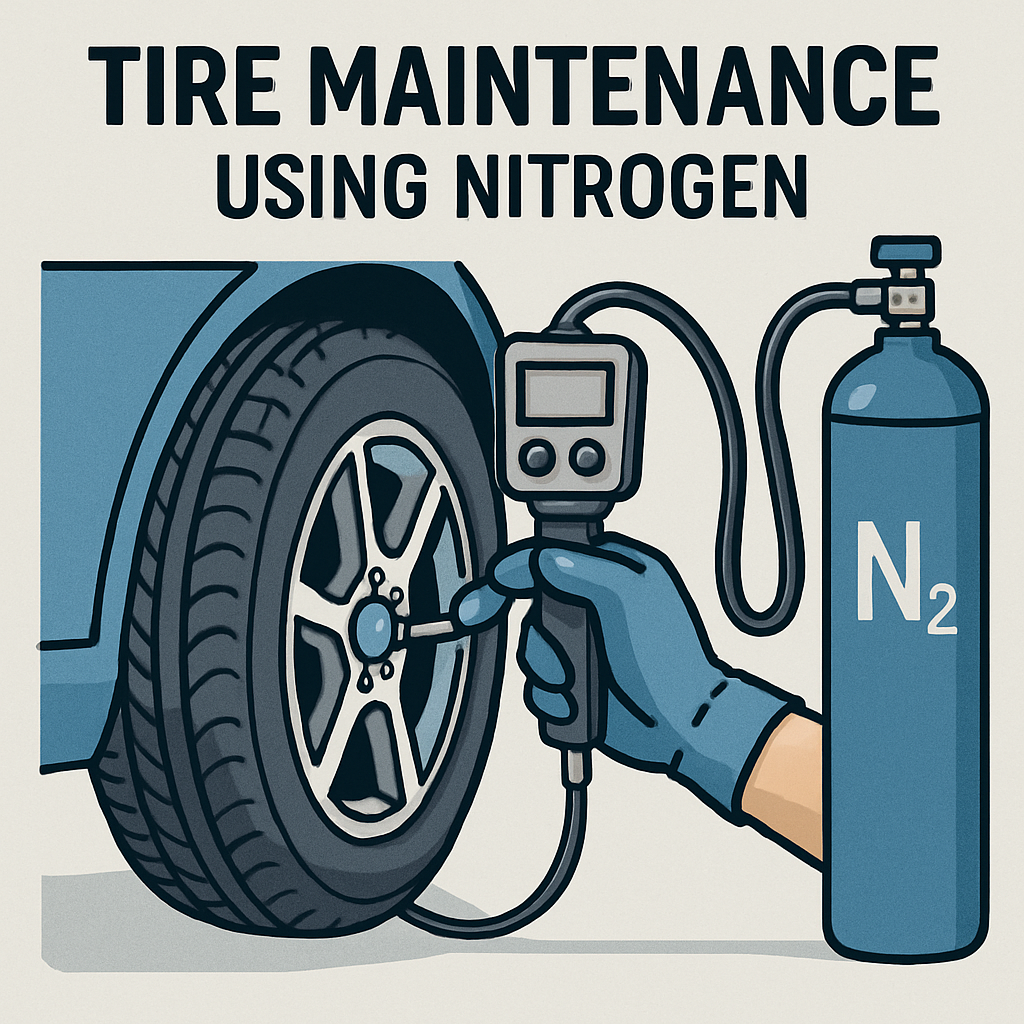
Moreover, nitrogen inflation is environmentally friendly. By reducing tire waste, it decreases the carbon footprint associated with tire production and disposal. Overall, nitrogen inflation stands out as a wise choice for conscientious vehicle owners focused on safety and efficiency.
Key Benefits of Nitrogen Tire Inflation
The use of nitrogen for tire inflation provides notable benefits. Tires filled with nitrogen maintain optimal pressure over time, unlike air-filled tires. This stability leads to more uniform tire wear.
A consistent tire pressure results in improved traction and handling. Drivers notice a smoother ride, with reduced risks on wet or slippery roads. Safety is enhanced significantly, especially in adverse conditions.
Nitrogen inflation contributes to environmental sustainability. By prolonging tire life, it reduces tire disposal and manufacturing demands. This, in turn, lowers energy consumption and pollution associated with tire production.
Key Advantages of Nitrogen in Tires:
- Increased Tire Longevity: Extends usable life.
- Better Vehicle Performance: Enhances handling and comfort.
- Eco-friendly Option: Reduces environmental impact.

by Hugo B. (https://unsplash.com/@snowbird_hb)
Considering these benefits, nitrogen inflation is gaining traction. The advantages extend beyond cost savings, promoting safer, more sustainable driving habits. As more drivers and service providers become aware, the demand for nitrogen inflation services continues to grow.
Types of Nitrogen Generators for Vehicles
Nitrogen generators vary to meet diverse needs in the automotive industry. They can be tailored for small workshops or large-scale service centers. Knowing the types available helps in selecting the right fit.
Portable nitrogen generators are ideal for mobile services. These compact units offer flexibility, allowing on-site tire inflation. They’re particularly useful for roadside assistance services.
Stationary systems are designed for high-volume operations. These generators are more robust, supporting numerous vehicles daily. They integrate well into established workshop infrastructure.
Common Types of Nitrogen Generators:
- Portable Generators: For mobile operations.
- Stationary Systems: Serve high traffic workshops.
- Integrated Units: Combine with existing equipment.

by Kate Andress (https://unsplash.com/@kateandress)
By understanding these types, vehicle service providers can enhance efficiency. Choosing the appropriate generator ultimately boosts customer satisfaction.
Essential Features to Consider When Choosing a Nitrogen Generator
Selecting the right nitrogen generator hinges on key features. These features ensure that the generator meets your service demands efficiently. Consider capacity, portability, and ease of use.
Capacity dictates how many tires you can service at one time. If you handle high volumes, opt for a generator with larger capacity. Smaller operations may find compact systems sufficient.
Portability is crucial for those offering mobile services. Lightweight and easy-to-move generators enable on-the-go tire inflation. However, stationary units are better suited for fixed garages.
Ease of use enhances operational efficiency. Look for generators with user-friendly interfaces and digital controls. These features streamline the inflation process, reducing setup time.
Key Features to Look For:
- Capacity: Matches service volume needs.
- Portability: Essential for mobile services.
- Ease of Use: Simple, intuitive controls.

by Gez Xavier Mansfield (https://unsplash.com/@gezxaviermansfield)
Considering these features ensures you’re well-equipped for effective tire maintenance. A well-chosen generator can significantly improve service quality.
How to Match a Nitrogen Generator to Your Needs
Finding the right nitrogen generator requires understanding your specific needs. Assess the number of vehicles you service regularly. This helps determine the generator’s capacity requirement.
Consider the type of vehicles in your fleet. Commercial and high-performance vehicles often require higher nitrogen purity. Knowing your fleet can guide you to the best fit.
Think about your operational model. If your services are mobile, prioritize portable generators. For stationary workshops, a larger, fixed unit might be more efficient.
Important Considerations:
- Service Volume: Evaluate how many tires you’ll inflate.
- Vehicle Type: High-performance needs may differ.
- Service Model: Mobile versus fixed locati0n needs.
Matching a nitrogen generator to your needs involves thoughtful analysis. This ensures optimal performance and customer satisfaction.
Maintenance and Best Practices for Nitrogen Generators
Regular upkeep is vital for nitrogen generators. Proper maintenance ensures peak performance and longevity. Schedule routine checks on the equipment.
Key areas to focus on include:
- Filter Replacement: Swap filters at recommended intervals.
- Leak Detection: Regularly inspect for leaks.
- Calibration: Ensure the machine is properly calibrated.
Adopt good practices to maximize efficiency. Train your staff on generator use and maintenance routines. Attention to detail prolongs the equipment life and service effectiveness. This diligence ensures you consistently deliver quality tire maintenance services.
Conclusion: Making the Right Choice for Tire Maintenance
Selecting the right automotive nitrogen generator is critical for tire care. Whether you own a vehicle or run a service center, understanding your specific needs is key. Matching your requirements with the generator’s features ensures optimal performance and cost-effectiveness.
Remember, a wise investment in quality equipment can lead to better tire health and savings over time. The benefits of nitrogen inflation—like improved safety and reduced maintenance costs—make it an attractive option. By choosing the right nitrogen generator, you’re taking a proactive step towards enhanced vehicle performance and longevity.