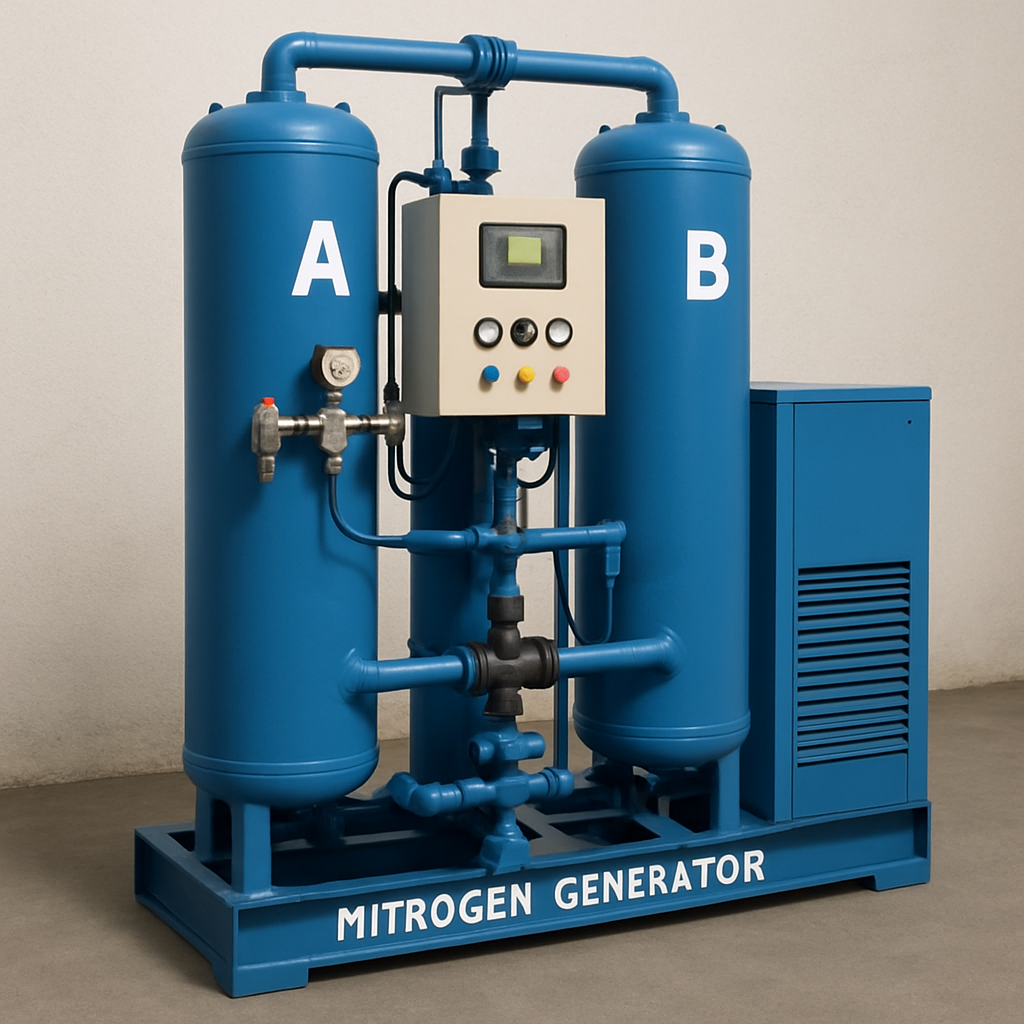
In the ever-evolving landscape of advanced materials science, the demand for innovative solutions continues to surge. The application of nitrogen gas plays a pivotal role in this domain, particularly in the synthesis and processing of new materials. A big capacity PSA (Pressure Swing Adsorption) nitrogen generator emerges as a cornerstone technology, enabling the efficient and reliable production of high-purity nitrogen gas essential for the development of cutting-edge materials.
The Role of Nitrogen in New Materials
Nitrogen gas is indispensable in a myriad of applications, including inerting, blanketing, and purging processes. In the context of new materials, it is crucial for preventing oxidation and maintaining an inert atmosphere during synthesis. This is particularly relevant in the production of advanced materials such as graphene, carbon nanotubes, and metal-organic frameworks. The ability to produce large volumes of high-purity nitrogen on-demand is thus a critical requirement for laboratories and production facilities engaged in materials innovation.
The Technology Behind PSA Nitrogen Generators
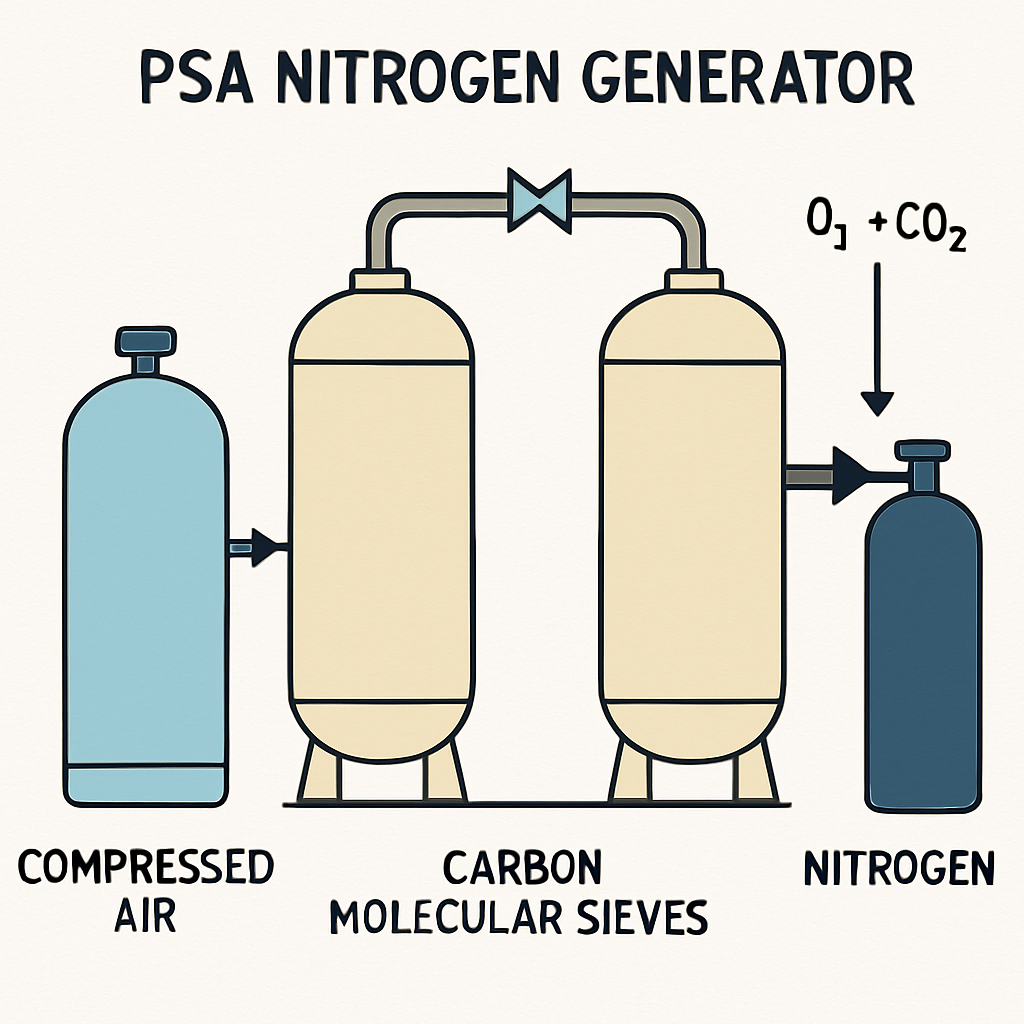
PSA technology operates on the principle of selective adsorption, employing adsorbent materials such as carbon molecular sieves to separate nitrogen from atmospheric air. The process involves alternating cycles of adsorption and desorption under varying pressure conditions, hence the term “pressure swing.” This method is renowned for its efficiency and ability to produce nitrogen with purity levels exceeding 99.999%.
The adoption of big capacity PSA nitrogen generators specifically designed for new materials applications ensures that facilities can meet the high-volume nitrogen demands of cutting-edge research and industrial production. These generators are engineered to deliver consistent performance, ensuring uninterrupted supply even during peak demand periods.
Advantages of Big Capacity PSA Nitrogen Generators
High Volume Production
One of the most compelling advantages of a big capacity PSA nitrogen generator is its ability to produce large volumes of nitrogen gas continuously. This capability is especially beneficial for facilities that require substantial amounts of nitrogen for extended periods, such as those involved in large-scale production of new materials.
Cost Efficiency
In-house nitrogen generation using PSA technology eliminates the logistical challenges and costs associated with the procurement and transportation of nitrogen cylinders. By producing nitrogen on-site, facilities can achieve significant cost savings, reduce their carbon footprint, and enhance operational efficiency.
Reliability and Purity
Big capacity PSA nitrogen generators are engineered to maintain high levels of purity consistently. The integration of advanced monitoring systems ensures that any deviations in nitrogen purity are promptly detected and corrected, safeguarding the integrity of the materials production process.
Flexibility and Scalability
These generators offer unparalleled flexibility, allowing facilities to adjust nitrogen output to match fluctuating demand. Moreover, they are scalable, enabling expansion as the needs of the facility grow, without necessitating a complete overhaul of the nitrogen generation system.
Applications in New Materials Development
Graphene and Carbon Nanotubes
The production of graphene and carbon nanotubes involves chemical vapor deposition (CVD) processes that demand a controlled atmosphere free from oxygen and moisture. A big capacity PSA nitrogen generator provides the requisite high-purity nitrogen environment, ensuring the structural integrity and quality of these materials.
Metal-Organic Frameworks (MOFs)
MOFs are crystalline materials with high porosity and surface area, finding applications in gas storage, separation, and catalysis. The synthesis of MOFs under inert conditions is critical to prevent unwanted reactions that could compromise their functionality. Here, a large nitrogen generator proves indispensable.
Advanced Polymers and Composites
In the realm of advanced polymers and composites, nitrogen is used for purging and blanketing to maintain an inert environment during polymerization and curing processes. This prevents oxidative degradation and ensures the optimal performance of the final material.
The Future of PSA Nitrogen Generators in Materials Science

by Sam Roy (https://unsplash.com/@sam_roy7093)
The integration of big capacity PSA nitrogen generators into the materials science sector heralds a new era of innovation and efficiency. As the demand for advanced materials continues to grow, these generators will play a pivotal role in enabling sustainable and scalable production processes.
Innovations on the Horizon
Emerging technologies such as artificial intelligence and the Internet of Things (IoT) are poised to enhance the operational capabilities of PSA nitrogen generators. Predictive maintenance, real-time monitoring, and automated adjustments based on demand forecasts are just a few examples of how these technologies could revolutionize nitrogen generation systems.
A Sustainable Path Forward
The emphasis on sustainability and environmental responsibility is driving research into more energy-efficient PSA systems. Advances in adsorbent materials and system design aim to reduce energy consumption and operational costs, aligning with global efforts to minimize environmental impact.
Conclusion
In conclusion, the deployment of big capacity PSA nitrogen generators is a strategic investment for facilities engaged in the development of new materials. These generators offer unmatched advantages in terms of volume, cost efficiency, purity, and flexibility, making them indispensable in the quest for innovation in materials science. As technology continues to advance, the role of PSA nitrogen generators will only grow more integral, paving the way for breakthroughs that will shape the future of materials science.