In industrial settings, nitrogen is a crucial component. It plays a vital role in various processes. But how do businesses choose between an onsite nitrogen generator and a nitrogen tank?
Each option has its own benefits and drawbacks. Onsite nitrogen generators produce nitrogen gas directly at the locati0n. This eliminates the need for transportation and storage.
Nitrogen tanks, on the other hand, are pre-filled and require regular deliveries. They offer a straightforward solution with minimal setup.
Understanding the differences between these two options is essential. It helps businesses make informed decisions based on their specific needs.
This article will explore the key differences, costs, and applications. It will guide you in choosing the right nitrogen supply method for your operations.
What Is an Onsite Nitrogen Generator?
An onsite nitrogen generator is a system that produces nitrogen gas at the point of use. It eliminates the need for transport and storage of bottled nitrogen. These devices offer a continuous nitrogen supply, making them ideal for industries with steady demand.
Onsite nitrogen generators use advanced technologies like Pressure Swing Adsorption (PSA) or membrane separation. These methods efficiently extract nitrogen from the air, providing flexibility in purity and flow rate. Industries can tailor these systems to meet specific operational requirements.
Benefits of using onsite nitrogen generators include:
- Reduced logistical costs
- Customizable nitrogen purity and flow
- Continuous supply, reducing downtime
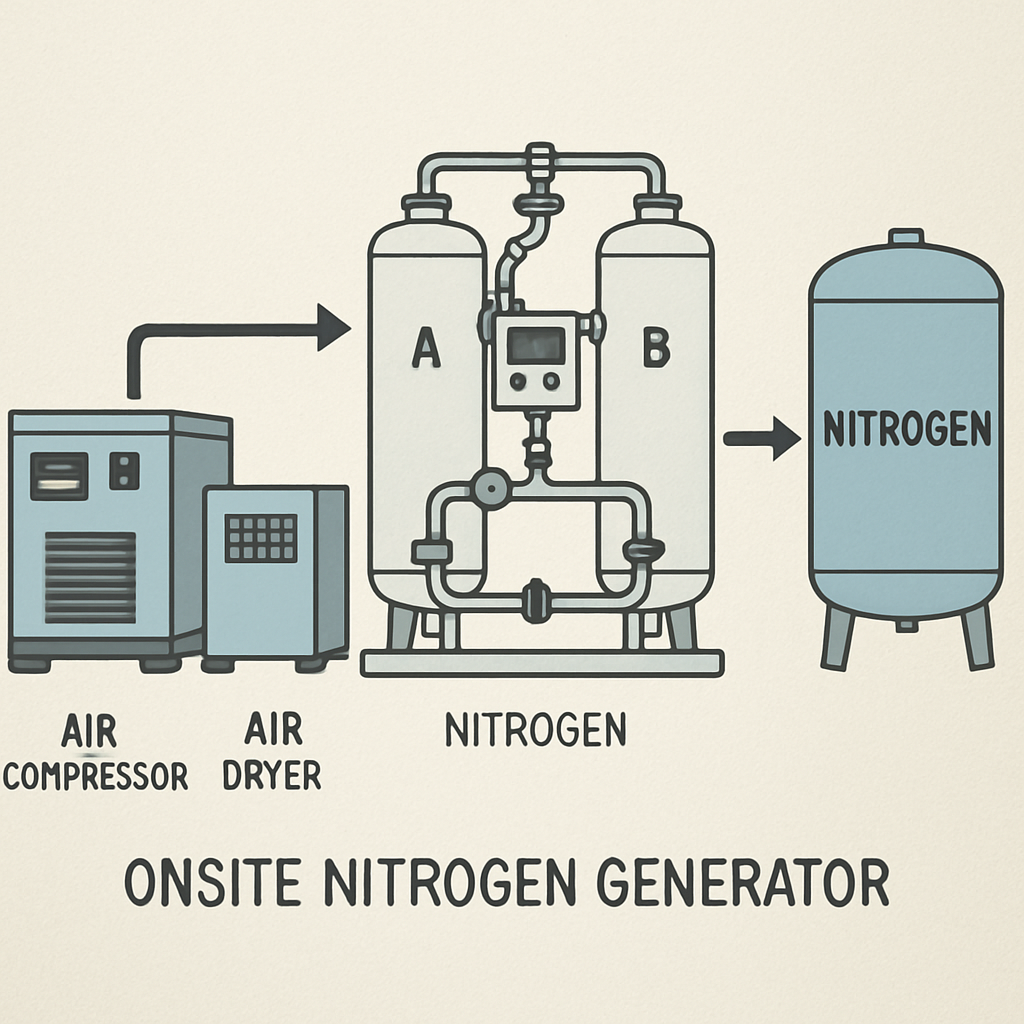
Overall, onsite nitrogen generators enhance operational efficiency. They provide a reliable and sustainable nitrogen source, aligning with modern industrial needs. This solution is practical for businesses aiming to streamline their nitrogen supply chain.
What Is a Nitrogen Tank?
A nitrogen tank is a cylinder filled with nitrogen gas, ready for use in various applications. These tanks require scheduled deliveries to ensure a constant supply. They are often chosen for simplicity and ease of use in many industries.
Nitrogen tanks provide a straightforward solution with minimal setup needs. They are widely available and are commonly used when space is a constraint, or mobility is needed. However, they require careful handling due to high pressure.
Advantages of nitrogen tanks include:
- Easy setup and integration
- No initial equipment costs
- Suitable for temporary projects
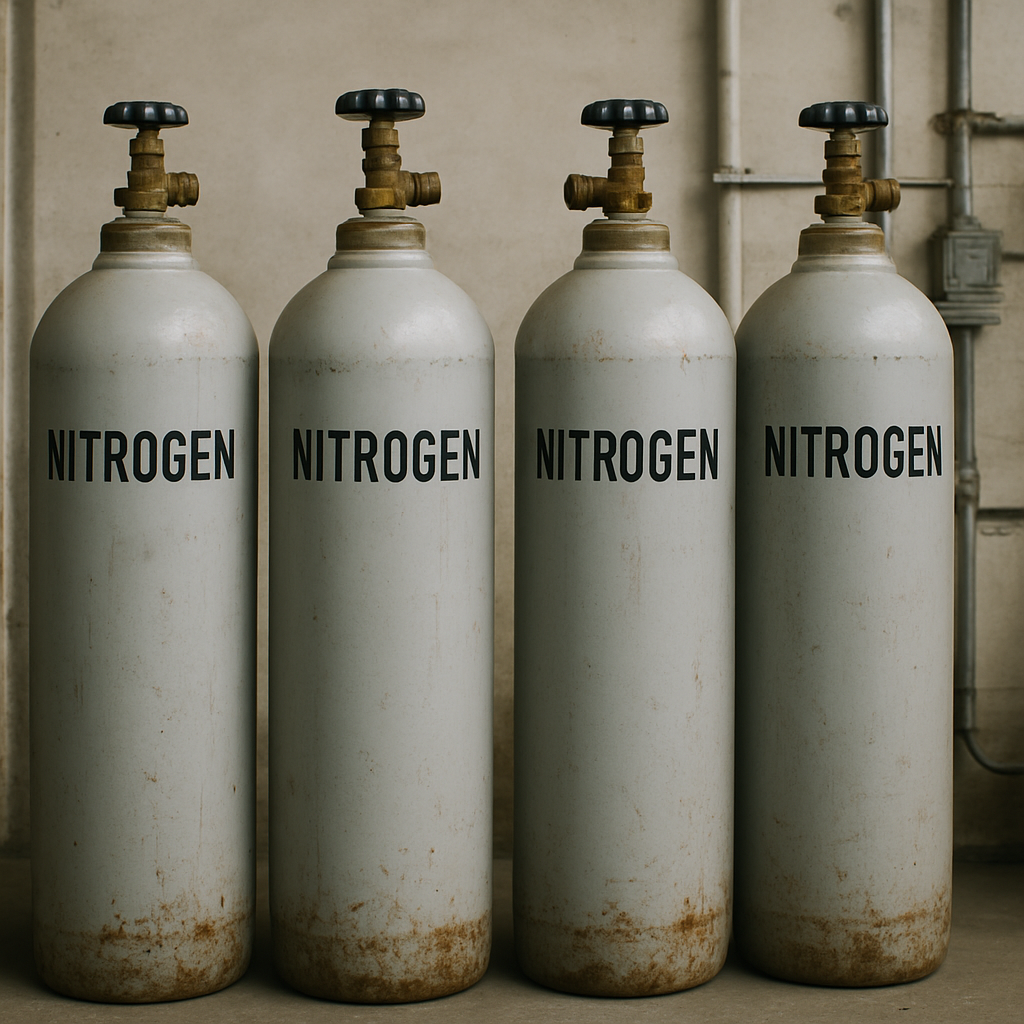
In summary, nitrogen tanks deliver a convenient nitrogen supply. They offer flexibility in deployment, especially for businesses with low or varying nitrogen demand. This method remains a viable choice for many operational scenarios.
Key Differences Between Onsite Nitrogen Generators and Nitrogen Tanks
The core difference lies in how nitrogen is supplied. Onsite nitrogen generators produce nitrogen directly at the point of use. This eliminates transportation and inventory hurdles that come with tanks.
Onsite generators provide a continuous supply, minimizing disruption risks due to shortages. In contrast, nitrogen tanks need regular deliveries to maintain supply levels. They rely on logistical efficiency, which can be unpredictable at times.
Flexibility is another key distinction. Onsite nitrogen generators offer customizable purity levels and flow rates. Nitrogen tanks, however, are limited by their fixed storage capacity and pre-set gas purity.
Here are the main differences:
- Supply Method: Onsite generation vs. delivered tanks
- Supply Continuity: Continuous vs. reliant on delivery schedule
- Customizability: Adjustable purity vs. predetermined purity

by Lfhv gjvj (https://unsplash.com/@givjk)
When choosing between the two, consider supply needs and operational requirements. The right choice depends on both application and business goals. Each solution has unique advantages tailored to specific industrial scenarios.
Cost Comparison: Upfront and Ongoing Expenses
When considering cost, initial investment is key. Onsite nitrogen generators often require higher upfront costs due to equipment purchase and installation. Over time, they can be more economical by reducing logistics and handling expenses.
On the other hand, nitrogen tanks might have a lower initial cost. These tanks are usually rented or purchased with less financial commitment at the outset. However, regular refills and delivery fees add up over time, potentially increasing total expenses.
Businesses should weigh these costs against their specific needs. Consider these factors:
- Initial Expenses: Generators vs. rental/purchase of tanks
- Long-term Costs: Reduced logistics vs. recurring delivery charges
- Operational Savings: Potential efficiency gains with generators
In conclusion, evaluating financial impact is crucial for selecting the optimal solution. Long-term savings often offset higher initial expenditures of onsite generators.
Purity, Supply, and Flexibility
Onsite nitrogen generators stand out with their ability to offer customizable purity levels. This flexibility ensures that businesses can meet specific requirements without overpaying for unnecessary purity. Generators can adjust to different demands easily, providing a constant and reliable supply.
Nitrogen tanks, while often pre-filled with high-purity gas, lack the same level of adjustability. Once filled, their purity level is set until the next refill. This limits control and may not be suitable for all applications.
When it comes to operational flexibility, consider the following:
- Purity Levels: Customizable with generators, fixed with tanks.
- Supply Consistency: Continuous with generators, dependent on deliveries with tanks.
- Application Adaptability: Scalable solutions are feasible with generators.
In summary, generators provide adaptable and consistent nitrogen delivery, while tanks offer simplicity but less flexibility.
Safety and Environmental Impact
Safety is a critical concern when dealing with nitrogen supply systems. Onsite nitrogen generators reduce the need for high-pressure storage, diminishing risks related to handling and storing pressurized gas. This enhances the safety of operations and minimizes the potential for accidents.
In contrast, nitrogen tanks necessitate careful safety measures due to their high-pressure nature. Regular inspections and proper handling protocols are essential to prevent leaks or potential hazards. This setup requires ongoing vigilance and training for employees managing the tanks.
From an environmental perspective, onsite nitrogen generators have a smaller carbon footprint since they eliminate the need for transportation. In contrast, the logistical demands of transporting nitrogen tanks contribute to emissions and environmental degradation.
Consider these factors:
- Risk Levels: Lower with generators, higher with tanks.
- Environmental Impact: Reduced emissions with generators, more with tanks.
- Safety Management: Less intensive for generators, more stringent for tanks.

by Brandon Griggs (https://unsplash.com/@paralitik)
Which Solution Is Right for Your Business?
Choosing between an onsite nitrogen generator and a nitrogen tank depends on several factors. Consider your business’s nitrogen demand, budget, and long-term goals when making this decision. Onsite generators offer continuous supply and customization, ideal for businesses needing consistent and high-volume nitrogen use.
For businesses with lower or variable demand, nitrogen tanks might be a more suitable choice due to their flexibility and straightforward setup. They provide an effective short-term solution without significant upfront investment.
Key considerations include:
- Usage Volume: High or low demand?
- Budget: Initial vs. long-term costs.
- Operational Needs: Continuous or variable supply required?
Aligning your choice with your business needs ensures an efficient and cost-effective nitrogen supply system.
Conclusion
Understanding the difference between an onsite nitrogen generator and a nitrogen tank can guide an informed choice. Each option has unique advantages tailored to specific operational needs.
Evaluate the costs, supply requirements, and safety to determine the best fit. Prioritize long-term efficiency and environmental impact in your decision to enhance your business’s nitrogen supply strategy.