You might not see it, but nitrogen is the reason your potato chips stay crunchy and airplane tires handle massive pressure safely. While air naturally contains 78% nitrogen, the remaining oxygen is a troublemaker that causes food to spoil and metals to rust. Nitrogen, however, is chemically “lazy”—it refuses to react with other materials. By swapping out active oxygen for this stable gas, manufacturers rely on a technique called inerting, which is vital for preventing oxidation in industrial processes.
To harness this invisible shield, we need a machine capable of capturing and concentrating it. A nitrogen compressor acts like a high-tech sorting pump, filtering out the oxygen and squeezing the remaining gas until it has the muscle to do work. Instead of relying on delivery trucks, modern n2 compressors allow facilities to pull this resource directly from the atmosphere, turning thin air into a reliable utility.
Why Nitrogen is the ‘Quiet Hero’ of Freshness and Safety
Imagine biting into a stale potato chip; that culinary disappointment is exactly what nitrogen prevents. Since oxidation causes food to spoil, we need to block oxygen from touching the product. Manufacturers pump pure nitrogen into bags to push the air out—this explains why use nitrogen for food packaging. It acts like an invisible blanket, ensuring nothing reacts with the contents until you break the seal.
Beyond the pantry, this ability to crowd out oxygen saves lives and protects expensive gear. Because nitrogen is “inert”—meaning it refuses to react chemically—it creates a safety bubble known as blanketing. An industrial nitrogen gas filling station compresses this gas to serve three critical roles:
- Preserving food freshness
- Preventing rust on sensitive electronics
- Suppressing fires by displacing combustible oxygen
Generating this supply on-site creates massive financial advantages over having heavy tanks delivered. By making their own gas, companies unlock significant nitrogen cylinder refilling cost savings and stop worrying about delivery trucks running late. Two distinct “sorting machines” make this on-demand magic possible.
PSA vs. Membrane: Which ‘Microscopic Sorting Machine’ Fits Your Needs?
Harvesting nitrogen starts with the air we breathe, but separating the useful gas from the rest requires some brute force. Before any sorting happens, an air compressor for nitrogen generator units must push atmospheric air into the system at high speeds. This initial push provides the energy needed to drive the gas molecules through the microscopic obstacles that will eventually pull them apart.
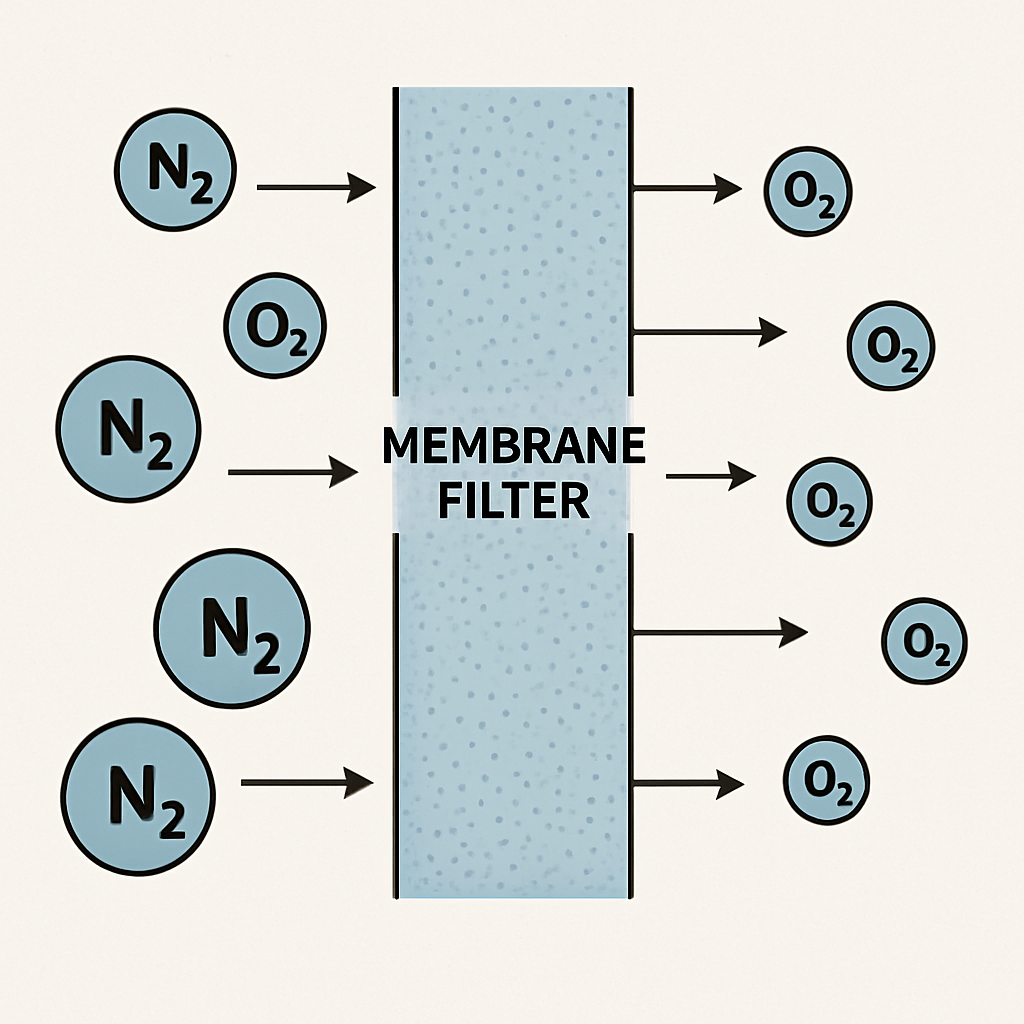
Once the air is moving, it faces one of two distinct sorting methods. Think of membrane technology like a specialized garden hose with millions of tiny pinholes along the side. As air rushes through, the smaller, “fast” oxygen molecules leak out through the walls, while the larger nitrogen molecules travel straight to the end of the tube. In contrast, Pressure Swing Adsorption technology functions like a molecular sponge. It uses a tank filled with carbon beads that “adsorb” or trap oxygen molecules under pressure, letting only the pure nitrogen pass. When the tank is full of oxygen, the system swings the pressure down to release the trapped gas and starts over.
Deciding between a PSA nitrogen generator vs membrane setup usually comes down to a trade-off between purity and simplicity. A high pressure nitrogen generation system utilizing PSA is the gold standard for electronics or food packaging where even a trace of oxygen is dangerous. Membranes, however, are often preferred for their durability in rougher environments.
- Choose PSA (The Sponge): When you need ultra-high purity (up to 99.999%) and high efficiency.
- Choose Membrane (The Filter): When you need a rugged, simple system for purities between 95-99.5%, such as for fire prevention or tire inflation.
Once you have separated the gas, it is often at a relatively low pressure. To make it useful for industrial tools, we need to squeeze it one more time.
Squeezing the Gas: Choosing Between Reciprocating and Centrifugal Boosters
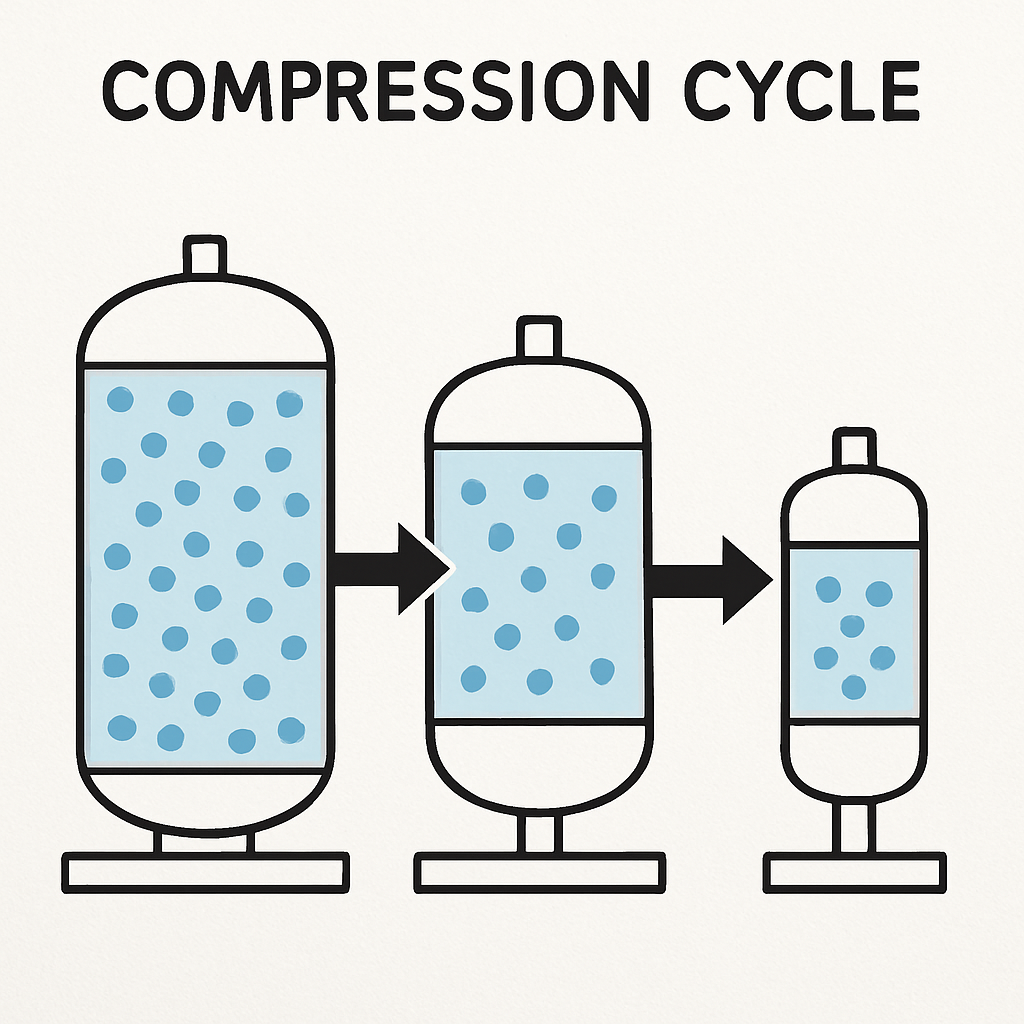
Capturing pure nitrogen is useful, but the gas often lacks the muscle needed for heavy industrial work immediately after separation. Safely increasing nitrogen gas pressure involves more than just brute force; it requires managing the intense heat that naturally builds up when gas molecules are packed tight. To prevent overheating and mechanical failure, engineers utilize multi-stage gas compression cycles. Instead of crushing the gas in one violent motion, the system squeezes it in manageable steps, cooling the gas down between each stage to ensure the equipment remains safe and efficient.
Selecting the mechanical “muscle” for this job depends entirely on your specific power requirements. A reciprocating compressor functions like a car engine’s piston, trapping gas in a cylinder and physically forcing it into a smaller volume. This method is the top choice for a high pressure nitrogen compressor, capable of delivering the concentrated force required to fill steel cylinders or assist in laser cutting. It is the heavy lifter of the industry, prioritizing raw intensity over continuous volume.
Conversely, when the priority is maintaining a steady river of flow rather than extreme force, dynamic compression is the answer. Centrifugal units act more like high-speed spinning fans, accelerating the gas outward to build pressure through velocity. While these machines are excellent for keeping a constant supply moving, they generally cannot reach the extreme PSI levels of piston models. Regardless of the method, the final challenge is ensuring the machine’s internal lubricants don’t contaminate the clean gas.
The Purity Choice: Why Oil-Free Equipment is Vital for Your Food and Electronics
Just as you wouldn’t want motor oil in your salad dressing, sensitive industries cannot tolerate microscopic oil droplets in their nitrogen supply. While standard machines rely on internal lubricants to reduce friction, oil-free gas boosting equipment uses special self-lubricating materials like Teflon to run dry. This ensures that when nitrogen is used to preserve the crunch of a potato chip or shield a delicate microchip during manufacturing, the gas remains perfectly clean and contaminant-free.
Contamination isn’t limited to oil; invisible water vapor is equally destructive. Compressing gas is physically like wringing out a wet sponge—as you squeeze the molecules closer together, moisture is forced out, creating liquid water inside the system. Effective moisture removal from compressed nitrogen is critical because even a tiny amount of water can freeze in control valves or rust the inside of expensive steel piping, turning a safety tool into a corrosion hazard.
Keeping these machines reliable requires a consistent routine rather than complex engineering skills. Maintaining high-pressure gas boosters is mostly about observation and prevention:
- Inspect intake filters weekly to ensure the “lungs” of the machine aren’t clogged.
- Listen for hissing sounds that indicate gas escaping through worn seals.
- Monitor gauge temperatures to ensure the cooling cycle is working correctly.
With the gas now clean and dry, the next step is holding onto it safely.
From Tanks to Tools: Sizing Your Storage and Staying Safe
Approach nitrogen gas storage tank sizing like packing a suitcase: you need enough space for the entire trip, not just today’s outfit. A correctly sized tank covers your usage peaks, ensuring your workflow never stalls. However, managing this supply demands strict inert gas handling safety protocols. Because nitrogen is an invisible “lazy” gas that displaces oxygen, proper ventilation is critical to keep your workspace safe while you work.
Beyond safety and logistics, generating your own nitrogen offers a powerful shift from renting tanks to owning your supply. This technology keeps food fresh and industries safe. Next time you open a crisp bag of chips, remember the silent, compressed nitrogen making it possible.