In today’s fast-paced industrial world, the demand for nitrogen gas is ever-increasing. From food packaging to chemical manufacturing, industries rely on nitrogen for its inert properties. As industries continue to evolve, the need for efficient, reliable, and cost-effective nitrogen generation solutions becomes more critical. This demand has led to the development of various nitrogen generation technologies, each with its unique advantages and disadvantages. Choosing the right nitrogen generation technology is crucial for efficiency and cost-effectiveness. In this article, we will explore PSA nitrogen generators and compare them with other nitrogen generation technologies to help you make an informed decision.
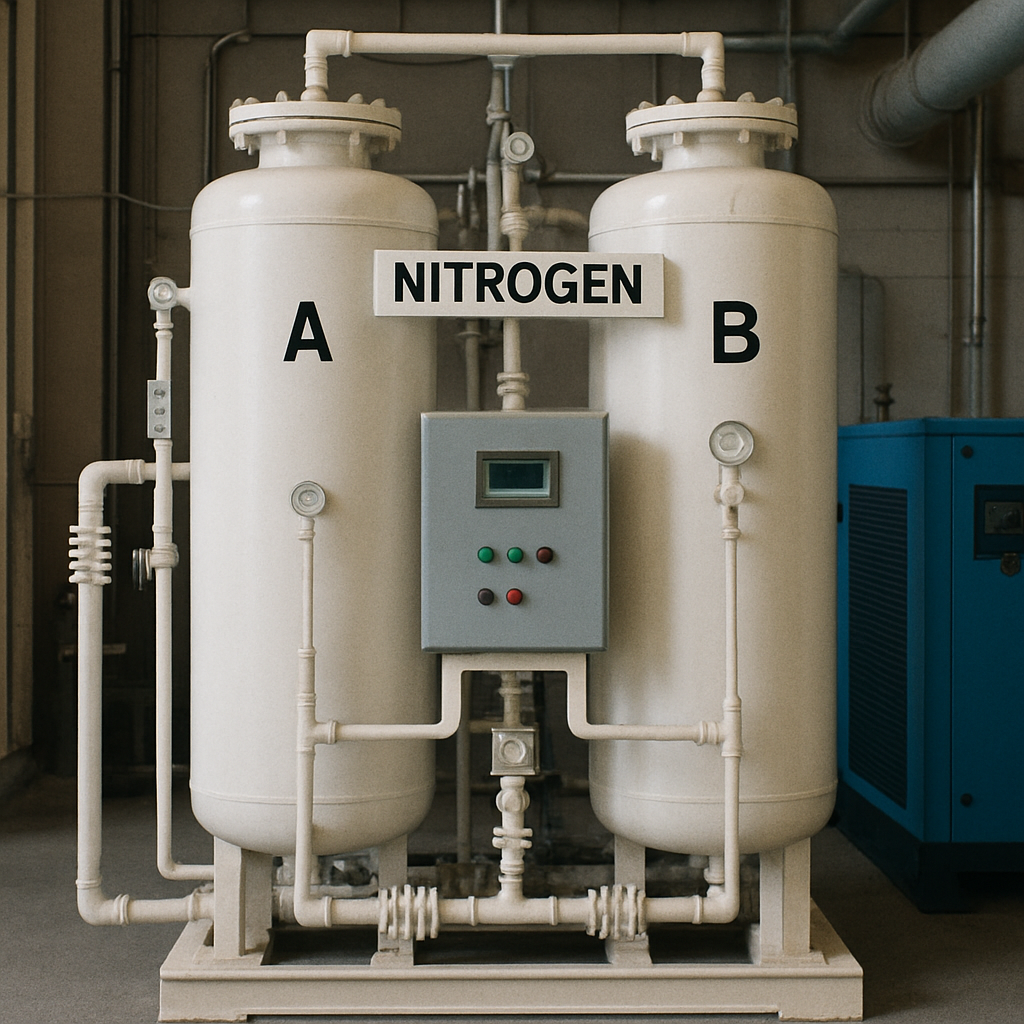
Nitrogen gas generators are devices that produce nitrogen gas from the air. They are essential in various industries, providing a continuous supply of nitrogen without the need for gas cylinders. The continuous production capability of these systems ensures that industries can maintain their operations without interruption. This is particularly important in sectors where a consistent supply of nitrogen is critical to maintaining production quality and efficiency. Among the different types of nitrogen generators, the PSA (Pressure Swing Adsorption) nitrogen generator is one of the most popular.
What is a PSA Nitrogen Generator?
A PSA nitrogen generator uses Pressure Swing Adsorption technology to separate nitrogen from the air. It operates by passing compressed air through a vessel filled with a carbon molecular sieve. This sieve adsorbs oxygen and other gases, allowing nitrogen to pass through as the primary product. The process is cyclic, with two vessels working alternately to ensure a constant flow of nitrogen. The efficiency of the PSA process lies in its ability to regenerate the sieve material, making it a sustainable choice for long-term nitrogen production.
Key Features of PSA Nitrogen Generators
- Efficiency: PSA systems are known for their high efficiency in nitrogen production, making them suitable for industries with large nitrogen demands. Their ability to produce nitrogen continuously without the need for frequent maintenance or replacement of parts makes them particularly attractive.
- Purity: These generators can produce nitrogen with a purity level of up to 99.999%. This high level of purity is essential for applications where the presence of oxygen or other impurities could compromise product quality or safety.
- Cost-Effective: Once installed, PSA nitrogen generators offer a cost-effective solution by eliminating the need for purchased nitrogen gas cylinders. Over time, the savings on gas cylinder purchases and reduced operational downtime contribute to a lower total cost of ownership.
Comparing PSA with Other Technologies
Now that we understand PSA nitrogen generators, let’s compare them with other nitrogen generation technologies. Each technology has its own set of characteristics, which can influence the decision-making process depending on specific industrial needs.
Membrane Nitrogen Generators
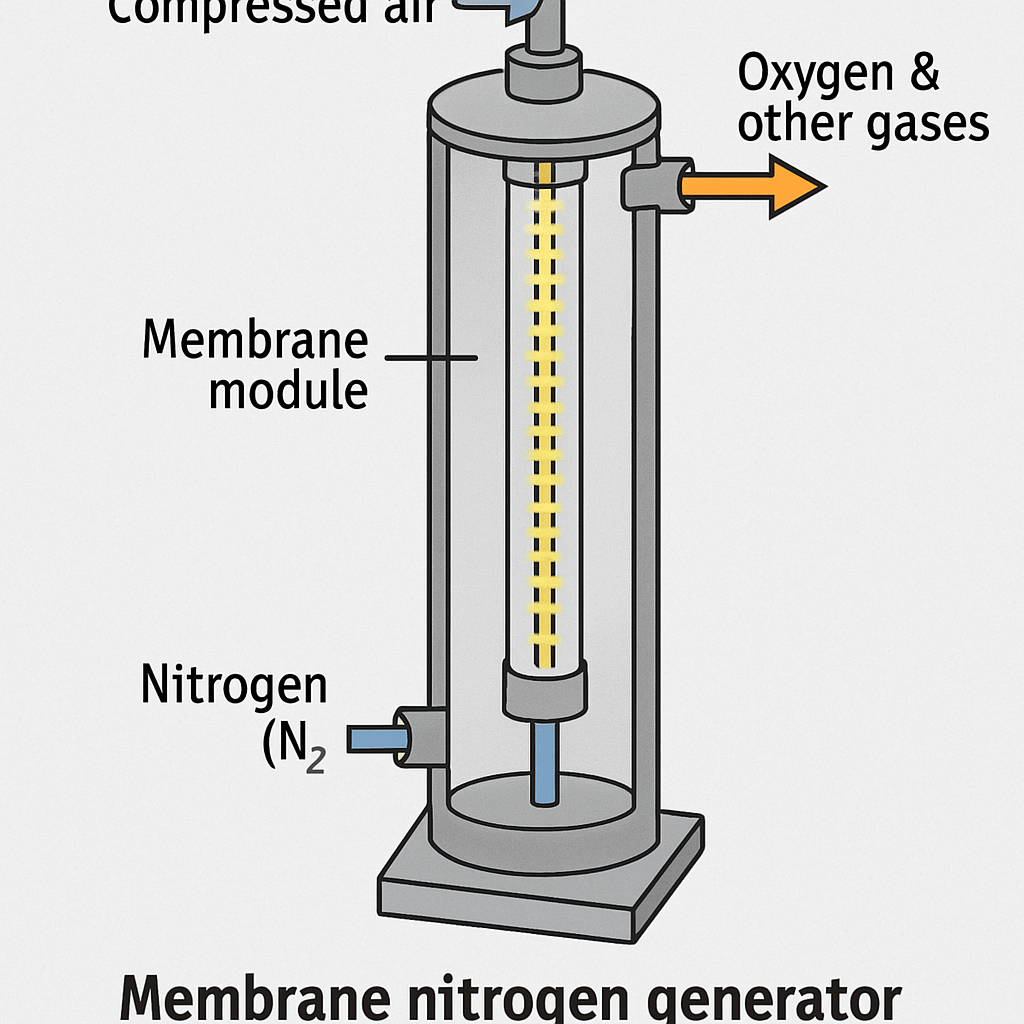
Membrane nitrogen generators use hollow fiber membranes to separate nitrogen from the air. As air passes through the membrane, oxygen and other gases are separated, leaving behind nitrogen. This technology relies on the differential permeation rates of gases through the membrane material, allowing for the selective separation of nitrogen.
Advantages of Membrane Generators
- Compact Design: They are generally more compact and require less space compared to PSA systems. This makes them ideal for industries with limited space or those looking to integrate nitrogen generation into existing systems without extensive modifications.
- Lower Maintenance: Membrane systems have fewer moving parts, resulting in lower maintenance costs. The simplicity of the design reduces the likelihood of mechanical failures and decreases the need for regular servicing.
Disadvantages
- Lower Purity Levels: Membrane generators typically produce nitrogen with a purity level of up to 99.5%, which may not be suitable for industries requiring high purity. This limitation can be a deciding factor for sectors where even trace amounts of oxygen can affect production outcomes.
Cryogenic Nitrogen Generators
Cryogenic nitrogen generators use the principle of liquefaction to separate nitrogen. Air is cooled to cryogenic temperatures, and as it liquefies, nitrogen is separated from other gases. This method is based on the differing boiling points of gases, allowing for the isolation of nitrogen in its liquid form.
Advantages of Cryogenic Generators
- High Purity: These systems can produce nitrogen with purity levels exceeding 99.999%. Such high purity is crucial for applications in pharmaceuticals, electronics, and other precision industries where contamination is unacceptable.
- Large Scale Production: Ideal for industries requiring large volumes of nitrogen. The scalability of cryogenic systems makes them suitable for operations with fluctuating nitrogen demands.
Disadvantages
- High Initial Cost: Cryogenic systems are expensive to install and maintain. The complexity of the equipment and the need for specialized materials contribute to the higher upfront investment.
- Complex Operation: Requires skilled personnel to operate and maintain. The intricacies of cryogenic processes necessitate a workforce trained in handling and troubleshooting sophisticated equipment.
When to Choose PSA Nitrogen Generators
PSA nitrogen generators are an excellent choice for industries where a balance of cost, efficiency, and purity is required. They provide a versatile solution that can be tailored to meet the specific needs of various applications. They are particularly beneficial in applications such as:
- Food and Beverage: For packaging and preserving freshness. Nitrogen’s inert nature helps prevent oxidation, extending the shelf life of perishable goods.
- Electronics: For creating an inert atmosphere to prevent oxidation. The production of sensitive electronic components often requires environments devoid of reactive gases.
- Pharmaceuticals: For maintaining sterile environments. High purity nitrogen is essential in preventing contamination during the manufacturing of drugs and medical devices.
Factors to Consider
When deciding on a nitrogen generator, consider the following factors:
- Purity Requirements: Determine the nitrogen purity level your industry needs. PSA systems offer high purity, but if your application requires ultra-high purity, a cryogenic system might be necessary. Evaluating the impact of nitrogen purity on product quality and safety is crucial.
- Budget Constraints: Assess your budget for both installation and ongoing operational costs. Understanding the total cost of ownership, including potential savings from reduced downtime and maintenance, can guide investment decisions.
- Space Availability: Ensure you have adequate space for the nitrogen generator system you choose. Space considerations can influence the feasibility of installation and impact workflow within your facility.
Conclusion
 by Roger Starnes Sr (https://unsplash.com/@rstar50)
Choosing the right nitrogen generation technology is essential for meeting your industry’s specific needs. PSA nitrogen generators offer a reliable, cost-effective solution with high purity and efficiency. However, it’s important to weigh the pros and cons of each technology based on your unique requirements. By thoroughly understanding the operational dynamics, cost implications, and purity demands of your industry, you can select a system that enhances operational efficiency and maintains product quality.
By understanding the differences between PSA, membrane, and cryogenic nitrogen generators, you can make an informed decision that optimizes your operations and reduces costs. Whether you prioritize purity, cost, or space efficiency, there’s a nitrogen generation technology that fits your needs. Each technology offers distinct advantages, and selecting the right one involves considering both immediate and long-term benefits.
Investing in the right nitrogen generator will ensure a consistent supply of nitrogen, enhancing productivity and efficiency across your operations. With the appropriate system in place, industries can focus on their core activities, confident in the knowledge that their nitrogen supply is secure and efficient.