Nitrogen makes up 78% of the air we breathe for free, yet when you need it for car tires or gardening, the price tag often comes as a shock. It seems contradictory to pay significant sums for something that is literally all around us. This creates a confusing price paradox for consumers wondering how much does nitrogen cost simply to fill a tank or buy a bag of fertilizer.
Think of purchasing this gas like buying milk at a grocery store. You aren’t just paying for the liquid; you are covering the costs of the plastic jug, the pasteurization process, and the refrigeration required to keep it fresh. Similarly, industrial suppliers charge for the massive energy required to filter atmospheric nitrogen and the specialized high-pressure containers needed to hold it safely.
Ultimately, the final bill reflects the difficulty of containment rather than the scarcity of the element. Standard industry practices dictate that costs rise alongside purity levels, meaning a medical-grade tank requires far more processing than garden soil additives. These hidden logistics help determine if you are paying a fair rate for concentration or just a high markup.
Is Nitrogen in Your Tires Worth the $5 to $30 Premium?
Most dealerships charge between $5 and $10 per tire—or a $30 “nitro package”—promising better performance, but does the science back the price tag? The answer lies in the molecule size. Nitrogen molecules are slightly larger than oxygen molecules, meaning they have a harder time pushing through the microscopic pores of your rubber tires. While regular compressed air permeates (leaks) out naturally over time, pure nitrogen stays trapped longer.
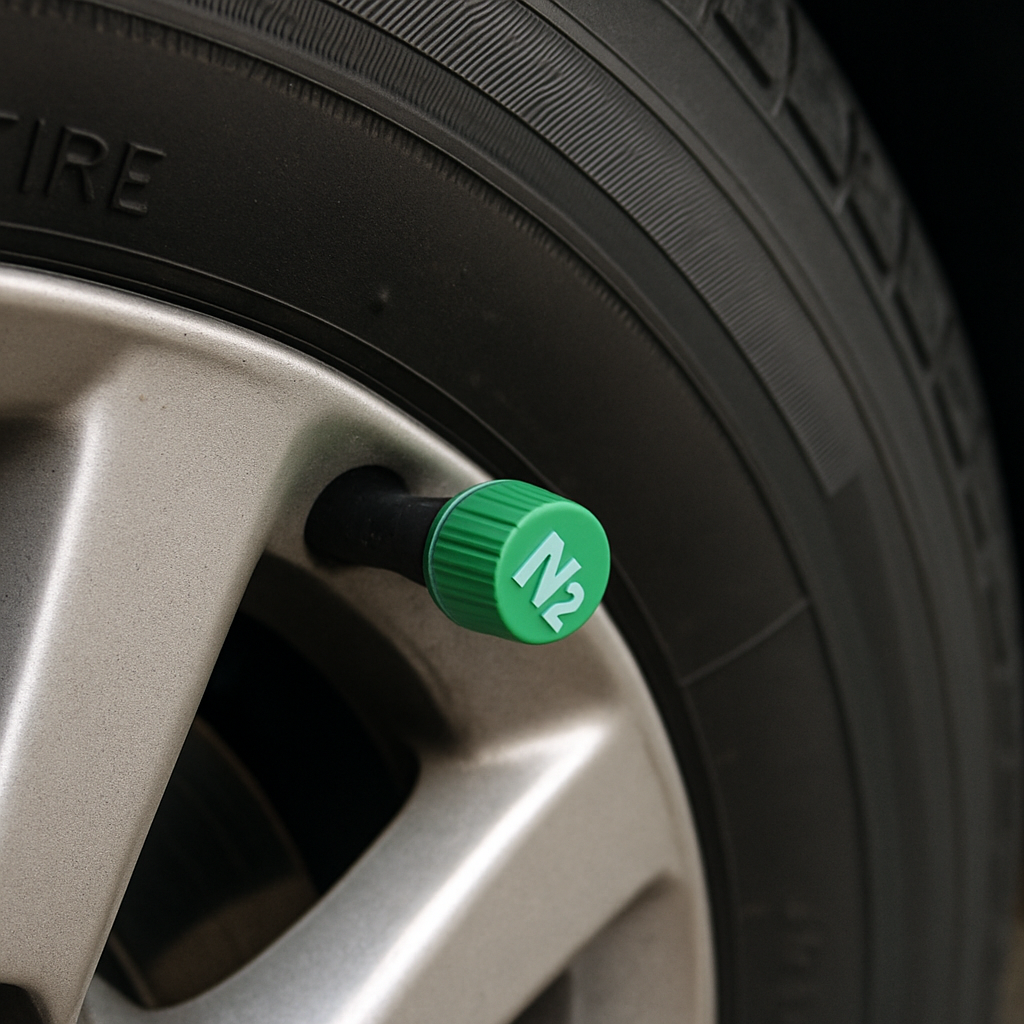
- Pressure Stability: Nitrogen escapes 30-40% slower than air, keeping tires properly inflated for months.
- Fuel Efficiency: Consistent pressure maintains optimal gas mileage (approx. 3% improvement), though this rarely recoups the $30 fee.
- Value: If you rarely check your tire pressure, the convenience is worth the cost; for diligent drivers, free air is sufficient.
Unless you are driving a Formula 1 car where a single PSI changes cornering speed, paying this premium is strictly for convenience. You are essentially paying for the machine that filters the air, not the air itself. This distinction—paying for the equipment rather than the element—becomes vital when analyzing the costs of buying nitrogen in bulk liquid forms.
Liquid Nitrogen Price Realities: Balancing the $2 Gallon with $100 Rental Fees
If you walked into a supplier with a specialized container, liquid nitrogen would only cost you about $2 to $5 per gallon—roughly the price of milk. However, purchasing cryogenics works on the “printer ink model,” where the consumable fluid is the cheapest part of the transaction. Because this liquid boils at -320°F, you are paying primarily for the advanced insulation required to keep the product from instantly vanishing into the atmosphere.
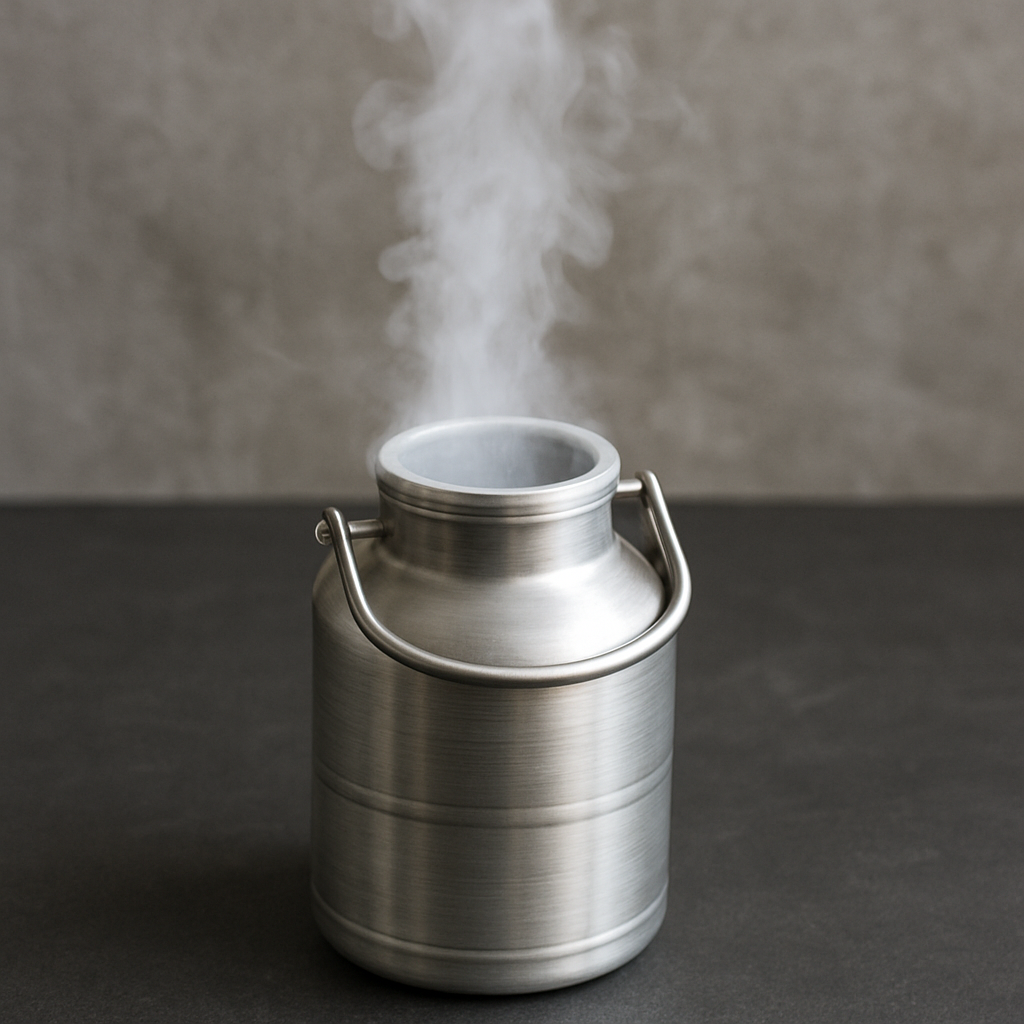
Storing this super-cooled liquid requires a Dewar, which functions as a high-tech, vacuum-sealed thermos capable of handling extreme thermal stress. Purchasing a small 10-liter unit outright often costs over $500, leading most casual users or small businesses to lease the equipment instead. While renting avoids the initial sticker shock, suppliers usually charge a daily or monthly rental fee for the hardware that can eventually cost more than the nitrogen itself if you hold onto the tank for too long.
Logistics represent the final markup, often doubling your total bill through hazardous material (Hazmat) fees and specialized delivery charges. A truck delivery might add a flat $50 to $100 fee regardless of order size, making it significantly cheaper to pick up small volumes yourself if you have a safe means of transport. As the liquid warms and expands, it becomes the high-pressure gas used in industrial welding, which leads to the specific economics of cylinder exchanges.
Navigating Industrial Cylinder Refills and Purity Premiums
For most DIYers or local shops, buying nitrogen gas feels much like swapping a propane tank for a backyard grill. You aren’t paying for the steel bottle each time, but rather a service fee to exchange an empty cylinder for a full one. Current industrial nitrogen gas cylinder refill rates typically land between $25 and $50 for a standard 40-cubic-foot tank used for welding or tire inflation. However, looking at the gas price alone can be misleading; suppliers almost always add a flat hazardous material (Hazmat) surcharge of $10 to $20 per invoice. Because this fee applies whether you fill one tank or ten, it is significantly cheaper to swap multiple cylinders in a single trip.
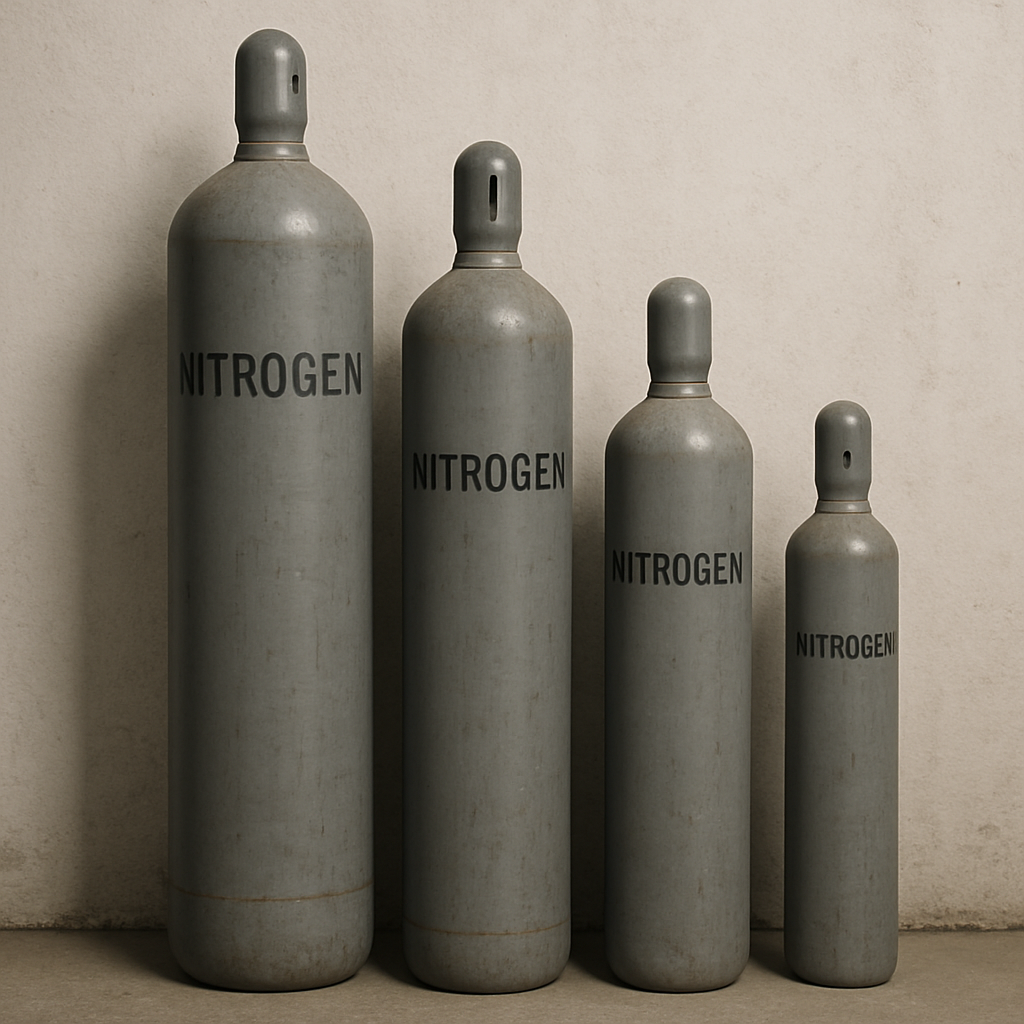
Not every cylinder contains the exact same product, and the intended use drives the final bill. Nitrogen gas purity levels and pricing operate like bottled water: the more filtration required, the higher the cost. Standard “Industrial Grade” is fine for tires, but if you are preserving coffee beans or dispensing draft beer, you need “Food Grade” certification. This guarantees the gas is free of oil and moisture, bumping the food grade nitrogen price for packaging up by roughly 20% to 30%.
- Industrial Grade (99.5% Pure): $25–$50 per refill (Welding, Tires)
- Food Grade (99.9% Pure): $35–$65 per refill (Beverages, Food Packaging)
- High Purity/Zero Grade (99.999% Pure): $100+ per refill (Lab work, Laser cutting)
Beyond buying bottles, some projects require paying for the application rather than just the commodity. Plumbers and HVAC technicians often use nitrogen to “sweep” copper pipes during brazing to prevent oxidation inside the lines. Because this involves skilled labor and equipment setup, nitrogen purging services hourly rates often range from $100 to $150, totally dwarfing the cost of the gas itself. This shift from simple volume pricing to value-based application is even more extreme when we look at how farmers buy solid nitrogen to feed crops.
From Ton Rates to Per-Acre ROI: Why Nitrogen Fertilizer Prices Volatilize
While a mechanic counts costs in cubic feet, the agricultural world operates on an entirely different scale. When you see global headlines discussing nitrogen fertilizer cost per ton trends, usually ranging from $600 to over $1,200 depending on market volatility, they are referring to the wholesale commodity market. This bulk pricing is the industrial equivalent of buying flour by the truckload rather than the kilogram; it offers the lowest price per unit of actual nitrogen but requires massive infrastructure to store and apply safely.
The benchmark for these prices is almost always anhydrous ammonia, a potent chemical that is 82% nitrogen by weight. You can think of this as the “crude oil” of the fertilizer industry because it serves as the base ingredient for most other forms, such as urea or liquid UAN. Nitrogen fertilizer pricing starts here: when the cost of anhydrous ammonia rises, the price of every other derived nitrogen product ripples upward in response.
For the average homeowner standing in a garden center, these industrial spot prices often feel irrelevant, but they strictly dictate the price tag on nitrogen fertilizer bags. The disconnect lies in packaging and distribution; while a farmer purchasing bulk anhydrous might pay the equivalent of $0.50 per pound of nitrogen to treat a field, a consumer buying a 20-pound bag of lawn food pays a premium for safety, granulation, and shelf stability. On a commercial scale, that $800-per-ton bulk price typically translates to an anhydrous ammonia market price per acre of roughly $80 to $120 for nutrient-hungry crops like corn.
Ultimately, these fluctuating costs are rarely arbitrary markups by the retailer. Since pulling nitrogen out of the air requires intense heat and pressure, the number on your receipt is actually a reflection of global energy markets, turning your fertilizer bill into a hidden energy bill.
The ‘Energy Mirror’: How Natural Gas Prices Dictate Your Gas Bill
If the raw ingredient is just free air, why are nitrogen prices increasing alongside your heating bill? You aren’t paying for the gas itself, but for the fuel used to capture it. Separating nitrogen molecules or fusing them into products requires immense power, effectively turning your purchase into a “hidden” energy bill that mirrors the volatility of the global fuel market.
Heavy industry relies on natural gas to strip nitrogen from the atmosphere—a simplified view of the Haber-Bosch process. This connection is incredibly tight, with natural gas often accounting for 70% to 90% of production costs. Consequently, the primary factors affecting industrial gas pricing are usually utility rates; a spike in natural gas prices today guarantees a more expensive tank of nitrogen or bag of fertilizer next month.
Monitoring regional energy costs essentially gives you a crystal ball for your own budgeting. Suppliers inevitably pass these production hikes down to you, regardless of whether you are buying welding cylinders or garden supplies. To escape these fluctuating market rates entirely, high-volume users often crunch the numbers on Generator vs. Tank: Finding Your Break-Even Point on Bulk Nitrogen.
Generator vs. Tank: Finding Your Break-Even Point on Bulk Nitrogen
For small workshops or tire centers, relying on weekly deliveries often feels like renting a printer just to use the ink. You aren’t just paying for the gas; you are paying for the driver, the fuel surcharge, and the rental fees for the steel cylinders sitting on your floor. An on-site nitrogen generator eliminates the middleman by acting like a specialized air compressor, filtering ordinary air to create your own supply on demand.
Switching to this “make it yourself” model requires a significant upfront investment, typically ranging from $2,000 for basic units to over $10,000 for industrial capacity. While that sticker price looks steep compared to a single refill, high-volume users usually reach their break-even point within 12 to 24 months. Once the equipment is paid off, your ongoing cost drops to just the electricity required to run the machine and occasional maintenance.
| Cost Factor | Bottled Gas (Cylinders) | On-Site Generator | | :— | :— | :— | | Initial Cost | Low (Deposit only) | High ($2k – $10k+) | | Ongoing Fees | Delivery, rental, & hazmat fees | Electricity & maintenance | | Labor | High (Moving heavy tanks) | Low (Push-button operation) | | Stability | Prices fluctuate with market | Fixed cost over time |
Beyond the raw dollar amounts, consider the hidden “handling tax” of manual swaps. Moving heavy, pressurized tanks takes employee time and carries a safety risk that disappears with a stationary machine. If your budget isn’t ready for a large capital purchase, you can still optimize your current contracts by following Your Nitrogen Savings Checklist: How to Minimize Delivery and Rental Fees.
Your Nitrogen Savings Checklist: How to Minimize Delivery and Rental Fees
Looking past the price of the gas itself reveals the hidden logistics fees. Just as the “Printer Ink” model demonstrates, the real expense often hides in the delivery and the tank. To unlock immediate nitrogen savings, stop paying monthly rental “zombie” fees by purchasing your own cylinder if you use gas frequently. For home and garden needs, remember the “Energy Mirror” concept and beat the market by fertilizer budgeting in the off-season, avoiding the spring price spikes caused by high energy demand.
This new perspective turns a confusing invoice into a negotiable conversation. Reduce gas costs by challenging specific line items; next time you see a delivery charge or hazmat fee, ask your supplier if picking it up yourself waives the cost. With these cylinder rental tips and timing strategies, you move from a passive buyer to a smart negotiator, ensuring you pay for the product you need rather than the inefficiencies of moving it.
Shenzhen Yuhan Electronic Technology Co., Ltd. specialize in PSA nitrogen generators, oxygen generators, nitrogen purification systems, and gas equipment solutions. Our expertise spans industries including SMT manufacturing, semiconductor packaging, optoelectronics, and food and pharmaceutical storage.
Contact us: +86 193 0864 1458