Recently, ensuring the quality and safety of our environment, food, and industrial products is more crucial than ever. Across multiple sectors, from environmental science to food safety and industrial quality control, ICP analysis stands out as a cornerstone technique. But what exactly is ICP analysis, and why is it so essential across these various fields?
ICP, or Inductively Coupled Plasma, analysis is a sophisticated technique used to detect and measure the concentration of elements in a sample. This method is highly sensitive and can identify trace elements at parts per million (ppm) or even parts per billion (ppb) levels. The versatility and precision of ICP analysis make it invaluable in numerous applications, providing insights that are critical for maintaining safety, compliance, and quality standards.
At its core, ICP analysis involves the use of a high-temperature plasma to excite atoms in a sample. The process begins with the sample being introduced into the plasma torch, where it undergoes atomization and ionization. This creates a range of ions and excited atoms that emit light at characteristic wavelengths. By measuring the intensity of this emitted light, scientists can determine the concentration of specific elements within the sample. This precise method allows for the detection of even minute quantities of elements, which is vital for applications requiring high accuracy.
The plasma used in ICP analysis is generated by an electric field, which ionizes an inert gas, typically argon. This creates a highly energetic environment capable of breaking down samples into their constituent elements. The unique properties of plasma enable the detection of elements across a wide concentration range, from major constituents to trace impurities. This versatility is one of the reasons why ICP analysis is favored in many scientific and industrial settings.
The equipment used in ICP analysis is highly specialized. Key components include the plasma torch, spectrometer, and a detection system. The spectrometer is essential for separating the light emitted by excited atoms into its component wavelengths. Advances in technology have led to the development of sophisticated instruments that offer enhanced sensitivity, accuracy, and speed. Modern ICP systems can simultaneously measure multiple elements, greatly increasing throughput and efficiency.
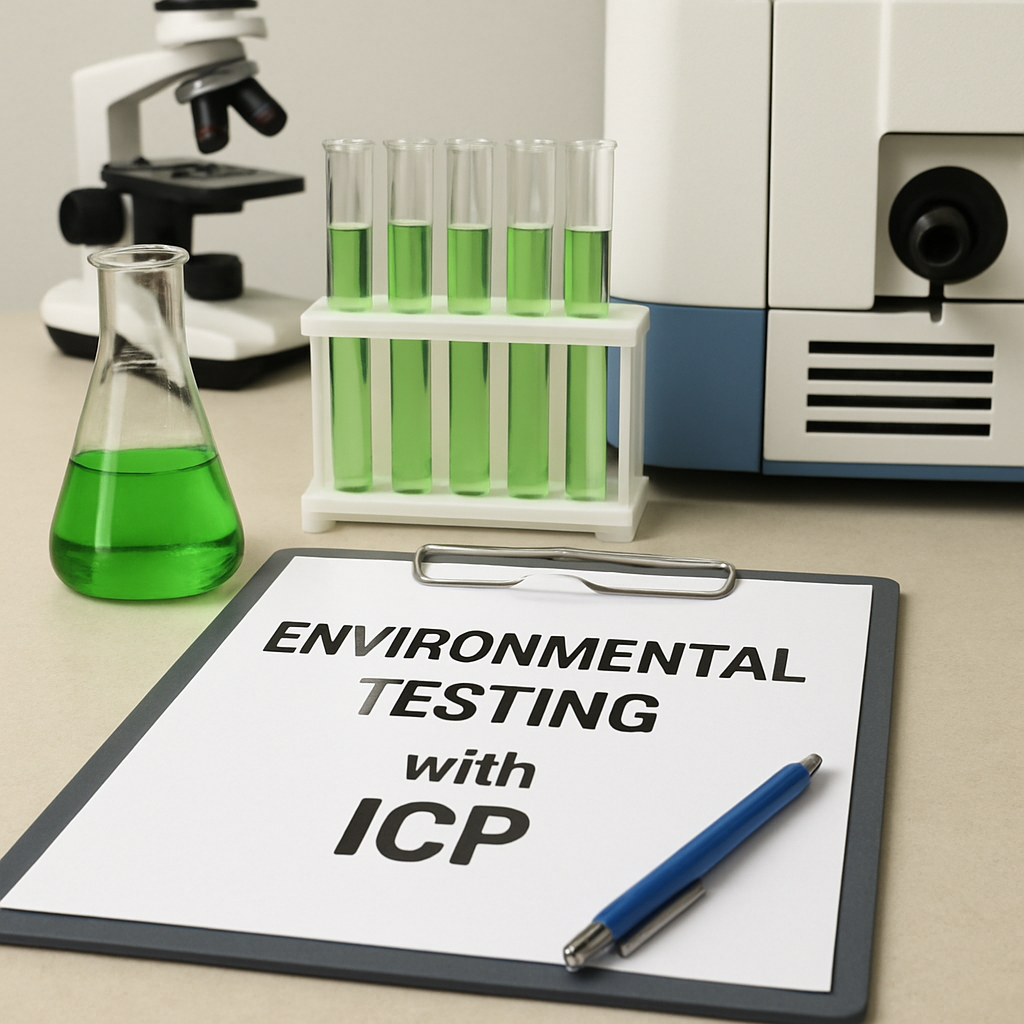
The environmental sector relies heavily on ICP analysis for monitoring and safeguarding natural resources. The ability to detect and quantify trace elements is crucial for maintaining ecological balance and ensuring public health.
Monitoring Air Quality
Air pollution is a significant concern for public health and the environment. ICP analysis plays a critical role in monitoring air quality by detecting harmful metals like lead, arsenic, and mercury in atmospheric samples. These analyses help regulatory bodies enforce air quality standards and protect public health. By regularly sampling and analyzing air, scientists can track pollution sources and trends, enabling more effective interventions and policy-making.
Water Quality Assessment
Water is essential for life, making its purity a priority. ICP analysis is widely used to monitor water quality by identifying and quantifying metals and other contaminants in water sources. This ensures that drinking water is safe and meets regulatory standards. It is also vital in assessing wastewater treatment processes and ensuring the safe discharge of industrial effluents. Regular monitoring helps in maintaining ecosystem health and preventing pollution-related issues.
Soil Contamination Studies
Soil contamination from industrial activities can have far-reaching consequences on agriculture and ecosystems. ICP analysis aids in detecting heavy metals and other pollutants in soil samples, guiding remediation efforts and helping to prevent further environmental degradation. By understanding the extent and nature of soil contamination, scientists and policymakers can develop effective strategies for land restoration and management, ensuring long-term sustainability.
Waste Management and Recycling
In the realm of waste management, ICP analysis assists in evaluating the composition of waste materials, ensuring proper disposal and recycling practices. By identifying hazardous elements, it helps in minimizing environmental impact and promoting sustainable waste management solutions. Recycling processes benefit from the precise identification of valuable metals, which can be recovered and reused, contributing to resource conservation.
Applications in Food Testing
Food safety and quality are paramount for consumer health and market success. ICP analysis plays a critical role in ensuring that food products are safe, nutritious, and compliant with regulations.
Ensuring Food Safety
Food safety is paramount for consumer health. ICP analysis is used to ensure that food products are free from harmful levels of metals like cadmium, lead, and mercury. By analyzing raw ingredients and final products, manufacturers can maintain high safety standards and comply with regulations. This not only protects consumers but also enhances brand reputation and trust in the market.
Nutritional Content Analysis
Beyond safety, ICP analysis is also employed to determine the nutritional content of food items. For instance, it can measure essential minerals such as calcium, iron, and zinc, providing valuable information for nutritional labeling and product development. This data is crucial for consumers making informed dietary choices and for manufacturers aiming to create health-promoting products.
Detecting Contaminants in Packaging
Food packaging materials can sometimes leach harmful substances into the food. ICP analysis helps in detecting potential contaminants in packaging materials, ensuring that they are safe and suitable for food contact. By testing packaging materials, manufacturers can prevent contamination, ensuring the integrity and safety of their products throughout the supply chain.
Quality Control in Food Processing
Within the food industry, maintaining consistent quality is key to consumer satisfaction. ICP analysis supports quality control by verifying the composition of ingredients and finished products. This ensures that products meet the desired standards and specifications, reducing the risk of recalls and enhancing consumer confidence.
Industrial Testing Applications
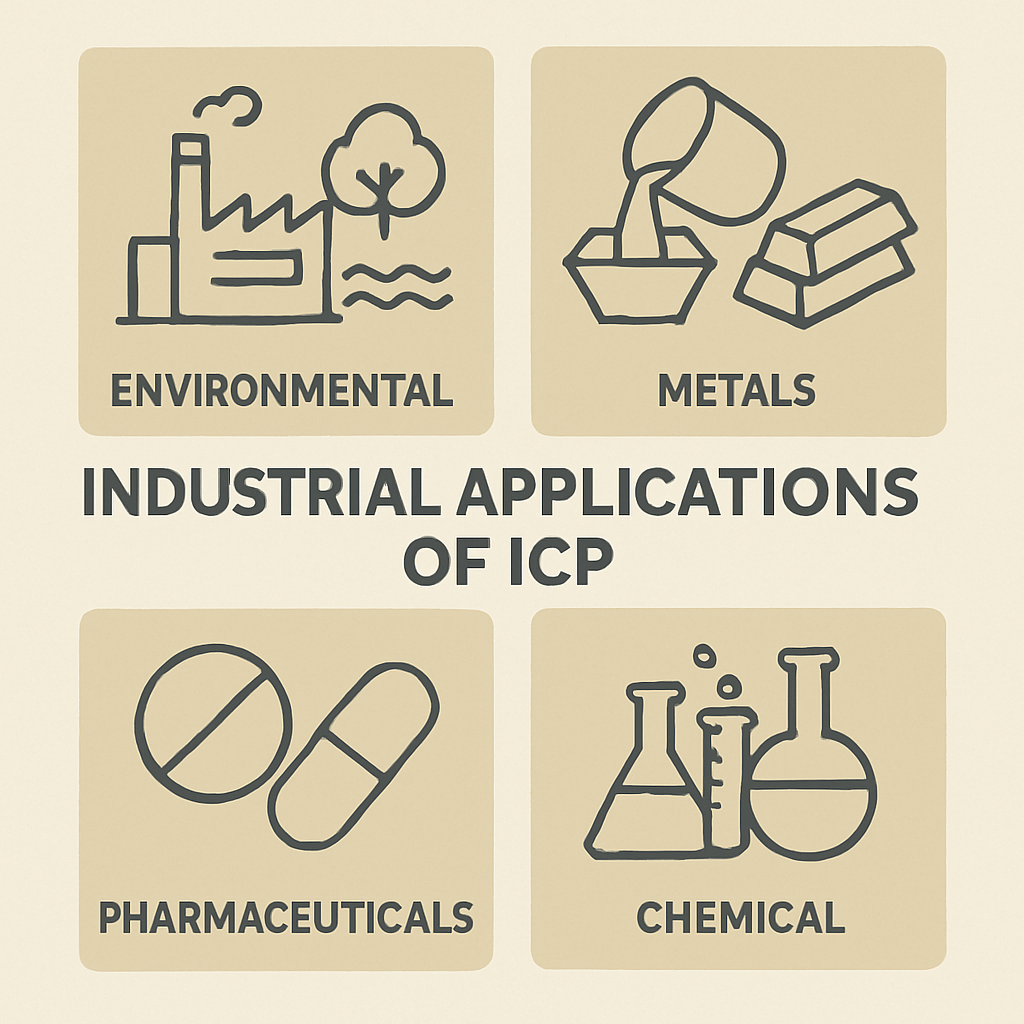
The industrial sector benefits immensely from ICP analysis, which is integral to maintaining product quality, safety, and compliance with environmental regulations.
Quality Control in Manufacturing
In the industrial sector, ICP analysis is crucial for quality control. It is employed to verify the composition of raw materials and finished products, ensuring that they meet required specifications. This is particularly important in industries like metal manufacturing, where precise alloy compositions are essential. By ensuring material integrity, manufacturers can produce high-quality products that meet consumer and regulatory expectations.
Monitoring Industrial Emissions
Industries emit various pollutants into the environment, and ICP analysis helps monitor these emissions. By analyzing stack emissions, industries can identify and reduce the release of harmful metals into the atmosphere, minimizing their environmental impact. This proactive approach not only aids in regulatory compliance but also enhances corporate responsibility and environmental stewardship.
Battery and Electronics Testing
The production of batteries and electronic components requires precise control of material composition. ICP analysis provides accurate measurements of elements such as lithium, cobalt, and nickel, ensuring product performance and reliability. As the demand for advanced electronics and sustainable energy solutions grows, the role of ICP analysis in ensuring material quality and safety becomes even more critical.
Mining and Metal Refining
In the mining sector, ICP analysis is indispensable for analyzing ore samples and refining processes. By determining the concentration of valuable metals, companies can optimize extraction and refining operations, improving efficiency and profitability. This also aids in environmental management, ensuring that mining activities are conducted responsibly and sustainably.
Advantages of ICP Analysis
ICP analysis offers numerous advantages that make it an essential tool across various industries. Its capability to deliver precise and accurate measurements underlies its widespread application.
High Sensitivity and Precision
ICP analysis offers unparalleled sensitivity and precision, capable of detecting trace elements at extremely low concentrations. This makes it ideal for applications where accuracy is paramount. The high-resolution data it provides is crucial for decision-making processes, ensuring compliance and enhancing product quality.
Versatility Across Different Matrices
One of the significant advantages of ICP analysis is its versatility. It can be applied to a wide range of sample types, including liquids, solids, and gases, making it suitable for diverse industries and applications. This adaptability allows for comprehensive testing and analysis, catering to the unique needs of each sector.
Rapid and Efficient Testing
With the ability to analyze multiple elements simultaneously, ICP analysis provides rapid and efficient testing. This is particularly beneficial in high-throughput environments where time is of the essence. The efficiency of ICP analysis helps industries meet tight deadlines and respond swiftly to quality control challenges.
Cost-Effectiveness and Scalability
ICP analysis is not only efficient but also cost-effective. Its ability to test multiple elements in a single run reduces operational costs. Moreover, the scalability of ICP systems allows for adaptation to both small-scale laboratories and large industrial setups, making it an economical choice for businesses of all sizes.
Conclusion
Inductively Coupled Plasma analysis is a powerful tool that finds applications across environmental, food, and industrial testing. Its ability to provide precise and accurate measurements of elemental concentrations makes it indispensable for ensuring quality and safety in various fields. By leveraging the capabilities of ICP analysis, industries can protect public health, meet regulatory requirements, and contribute to a safer and more sustainable world. As technology continues to advance, the applications of ICP analysis are likely to expand even further, reinforcing its role as a cornerstone in analytical chemistry. The future promises even more innovative uses for ICP analysis, solidifying its place as a vital component of modern scientific and industrial practices.
Founded in 2013 and 2014, Shenzhen Yuhan Electronic Technology Co., Ltd. and Suzhou Hongjinli Gas Equipment Co., Ltd. specialize in PSA nitrogen generators, oxygen generators, nitrogen purification systems, and gas equipment solutions. Our expertise spans industries including SMT manufacturing, semiconductor packaging, optoelectronics, and food and pharmaceutical storage.