Inductively Coupled Plasma Mass Spectrometry, commonly known as ICPMS, is a powerful analytical technique used to detect and measure trace elements in various samples. It offers unparalleled sensitivity and precision, making it a preferred choice in many scientific and industrial applications. This guide will walk you through the essentials of ICPMS, its applications, and its advantages over other methods like ICP-OES.
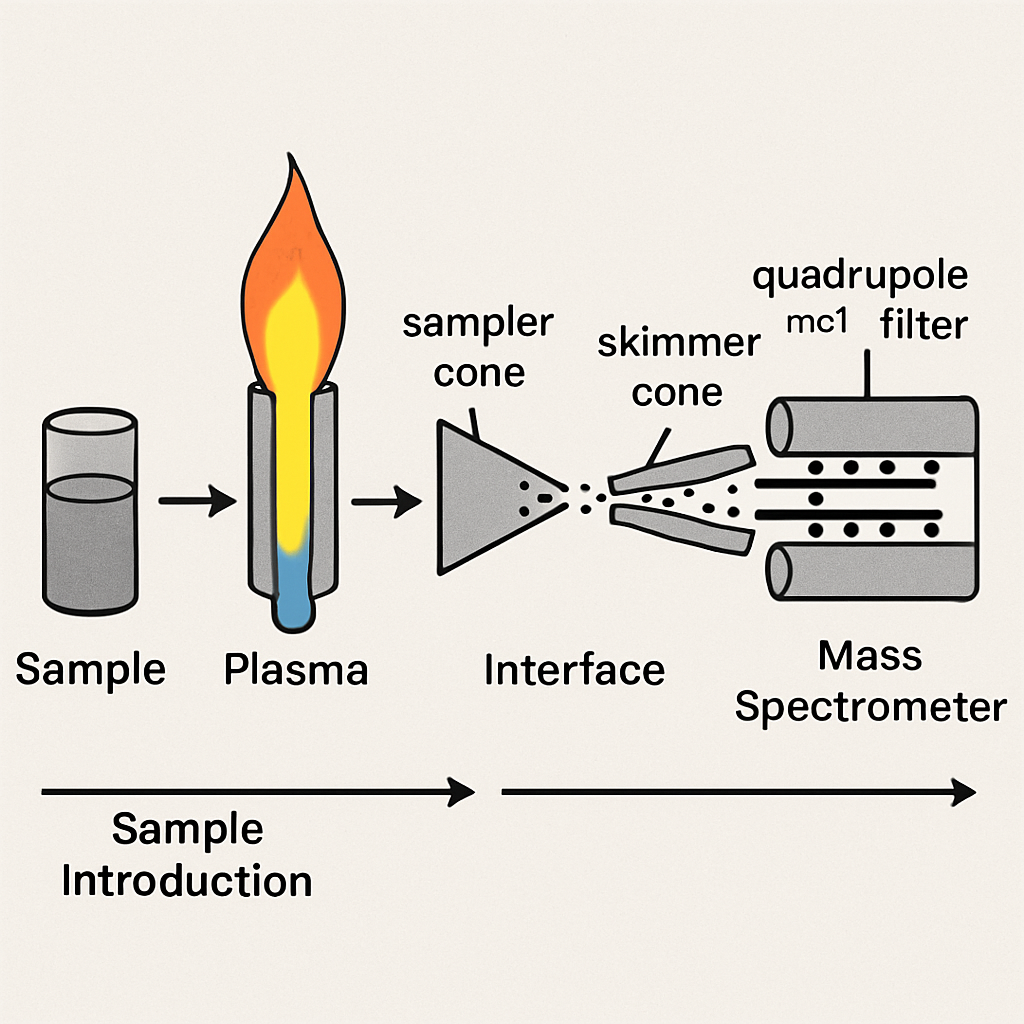
ICPMS combines a high-temperature plasma source with a mass spectrometer to detect elements at trace levels. But how does it actually work?
The Basics of ICPMS
Inductively Coupled Plasma Mass Spectrometry involves three main steps:
- Sample Introduction: Samples, usually in liquid form, are introduced into the system using a nebulizer. The nebulizer converts the liquid sample into an aerosol.
- Ionization: The aerosol enters the plasma, where it is ionized at extremely high temperatures. This process breaks down the sample into its elemental ions.
- Mass Spectrometry: The ions are directed into a mass spectrometer, where they are separated based on their mass-to-charge ratio. The detector then identifies and quantifies the elements present in the sample.
Key Components of ICPMS
- Plasma Source: Generates the high-temperature environment needed to ionize the sample.
- Mass Analyzer: Sorts ions based on their mass-to-charge ratio.
- Detector: Measures the intensity of ions, allowing for the quantification of elements.
Applications of ICPMS
ICPMS is used in various fields due to its ability to measure trace elements with high precision and sensitivity.
Environmental Analysis
ICPMS is widely used in environmental science to monitor pollution levels. It helps in detecting heavy metals in water, soil, and air, which is crucial for environmental protection and regulatory compliance.
Pharmaceutical Industry
In the pharmaceutical sector, ICPMS ensures the purity of drugs by detecting trace metal impurities. This is vital for drug safety and efficacy.
Food and Beverage Testing
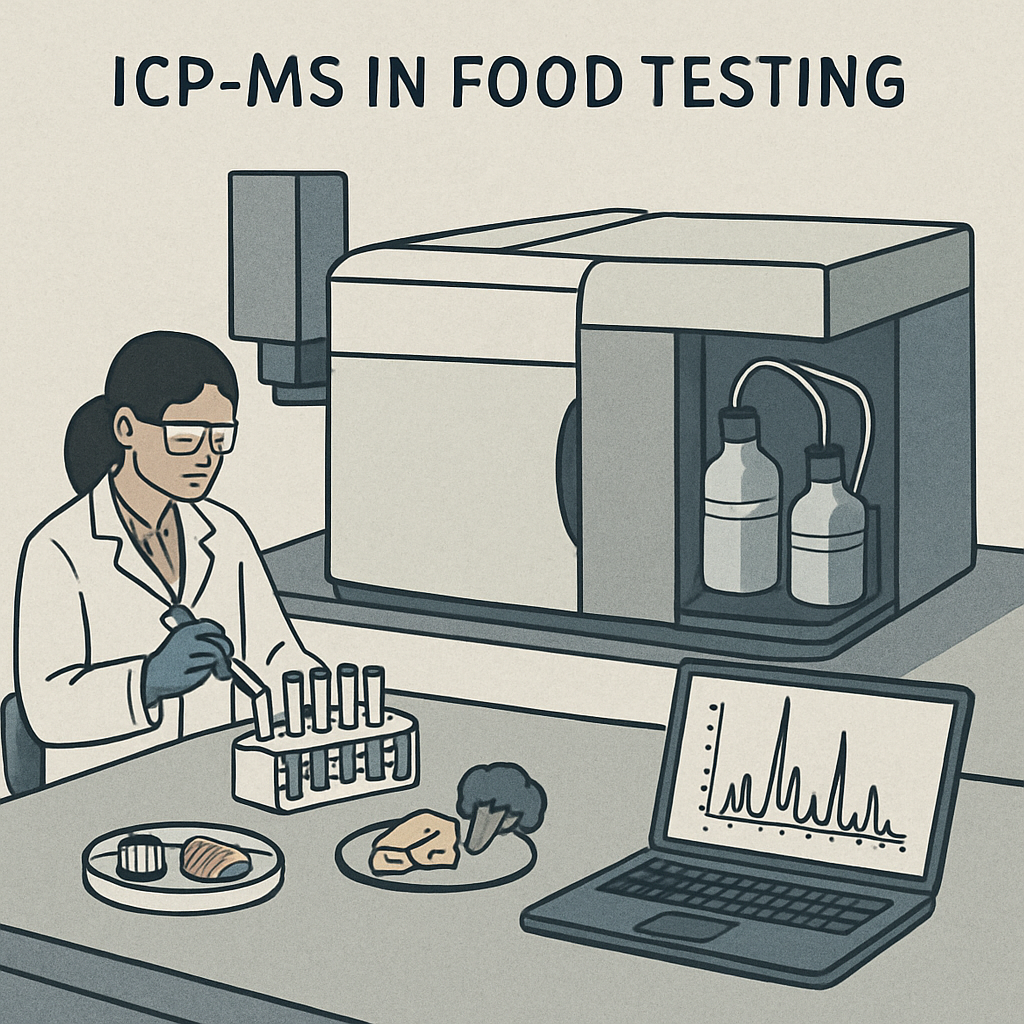
Ensuring food safety is another critical application of ICP-MS. It detects harmful elements like lead and mercury in food products, helping to safeguard public health.
Clinical and Biological Research
In clinical settings, ICP-MS is used for biomonitoring and nutritional studies. It can measure trace elements in biological samples like blood and urine, aiding in health diagnostics and research.
ICP-OES vs. ICPMS
ICPMS and ICP-OES (Inductively Coupled Plasma Optical Emission Spectrometry) are both used for elemental analysis, but they differ in several ways.
Sensitivity
ICPMS is more sensitive than ICP-OES, capable of detecting elements at parts per trillion (ppt) levels. This makes it ideal for applications requiring ultra-trace detection.
Speed and Simplicity
ICP-OES is generally faster and simpler than ICPMS, making it suitable for routine analysis where extreme sensitivity is not required.
Cost
ICPMS instruments tend to be more expensive than ICP-OES systems, both in terms of initial investment and operational costs. However, the increased sensitivity and precision of ICPMS often justify the higher cost for many applications.
Choosing Between ICP-OES and ICP-MS
The choice between ICP-OES and ICPMS depends on your specific needs. If you require high sensitivity and precision, ICPMS is the way to go. For simpler, less demanding analyses, ICP-OES may suffice.
Advantages of ICP-MS
ICPMS offers several benefits that make it a top choice for elemental analysis:
- High Sensitivity: Detects elements at extremely low concentrations.
- Wide Dynamic Range: Can measure a broad concentration range of elements.
- Multi-Element Detection: Capable of detecting multiple elements simultaneously.
- Isotopic Analysis: Allows for the determination of isotopic ratios, useful in various scientific research fields.
Challenges and Limitations of ICP-MS
Despite its advantages, ICPMS also has some limitations.
Interference
Interferences can occur due to the presence of polyatomic ions or matrix effects, which can affect accuracy. However, modern ICPMS systems are equipped with collision/reaction cells to minimize these interferences.
Cost and Maintenance
As mentioned earlier, ICPMS instruments are costly and require regular maintenance. This can be a limiting factor for smaller laboratories with tight budgets.
Future Trends in ICPMS
 by Alan W (https://unsplash.com/@alanw)
As technology advances, ICPMS continues to evolve. Here are some trends shaping its future:
- Miniaturization: Portable ICPMS devices are being developed for field applications.
- Automation: Improved automation for sample preparation and analysis is increasing efficiency.
- Enhanced Software: Advanced software solutions are making data analysis more straightforward and comprehensive.
Conclusion
Inductively Coupled Plasma Mass Spectrometry (ICPMS) is an essential tool for precise and sensitive elemental analysis across various industries. Whether you are monitoring environmental pollutants, ensuring drug safety, or conducting cutting-edge research, ICP-MS provides the accuracy and reliability needed for trace element detection.
When choosing between ICP-OES and ICPMS, consider your specific analytical needs, budget, and the level of sensitivity required. With ongoing advancements in technology, ICP-MS will continue to play a pivotal role in scientific and industrial applications.
By understanding the fundamentals and applications of ICPMS, you can make informed decisions and leverage this powerful tool to its fullest potential.
Founded in 2013 and 2014, Shenzhen Yuhan Electronic Technology Co., Ltd. and Suzhou Hongjinli Gas Equipment Co., Ltd. specialize in PSA nitrogen generators, oxygen generators, nitrogen purification systems, and gas equipment solutions. Our expertise spans industries including SMT manufacturing, semiconductor packaging, optoelectronics, and food and pharmaceutical storage.