Choosing between liquid nitrogen and nitrogen generators can be challenging. Both options have unique benefits and costs.
Liquid nitrogen is widely used for its cooling properties. It requires specialized storage and regular deliveries.
On the other hand, nitrogen generators produce nitrogen on-site. This eliminates transportation costs and offers flexibility.
Cost-effectiveness is a key factor in this decision. It depends on your business’s specific needs and usage patterns.
Understanding the differences in storage, cost, and operational factors is crucial. This knowledge helps in making an informed choice.
In this article, we will explore these aspects in detail. Our goal is to help you determine the most cost-effective solution for your nitrogen needs.
Understanding Liquid Nitrogen and Nitrogen Generators
Liquid nitrogen is a key player in various industries. Its extremely low boiling point makes it ideal for cooling and cryogenic applications.
Nitrogen generators, in contrast, deliver nitrogen gas at ambient temperature. They produce nitrogen on-site, ensuring a steady supply.
Here’s how they differ:
- Storage: Liquid nitrogen requires insulated tanks.
- Production: Generators produce on-demand nitrogen.
- Transportation: Liquid nitrogen needs delivery, generators do not.
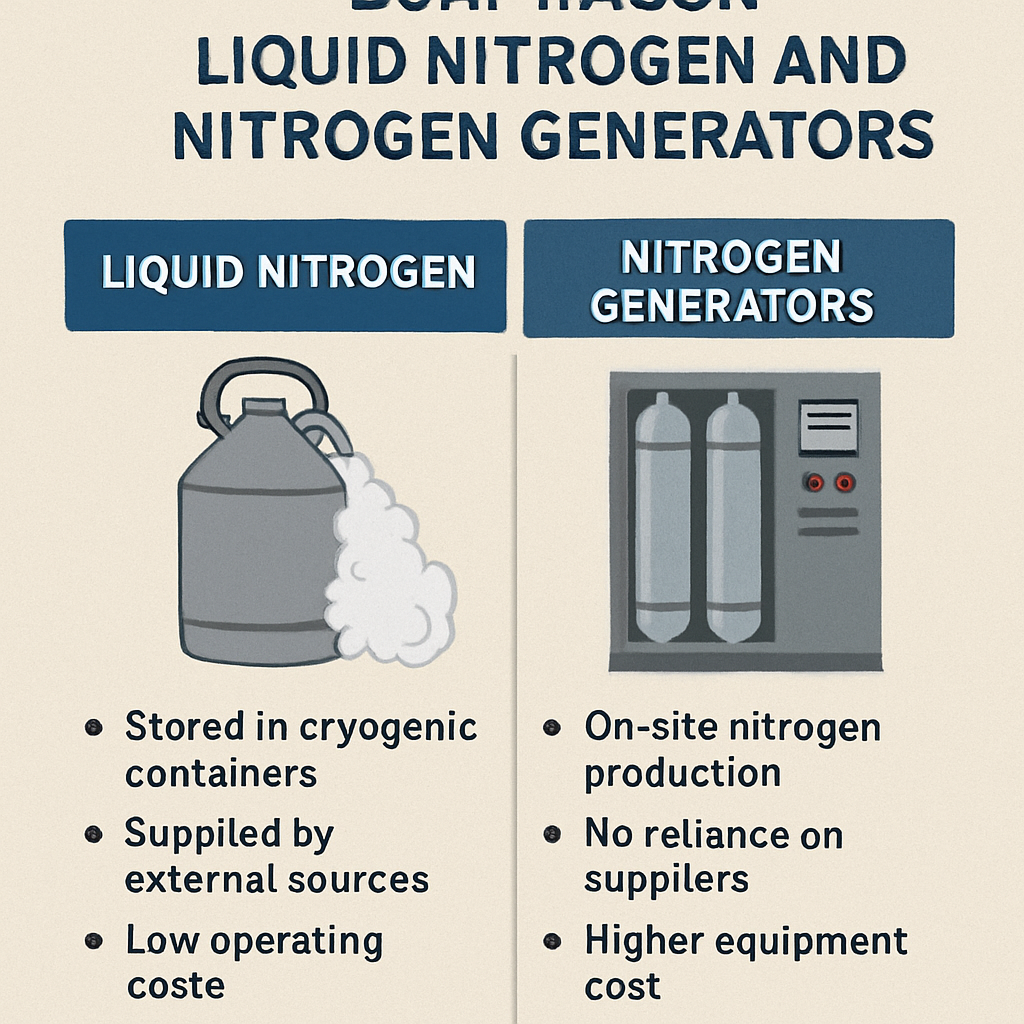
Nitrogen generators eliminate the dependency on external suppliers. They ensure a consistent nitrogen supply, crucial for uninterrupted operations.
Liquid nitrogen, however, is often favored for its cooling efficiency. It finds applications in industries like food processing and medical preservation.
Choosing the right option depends on specific requirements. Consider factors like application needs, ease of use, and purity. Analyzing these can simplify the decision-making process, ensuring the best fit for your operational needs.
Liquid Nitrogen Storage and Handling Requirements
Storing liquid nitrogen requires careful considerations due to its extreme cold. Insulated tanks are essential to maintain its low temperature. Regular inspections ensure tanks are functioning safely and effectively.
Handling liquid nitrogen involves significant safety measures. Personnel must be trained in using protective gear to prevent cold burns or other injuries.
Here’s what to consider:
- Tank inspections and maintenance
- Proper safety equipment for handling
- Regular training for personnel
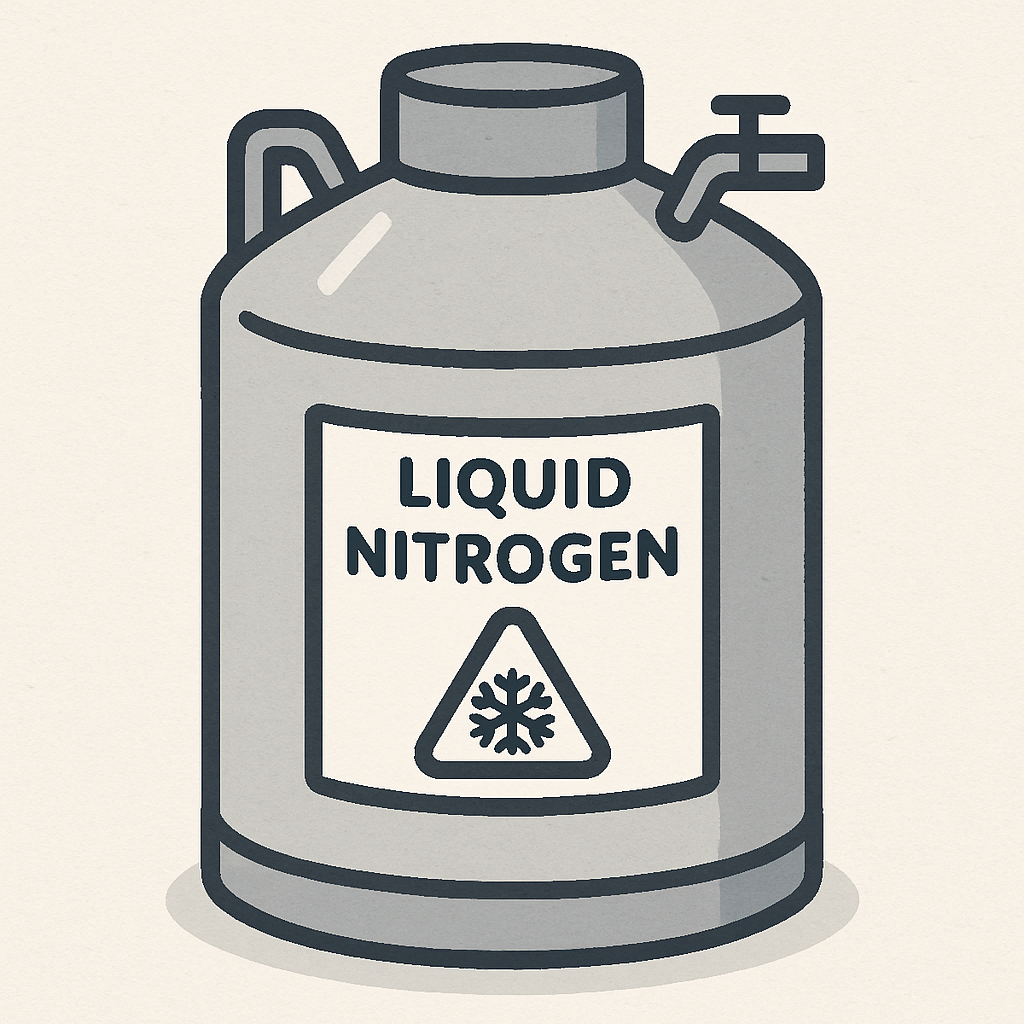
Liquid nitrogen’s low boiling point demands specialized vaporization equipment. This helps in converting liquid to gas for various applications.
Safety protocols are critical to avoiding accidents. This is especially true in industries like manufacturing and laboratories. Proper handling not only safeguards employees but also ensures the quality and effectiveness of liquid nitrogen for its intended use.
Cost Breakdown: Liquid Nitrogen
The cost of liquid nitrogen encompasses several components. Production costs are a key factor, influenced by the energy required to liquefy nitrogen.
Transportation is another significant expense. Due to its cryogenic nature, liquid nitrogen must be delivered in insulated containers. This adds to its overall cost.
Here’s a closer look at the costs:
- Production and liquefaction costs
- Transportation and delivery expenses
- Storage equipment and maintenance

by Nathan Rimoux (https://unsplash.com/@nathan_rmx)
Storage requirements also contribute to expenses. Insulated tanks and regular maintenance ensure proper function and safety.
Variable usage can impact cost-effectiveness. Bulk deliveries might lead to waste if not used efficiently, which is a factor to consider. Regular supply contracts can offer price stability, but companies must be wary of hidden fees. Understanding these components helps businesses evaluate if liquid nitrogen is a financially viable solution.
Cost Breakdown: Nitrogen Generators
Nitrogen generators have distinct cost elements compared to liquid nitrogen systems. The initial investment in equipment is a primary consideration. This upfront cost might seem high, but it’s balanced by lower operational expenses over time.
Generators eliminate delivery costs. By producing nitrogen on-site, businesses avoid ongoing transportation and delivery fees, leading to significant savings. This aspect plays a vital role in the cost-effectiveness of nitrogen generators.
The costs are broken down into:
- Initial investment in generator equipment
- Operational and maintenance costs
- Utility and energy consumption

by Ömer Haktan Bulut (https://unsplash.com/@omerhaktan)
Maintenance is another cost to consider. Although nitrogen generators need regular upkeep, the costs are generally predictable and manageable.
Finally, energy consumption can vary based on the generator’s efficiency and requirements. Businesses should weigh this factor against the cost of liquid nitrogen production. Overall, while the initial investment for nitrogen generators might be substantial, the predictable, lower ongoing expenses make them an attractive option for many industries seeking cost-effective nitrogen solutions.
Operational Considerations and Supply Chain Factors
When choosing between liquid nitrogen and nitrogen generators, operational needs and supply chain factors are crucial. Liquid nitrogen requires regular deliveries and proper inventory management, which can introduce complexities.
Supply chain disruptions can also impact liquid nitrogen availability. Delays in delivery may result in production slowdowns. Businesses relying on liquid nitrogen might face challenges if their supplier experiences issues.
Nitrogen generators offer an advantage by producing nitrogen on-site. This autonomy reduces reliance on external suppliers and minimizes risks associated with supply chain hiccups. In essence, generators provide more control over nitrogen availability.
Consider the following operational aspects:
- Dependency on external suppliers
- Potential supply chain disruptions
- Flexibility in nitrogen production and usage

by Growtika (https://unsplash.com/@growtika)
Moreover, nitrogen generators allow for precise control over production volumes. This flexibility enables businesses to align nitrogen supply with demand, optimizing operational efficiency. For industries with fluctuating nitrogen needs, this adaptability is particularly beneficial. Ultimately, assessing these operational and supply chain factors can significantly influence the decision between liquid nitrogen and generators, ensuring seamless and cost-effective operations.
Purity, Flexibility, and Application Suitability
In industries where nitrogen quality is critical, purity levels are paramount. Liquid nitrogen inherently offers high purity. This purity makes it ideal for sectors like food processing and pharmaceuticals requiring stringent quality standards.
With nitrogen generators, the purity can be customized. This flexibility allows businesses to tailor nitrogen quality according to specific application needs. Adjusting purity levels helps manage costs and meet diverse operational demands.
Flexibility is another significant advantage offered by nitrogen generators. Businesses can adjust production rates based on demand fluctuations. This adaptability ensures efficient nitrogen use, minimizing wastage and unnecessary expenses.
Application suitability extends beyond purity and flexibility. Choosing between these two nitrogen sources should account for:
- Specific industry requirements
- Use of nitrogen (cooling vs. inerting)
- Need for constant vs. variable supply

by Christine Walker (https://unsplash.com/@chris_walker2020)
In conclusion, evaluating purity requirements and application suitability will guide businesses in selecting the most appropriate nitrogen solution. These factors determine not only cost-effectiveness but also operational success in meeting industry standards and performance expectations.
Environmental Impact and Sustainability
Environmental considerations are increasingly vital in industrial operations. Liquid nitrogen production and transport can contribute to carbon emissions. The energy-intensive process and regular shipments impact the environment negatively.
On the other hand, nitrogen generators can offer a greener solution. These systems reduce the need for bulk transportation. By producing nitrogen on-site, businesses can cut transportation-related carbon emissions significantly.
Additionally, nitrogen generators can align with sustainability goals. They can be powered by renewable energy sources, further lowering environmental impact. Considering environmental benefits is critical for businesses committed to sustainable practices.
Key environmental benefits include:
- Reduced transportation emissions
- Potential for renewable energy use
- Decreased overall carbon footprint
Ultimately, selecting a nitrogen solution should weigh the environmental implications alongside operational and cost factors. Opting for sustainable nitrogen generation can enhance a company’s eco-friendly profile while supporting long-term business objectives.
Safety and Regulatory Compliance
Safety is a top priority when handling nitrogen. Liquid nitrogen requires careful handling due to its extremely low temperatures. Proper training and equipment are essential to avoid accidents.
Nitrogen generators, on the other hand, pose fewer immediate risks. They produce nitrogen gas at ambient temperatures. This reduces the risk of severe cold burns, a common concern with liquid nitrogen.
Both options must comply with industry regulations. Ensuring compliance helps to avoid legal issues. Regular inspections and maintenance are vital. It’s important to ensure systems operate safely and efficiently.
Key safety measures include:
- Proper training for personnel
- Regular equipment inspections
- Compliance with industry standards
Choosing between liquid nitrogen and generators involves considering both safety protocols and regulatory requirements to ensure smooth operations.
Total Cost of Ownership: Long-Term Analysis
When evaluating nitrogen solutions, it’s crucial to consider the total cost of ownership. This includes not just the initial purchase price but also ongoing expenses. Maintenance, operation, and potential downtime are key factors affecting long-term costs.
Liquid nitrogen incurs repeated costs through deliveries and storage. Over time, these expenses can accumulate significantly. Additionally, supply disruptions due to transportation or other logistics can lead to operational downtime, impacting the cost-efficiency of this option.
Nitrogen generators, in contrast, offer a more predictable cost structure. Although they require a substantial upfront investment, the lower operational and maintenance costs often make them a cost-effective choice in the long run. The ability to control production rates and purity levels can further optimize expenses.
Factors influencing the total cost of ownership:
- Initial investment
- Ongoing maintenance costs
- Supply reliability

by Aleksandar Manasiev (https://unsplash.com/@aleksandar_akr)
Decision Factors: Which Is More Cost-Effective for Your Business?
Choosing between liquid nitrogen and a nitrogen generator depends on several key factors. First, assess your business’s nitrogen demand. Is your requirement intermittent or continuous?
Next, consider the scalability of your operations. Will your nitrogen needs increase over time? Nitrogen generators offer scalability, reducing future costs. Also, evaluate your budget for initial investments. Can you afford higher upfront costs for long-term savings?
Decide based on:
- Nitrogen demand
- Scalability and future needs
- Budget constraints
Ultimately, aligning your choice with your strategic business goals is crucial. Consider how each option fits into your long-term operational plans. Your decision should support business growth and sustainability.
Conclusion: Making the Right Choice for Your Nitrogen Needs
Selecting the most cost-effective nitrogen solution involves evaluating both current and future needs. Analyzing the cost-effectiveness, operational demands, and environmental impacts of each option helps make an informed decision.
Consider how liquid nitrogen and nitrogen generators meet your industry’s specific requirements. Your final choice should enhance efficiency and align with your business goals. Balancing immediate needs with long-term benefits ensures the right choice for your operation’s nitrogen needs.
💼 Looking for a More Cost-Effective Nitrogen Solution?
If you’re currently relying on liquid nitrogen or cylinders, you may be facing high costs and unstable supply.
Our onsite nitrogen generator systems help you:
✔ Reduce nitrogen cost by up to 70%
✔ Ensure continuous and stable supply
✔ Improve production efficiency
👉 Get a free quote within 24 hours
👉 Talk to our engineer for a custom solution