Choosing the right nitrogen supply method is crucial for many industries. Each option—liquid nitrogen, nitrogen generators, and cylinders—has unique benefits and costs.
Understanding these differences can help businesses make informed decisions. The cost of nitrogen varies significantly based on the supply method chosen.
Liquid nitrogen is often used for rapid cooling needs. Nitrogen generators offer a continuous supply, while cylinders provide portability.
This article will explore the cost comparison of these methods. It will help you decide which is best for your specific needs and budget.
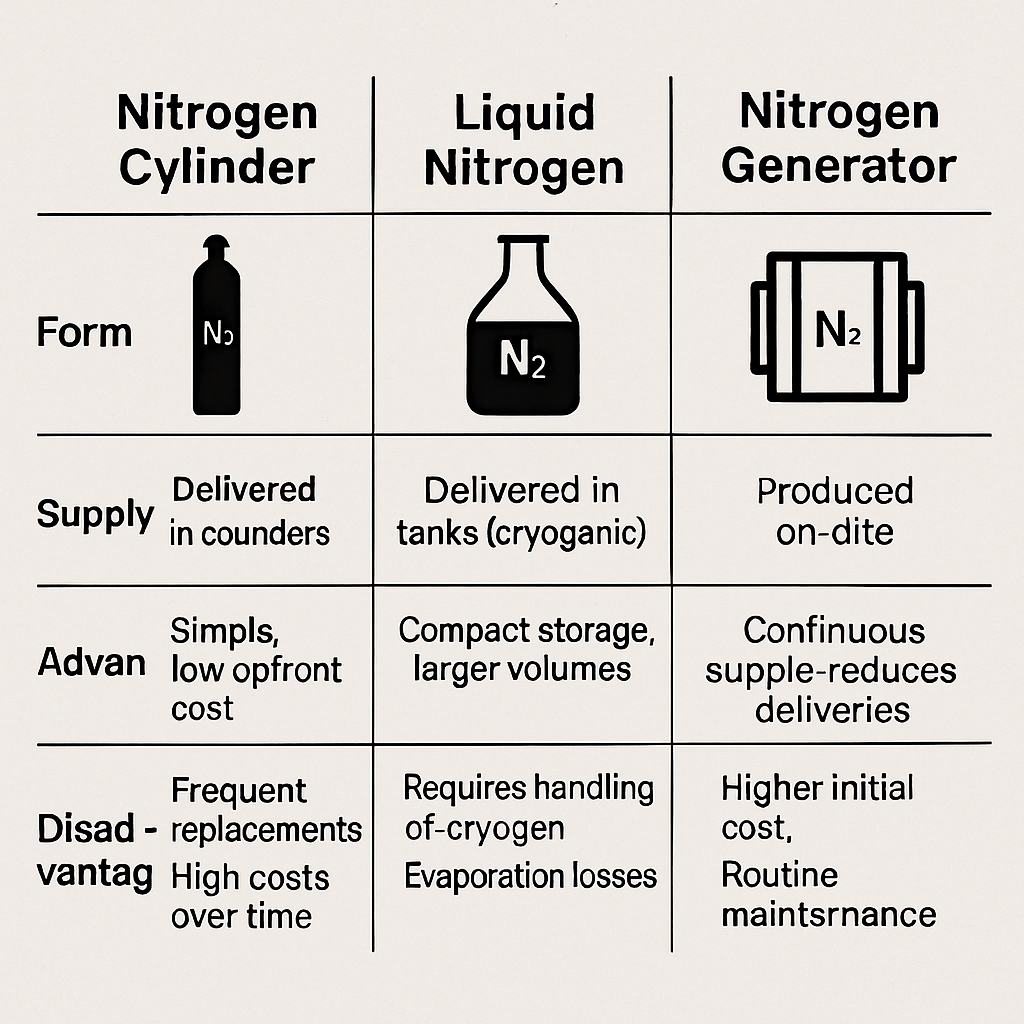
Understanding Nitrogen Supply Methods
Nitrogen supply methods cater to various industrial needs. Each option has distinct characteristics that suit different applications. Knowing these can clarify which is optimal for you.
The three primary nitrogen supply methods include:
- Liquid Nitrogen: Used for rapid cooling and cryogenics.
- Nitrogen Generators: Provide on-site, continuous nitrogen supply.
- Cylinders: Portable and ideal for temporary or smaller-scale operations.
The choice between these methods depends on multiple factors. Usage frequency, volume requirements, and budget constraints all play a role. Each method also has its own set of costs and logistical considerations.
Liquid Nitrogen: Costs, Pros, and Cons
Liquid nitrogen is vital in industries needing ultra-cold temperatures. It’s common in food processing and scientific experiments. But, the associated costs can add up quickly.
Typically, liquid nitrogen is priced per liter. While initial purchase costs seem low, expenses for storage and handling increase total costs. Specialized insulated tanks are necessary.
Benefits of liquid nitrogen include rapid cooling and suitability for precise applications. It’s perfect for industries requiring ultra-low temperatures. However, there’s a downside to consider.
There are significant safety concerns due to extremely low temperatures. The handling of liquid nitrogen demands strict safety procedures. Moreover, as it evaporates, replenishment becomes a regular expense.
- Pros:
- Rapid cooling
- Effective for precise applications
- Immediate availability
- Cons:
- High handling costs
- Safety risks
- Replenishment needed

by Roger Starnes Sr (https://unsplash.com/@rstar50)
Nitrogen Cylinders: Costs, Pros, and Cons
Nitrogen cylinders offer a portable solution for businesses needing smaller quantities. They’re ideal for temporary or mobile operations. Pricing is usually per unit, with potential rental fees.
The cost can vary depending on size and quantity required. Transportation adds to the expense, as cylinders need replacement frequently. Despite this, they provide a straightforward nitrogen solution.
Cylinders are practical for limited-space environments. Their portability allows easy movement across locations. However, dependency on regular supply and higher long-term costs could be a drawback.
- Pros:
- Portable and flexible
- Suitable for small-scale use
- No need for large storage
- Cons:
- Frequent replacements necessary
- High transportation expenses
- Potential for increased long-term costs

by Brandon Griggs (https://unsplash.com/@paralitik)
Nitrogen Generators: Costs, Pros, and Cons
Nitrogen generators offer a sustainable and continuous nitrogen supply. They are more suitable for businesses with consistent nitrogen needs. While the initial cost is high, they provide significant savings over time.
Generators eliminate the need for deliveries, reducing logistical hassles and environmental impact. They require an upfront investment but offer low operational costs, making them economically feasible long-term.
Technological advancements have improved their efficiency, which is beneficial for growing businesses. With reduced dependency on external suppliers, operational efficiency improves. Generators are a one-time purchase that pays off with consistent use.
- Pros:
- Continuous nitrogen supply
- Lower operational costs
- Environmentally friendly
- Cons:
- High initial investment
- Requires maintenance
- Best for high-volume needs

by Luo Jin Hong (https://unsplash.com/@logichom)
Direct Cost Comparison: Liquid Nitrogen vs Nitrogen Generator vs Cylinders
When analyzing costs, each method has distinct financial implications. Liquid nitrogen often comes with per-liter pricing, making it ideal for short-term or specific needs.
Nitrogen cylinders have a straightforward cost model. They are priced per unit and might include rental fees. This can result in higher expenses over time, especially with repeated replacements.
Nitrogen generators, on the other hand, have higher upfront costs. However, they pay off gradually as they eliminate ongoing purchase expenses. For businesses with high nitrogen requirements, they become cost-effective in the long run.
In summary, choosing the best method depends on usage patterns and budget constraints. Here’s a quick comparison:
- Liquid Nitrogen: High storage costs, per liter pricing
- Cylinders: Medium costs, per cylinder pricing with possible rental fees
- Generators: High initial investment, low ongoing costs

by Markus Spiske (https://unsplash.com/@markusspiske)
Special Focus: Cost Comparison for Nitrogen Ice Cream Businesses
Nitrogen ice cream shops face unique challenges with nitrogen costs. Liquid nitrogen is popular due to its rapid freezing capability, enhancing texture and flavor in seconds.
Despite its benefits, liquid nitrogen is expensive long-term due to storage needs and frequent purchases. Comparatively, nitrogen generators offer a steady supply, reducing dependency on suppliers and potentially lowering expenses over time.
Key cost considerations include:
- Liquid Nitrogen: High freezing efficiency, continuous purchase expenses
- Nitrogen Generators: Consistent supply, potential cost savings over time
Key Factors Affecting the Cost of Nitrogen
Many elements influence nitrogen costs. Volume needs and purity levels play significant roles in pricing variations.
Moreover, delivery logistics and regional availability affect pricing. Businesses should consider these key factors when analyzing costs:
- Usage Volume: Higher usage may lead to discounts.
- Purity Requirements: Different applications need varying purity levels.
- Location: Costs fluctuate based on regional availability and infrastructure.
Making the Right Choice: Which Nitrogen Supply Method Is Best for You?
Choosing the best nitrogen supply hinges on specific needs and budget. Evaluate each method’s benefits and limitations carefully.
Consider these factors to guide your choice:
- Usage Frequency: Regular supply versus occasional use.
- Budget Constraints: Initial investment vs. operational costs.
- Application Needs: Temperature and volume requirements.
Conclusion
Selecting the appropriate nitrogen supply method involves careful consideration of various factors. It’s important to balance initial costs against long-term expenses while assessing operational efficiency.
Each nitrogen supply method offers unique advantages. Liquid nitrogen is unmatched for rapid cooling. Nitrogen generators provide consistent supply and lower long-term costs. Meanwhile, cylinders offer unmatched portability. Evaluating your specific needs, including volume and frequency, will guide you towards the most economical and practical choice. By choosing wisely, you can enhance operational efficiency while managing expenses effectively.
https://addlinks.pro/bcn4e